
In a recent news release, US Equestrian (aka the United States Equestrian Federation), announced that it has committed $100,000 over two years toward ongoing international research into equestrian safety vests. The release also noted the allocation of an additional $100,000 toward the Chromatic Fund for equine health research.
The United States Equestiran Federation (USEF) is the national governing body for most equestrian sports in the United States.
Safety vests: Addressing unknowns
While equestrian riding helmets have a standardized system for testing and rating products from different manufacturers, there is far less standardization of rating safety vests in equestrian sports. Many international ratings systems are based on motorcycle vests, which may not be absorbing the same kinds of impacts as equestrian safety vests.
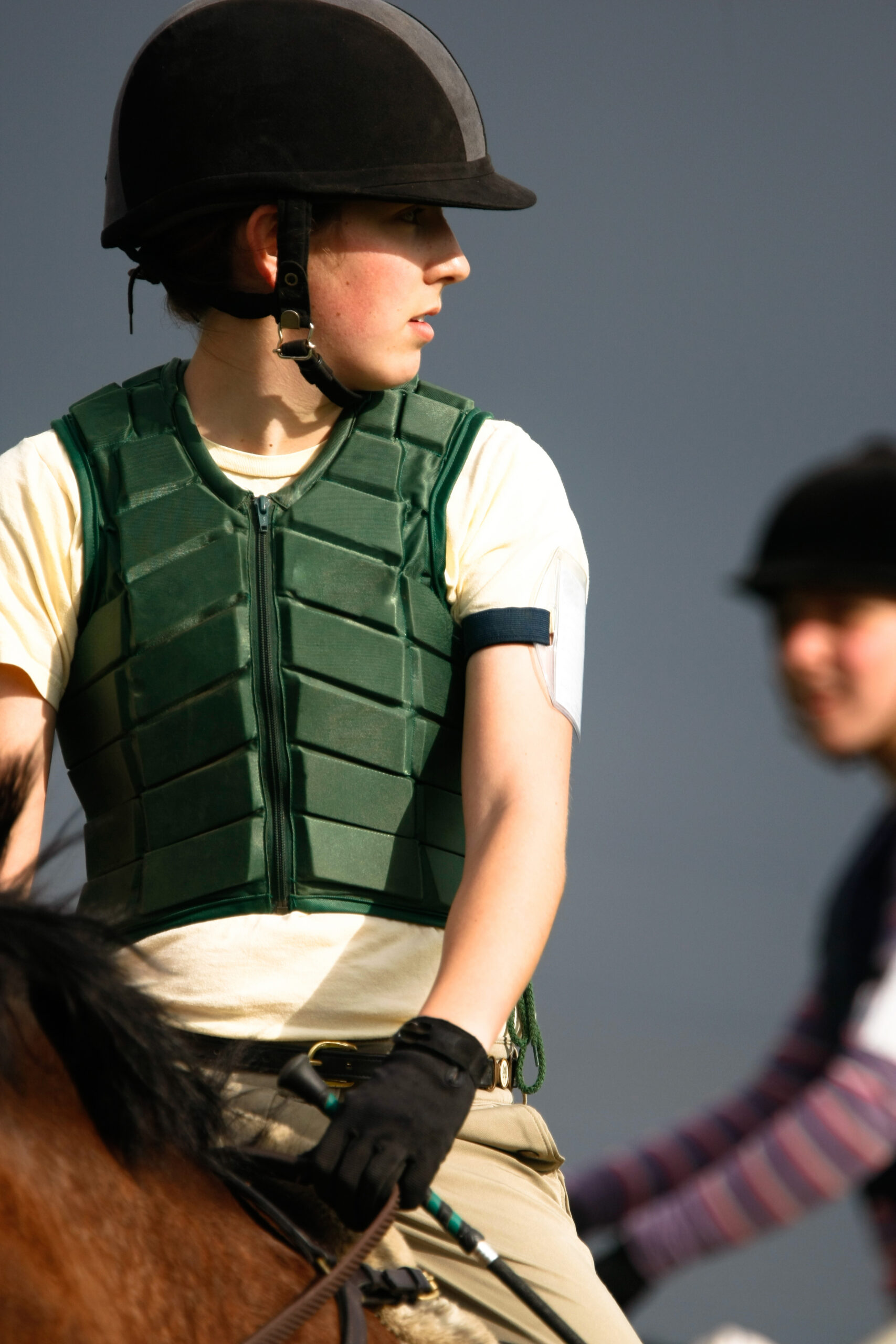
The current research effort will work with an academic research partner to establish testing standards and then test existing products against those standards. This will be similar to the helmet ratings work that has taken place at Virginia Tech.
The unknown aspects of safety vest protection don’t mean that equestrians shouldn’t be wearing them (they’re required for eventing). But it does mean there is a gap in our understanding of their strengths and limitations.
“As we know, serious fall injuries are thankfully few and far between, but when they do happen, they can be catastrophic,” said Dr. Mark Hart, chair of the FEI Equestrian Safety Vest Working Group and former chair of the US Equestrian Human and Equine Safety & Welfare Committee. “We feel it’s our duty as an organization to take a leadership role to evaluate and improve riders’ personal protective equipment. A lot of our USEF members have been requesting that this research be done to enhance rider safety.”
Research to improve PPE
Funding for this research doesn’t just come from US Equestrian. A variety of national and international governing bodies and affiliates, as well as private donors, are coming together to make the work possible.
The project began with a survey to determine a baseline for what riders believe about the protection of vests and body protectors, and how they’re being used in the field. You can find details of those survey results in this USEF Insider feature.
The commitment to the safety vest study is just part of a bigger picture. When fee increases were announced in late 2025, US Equestrian members were told the change would not only secure existing operations, but allow the organization to better serve members, horses and the industry going forward. One of those promises was increased commitment to research.
Chromatic Fund projects
In addition to the news about the safety vest research funding, the Federation announced it will direct an additional $100,000 toward the Chromatic Fund. This will join the $100,000 already allocated to research projects beginning in 2026.
This year marks the first series of projects made possible by the Chromatic Fund, which is a collaborative effort between the American Association of Equine Practitioners, US Equestrian, Chromatic BF’s breeder KC Branscomb and The Foundation for the Horse. The first year’s projects include a study on the effects of vitamin E supplementation on vitamin K in healthy horses and another examining the safety of high versus repeated low-dose steroid use. You can find out more about these projects in the USEF’s October announcement and in this feature from North Carolina State University, where the steroid research will take place.
The Chromatic Fund focuses on research that will benefit the health, well-being and career longevity of horses in sport. The fund works through Foundation for the Horse’s existing process to solicit and review grant requests. The Foundation, established in 1994, funds a variety of equine research projects. It has an extensive process in place to review scientific merit, feasibility and other considerations of project proposals. The advisory board for the Chromatic Fund selects sporthorse-oriented proposals from the list of projects recommended by the Foundation.
Learn more about the selection process and this year’s projects here.
Medications and more
Besides the Chromatic Fund, US Equestrian contributes to academic research and horse health in other ways. Its Drugs and Medications team works with Ohio State University each year to conduct drug administration studies. These result in peer-reviewed, published data which shows how medications behave in horses’ bodies in response to different doses and routes of administration. This data can be used to help inform detection times for USEF drugs and medications testing.
Previous research has covered methylprednisolone, betamethasone, methocarbamol and isoflupredone–all based on queries from veterinarians and members. Some research has looked at the way common medications formulated as injectables act in horses when given orally (which people sometimes have to do in a pinch). Research has also examined the way a drug is metabolized when given via crushed and dissolved oral tablets ,compared to other forms. The way one introduces a substance into a horse’s system can sometimes drastically alter the rate at which it’s metabolized. This can be reflected in drug testing results.
“The results may not mitigate a penalty in the event of a positive, but we can use these scenarios to help understand what we could see in a case because now we know how the drug behaves in different situations,” said Dr. Stephen Schumacher, chief veterinary officer for US Equestrian. “It helps us understand the environment better and make sure our testing standards make sense and are reasonable.”
Testing the testing lab
In addition, the team invests resources in a blind sample quality control program for its contracted drug testing lab. The Federation works to create and send blood or urine samples with a known concentration of a substance. These are transported and packaged identically along with field test samples. This is done to ensure the laboratory is consistently not only finding the correct substance in a test, but at the expected concentration.
This year, US Equestrian will also work with the University of Pennsylvania on a study examining the injured limbs of horses that have been euthanized due to a musculoskeletal injury while competing or training at a licensed event. Though these instances are thankfully statistically rare, the research team hopes to draw on research from horse racing to document lesions that may have been undetected prior to a catastrophic injury.
Horses who suffer a fatality at a licensed event are already required to undergo a necropsy. The purpose is to gather any information that can be used to understand their death or prevent others. Dr. Holly Stewart, assistant professor of Large Animal Surgery at the university’s New Bolton Center, will analyze radiographic findings in the affected limbs. She will also perform CT imaging and comprehensive histopathology of tissues to further characterize preexisting pathologic lesions. Findings will be reported to USEF annually.
Disease spread and biosecurity
The USEF’s Drugs and Medications team isn’t the only one whose work includes research. Dr. Katie Flynn, US Equestrian senior staff veterinarian, is known to members as the go-to biosecurity expert for competitions. She also contributes to academic publications about equine infectious disease, sharing her learnings with other veterinarians and the public.
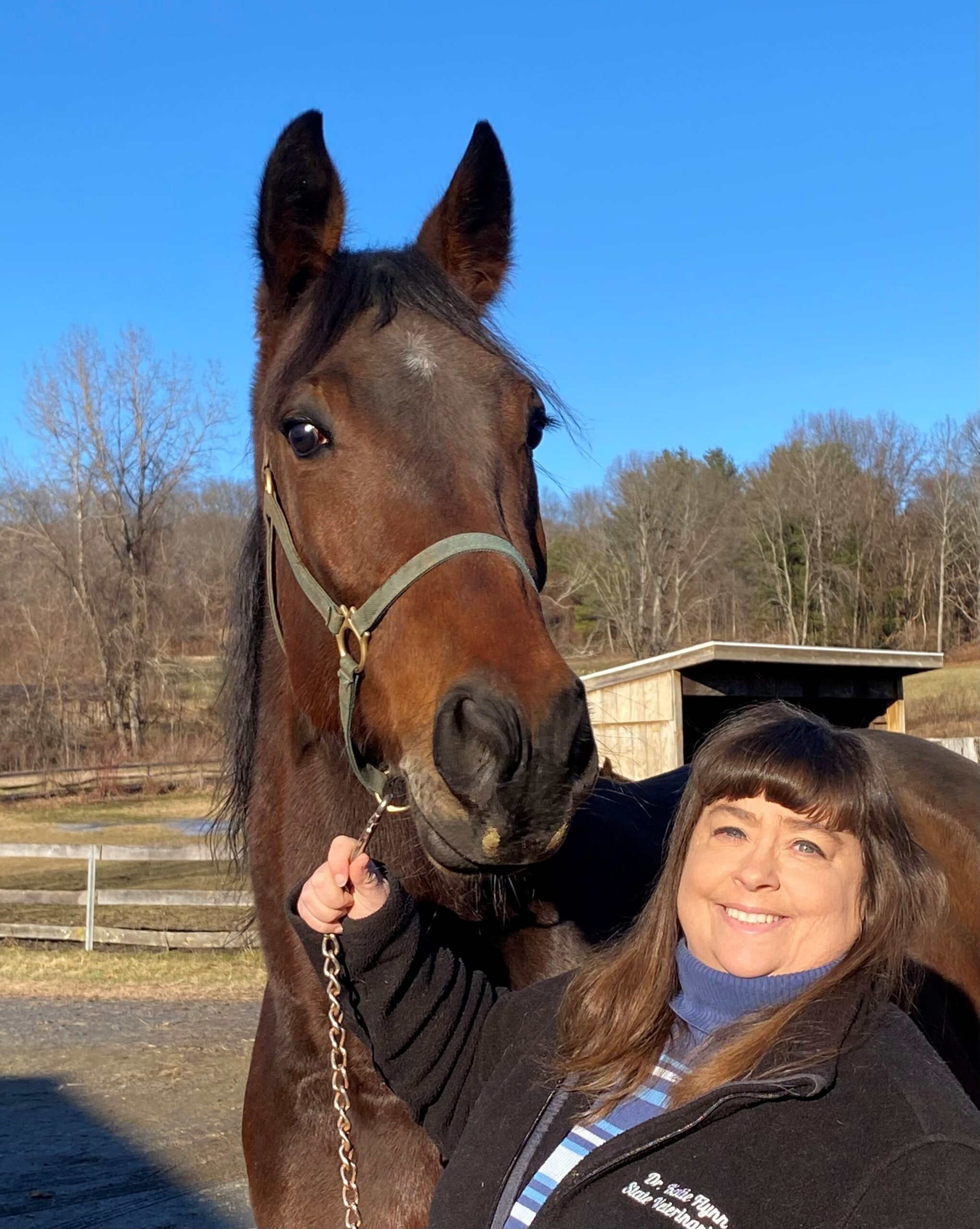
Sometimes, these studies are observational, such as a paper in the Journal of the American Veterinary Medical Association in November 2024. This surveyed state animal health officials to understand their challenges in equine disease outbreaks. Another example is a paper in the April 2025 journal Viruses. This documented an EHV-1 outbreak at a USEF competition, which was successfully contained with quick isolation and temperature monitoring. At other times, Flynn has assisted in the collection of samples for research by swabbing stalls or collecting environmental samples to look for respiratory pathogens at events. This can help researchers learn more about how diseases are spread.
“It’s important to continue learning about disease spread and biosecurity to make sure our requirements and recommendations align with the latest research, but sharing those findings is a crucial part of what we do, too,” said Flynn. “The ultimate goal is to make horses and their environment healthier and safer, and collaborating with researchers to advance peer-reviewed published research is one of the ways we do that.”
Going forward, US Equestrian official say they will “continue to explore even more ways to partner with research institutions to improve the lives of our members and the horses we all love.”
Landing page image by Adobe Stock