

JOHNS CREEK, Ga. (October 22, 2026)—Fifteen years after the introduction of the first FDA-approved drug to treat pituitary pars intermedia dysfunction (PPID, formerly called equine Cushing’s disease), a survey of horse owners confirmed what the equine community has observed for a long time: that riding time is reduced after an initial PPID diagnosis.
Encouragingly, however, the survey also found that treatment can help restore that time in the saddle and that horse owners are more knowledgeable than ever about PPID.
Conducted by Boehringer Ingelheim, the nationwide survey garnered nearly 2,000 responses from horse owners in 49 states. It found that a large percentage of owners indicated a decrease in riding time after a PPID diagnosis. This can negatively impact the important human/horse bond.
Better long-term outcomes
“A horse receiving a PPID diagnosis can feel overwhelming at first,” noted Steve Grubbs, DVM, PhD, DACVIM, Equine Technical Manager, Boehringer Ingelheim. “But as owners learn to manage the disease, many horses can potentially return to a normal life, whether that be competing or as a companion.”
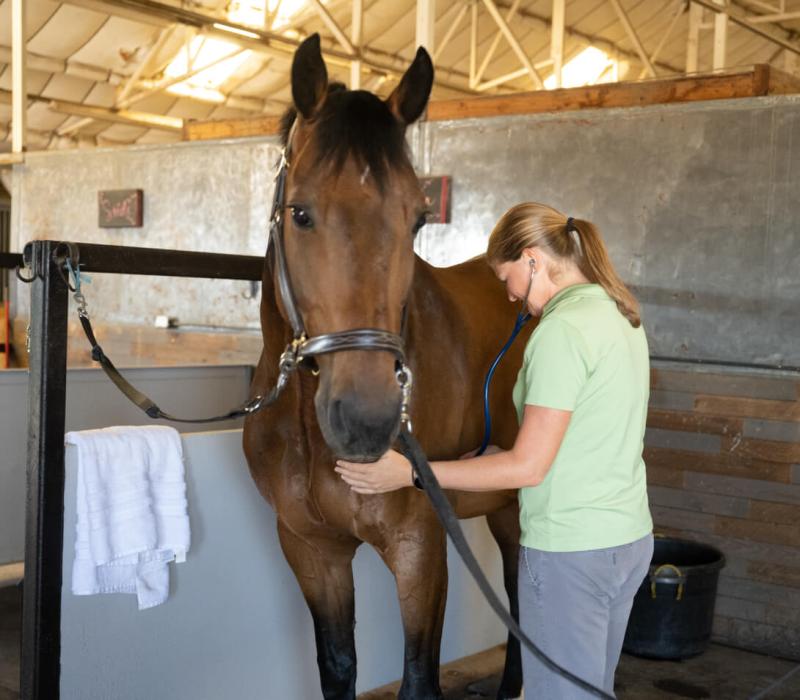
Most promising is that the survey found that horse owners have an understanding of the disease. Eighty-nine percent of respondents identified at least one clinical sign associated with PPID.¹ The findings reflect how awareness of the disease has evolved over the past decade and a half.
“In the past, many horses with PPID weren’t diagnosed until the disease was advanced, because owners simply didn’t recognize the clinical signs,” said Grubbs. “Today, horse owners are much more aware of what to watch for, which creates opportunities for earlier conversations with their veterinarians, and better long-term outcomes for affected horses.”
Progress in owner awareness
Before PPID became a topic horse owners understood, they often attributed the early signs of PPID to the natural aging process. Those early clinical signs include change in attitude, lethargy, decreased performance, delayed shedding, loss of topline muscle, laminitis and abnormal sweating.
The survey suggests that significant progress has been made in horse owner awareness of the disease and the resources available to manage it, including:
- 61% of those surveyed specifically asked their veterinarian to test their horse for PPID;
- 75% of respondents’ horses are on PRASCEND® (pergolide tablets), with 98% treating daily year-round.; and
- 78% plan to continue treating for their horse’s lifetime.
“The increased awareness reflected in this survey is encouraging, because early recognition remains one of the most important factors in successfully managing PPID,” Grubbs said. “When horse owners recognize subtle changes sooner, they’re more likely to involve their veterinarian earlier, which can make a meaningful difference in developing an appropriate long-term management plan.”
Common endocrine disorder
PPID is one of the most common endocrine disorders affecting older horses, although in rare cases, it has been identified in horses as young as 5 years old.² Veterinarians emphasize that successfully managing PPID requires a whole-horse approach. This includes appropriate medical treatment, nutritional management, routine hoof and dental care, exercise when appropriate and regular veterinary monitoring.
For Grubbs, the survey represents more than an encouraging statistic. “The biggest change over the past 15 years is that more horses with the disease have had the opportunity to be diagnosed and managed before the disease advances, significantly impacting their quality of life. That’s real progress,” he stressed.
Trainer and horse owner Keri Davidson, KTR Farms, Adairsville, Georgia, knows firsthand about how to help horses diagnosed with PPID enjoy longevity. Her five horses on PRASCEND® (pergolide tablets) continue to thrive, providing lessons and competing on the show circuit. “I want other people to understand that a PPID diagnosis doesn’t mean the end of a horse’s career,” she said. “When their conditions are managed properly, these horses are able to continue doing their jobs and enjoy a great quality of life.”
Early testing, successful treatment
Horse owners who suspect their horse might have PPID should talk to their veterinarian about testing. Catching PPID early can help with successful treatment. For additional information about PPID, visit PRASCEND.com.
PRASCEND® IMPORTANT SAFETY INFORMATION: PRASCEND has not been evaluated in breeding, pregnant or lactating horses. Treatment with PRASCEND may cause loss of appetite. Most cases are mild. PRASCEND tablets should not be crushed, due to the potential for increased human exposure. Keep PRASCEND in a secure location out of reach of pets and other animals to prevent accidental ingestion or overdose. Adverse reactions may occur if animals other than horses ingest PRASCEND tablets. Not for human use. Do not ingest the product. Refer to the package insert for complete information.
References
1 Data on file at Boehringer Ingelheim.
2 Young A, Berryhill E. Pituitary pars intermedia dysfunction (PPID). UC Davis Weill Veterinary Medicine Center for Equine Health. 2020. Available at: https://ceh.vetmed.ucdavis.edu/health-topics/pituitary-pars-intermedia-dysfunction-ppid. Accessed July 15, 2026.
About Boehringer Ingelheim-Animal Health business
Boehringer Ingelheim provides innovation for preventing and treating diseases in animals. The company offers a wide range of vaccines, parasite-control products and medicines for pets, horses and livestock to veterinarians, animal owners, farmers and governments. As a leader in animal health, Boehringer Ingelheim values that the health of humans and animals is deeply connected. The company strives to make a difference for people, animals and society. Learn more at www.boehringer-ingelheim.com/us/animal-health.
About Boehringer Ingelheim
Boehringer Ingelheim is a biopharmaceutical company active in both human and animal health. It is one of the industry’s top investors in research and development. The company focuses on developing innovative therapies that can improve and extend lives in areas of high unmet medical need. Independent since its foundation in 1885, Boehringer takes a long-term perspective, embedding sustainability along the entire value chain. Its approximately 54,500 employees serve over 130 markets to build a healthier and more sustainable tomorrow. Learn more at www.boehringer-ingelheim.com.
Landing page image from Boehringer Ingelheim website