

Listen here:
Maintaining clean grooming brushes isn’t just about aesthetics—it’s essential for your horse’s health and the effectiveness of your grooming routine. Dirty brushes can harbor bacteria and fungus that may cause skin infections, while accumulated grime makes it impossible to properly clean your horse’s coat or distribute natural oils that keep it shiny and healthy.
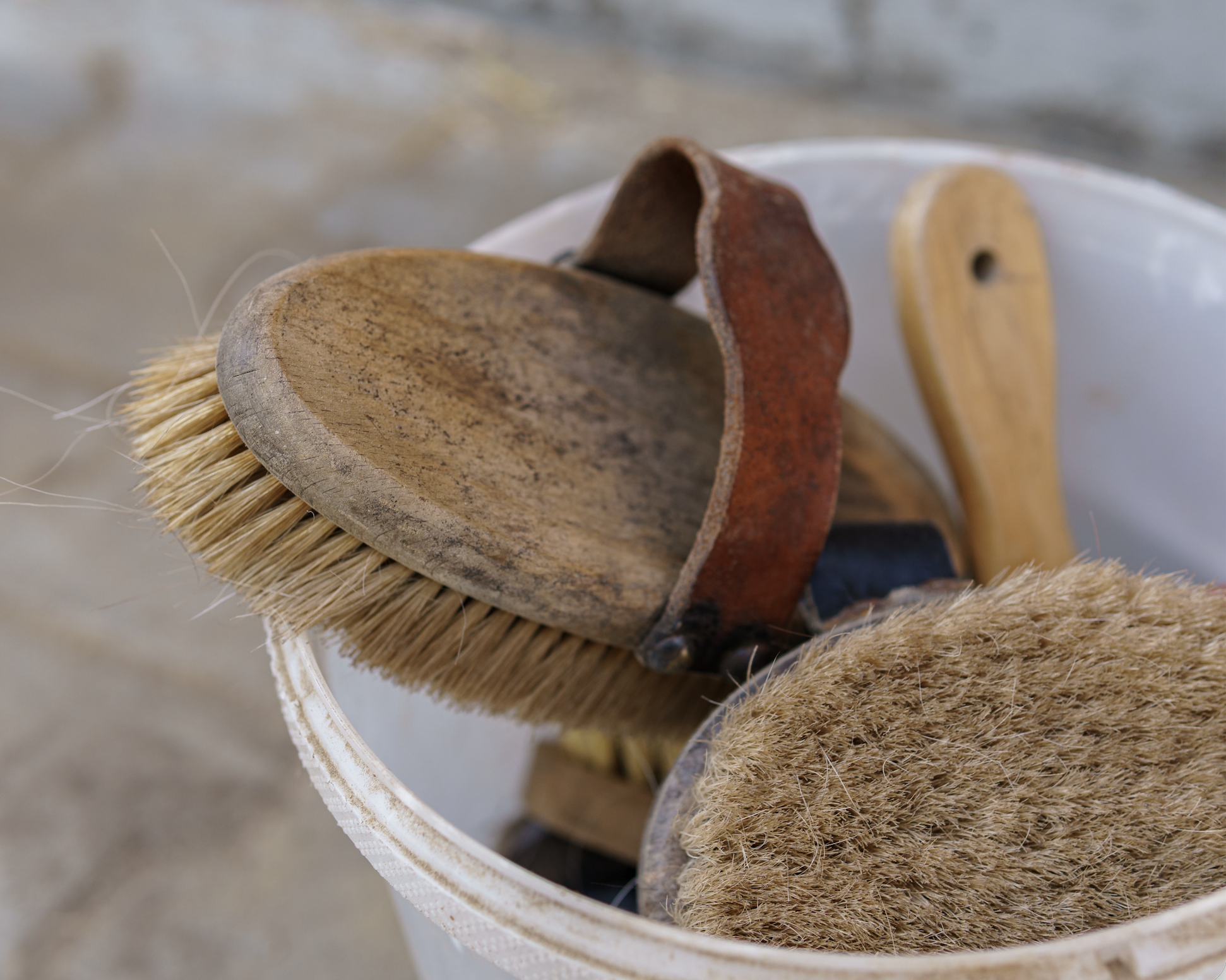
The good news is that brush care doesn’t have to be complicated or time-consuming. By adopting a few simple habits, you can keep your grooming tools in top condition year-round. Regular maintenance also extends the life of your brushes, saving you money in the long run.
Think of your grooming brushes the way a salon professional thinks of their styling tools—as an investment that requires proper care to perform at its best. Just as you wouldn’t want a hairstylist to use dirty brushes on your hair, your horse deserves the same consideration.
The “Do’s” of brush care
Follow these five essential practices to keep your grooming brushes clean, safe and effective:
1. DO remove loose hair from your brushes. I do this at least three times a week.
2. DO inspect brushes for any damage, cracks, sharp or lost bristles at each use.
3. DO wash/bathe all brushes every two to four weeks, depending on how often you groom and the season. Muddy and wet seasons will mean cleaning your brushes more often.
4. DO soak brushes for at least 20 minutes in a gentle, cleansing bath.
5. DO use a sanitizing spray regularly to keep brushes healthy.
About the author: As a 30-year beauty professional and salon educator, Nicola Cocorocchio has spent her career helping her clients look and feel their best. A horse owner and bodywork practitioner, Cocorocchio is now applying her knowledge of client care to horses.
Don’t miss out! The free weekly EQUUS newsletter delivers practical and interesting horse health information right to your inbox! If you’re not already receiving the EQUUS newsletter, click here to sign up. It’s *free*!