

Listen here:
It’s true that much of a horse’s hoof quality is determined by genetics—there’s no substitute for good feet on a sire and dam. But that doesn’t mean a horse with naturally weaker hooves is out of luck. In fact, there’s plenty that can be done to improve a horse’s hooves through diet and management. Here are five secrets to encouraging stronger hooves in any horse:
1. Optimize nutrition
Feeding for healthy hooves doesn’t have to be complicated. Most commercial feed products provide the necessary nutrition for average horses and those at specific life stages or activity levels. Choose one that is formulated for your horse’s situation, and you’ll be feeding all of him, including his hooves, well. If your horse is on a primarily forage-based diet, buy the best quality hay you can find to replace the nutrition lost when grazing is no longer available. If you are unable to consistently secure good hay, talk to your veterinarian about using a “balancer” pellet that can provide needed nutrition without unneeded calories.
2. Stick to a consistent shoeing schedule
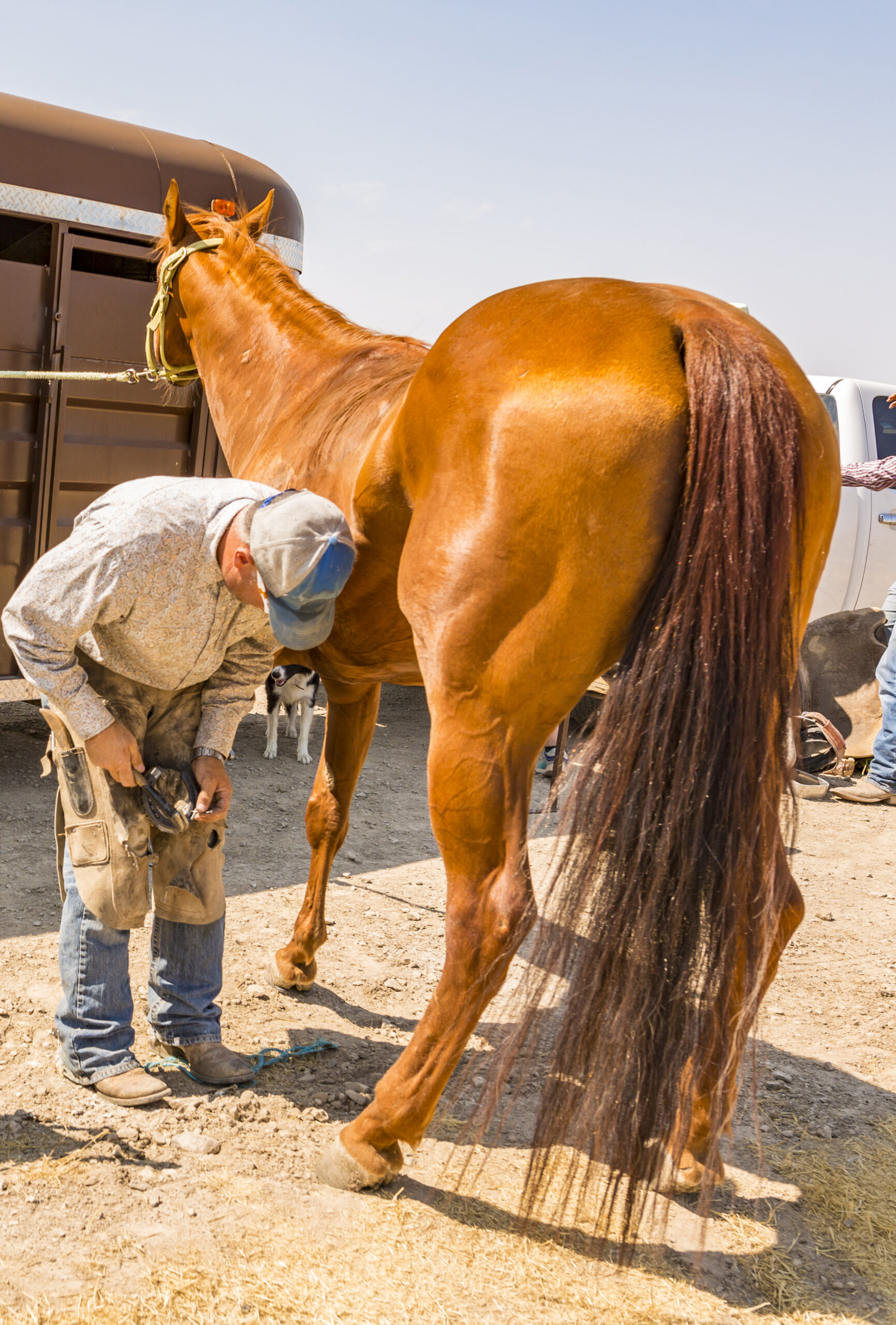
Regular farrier visits are essential to maintaining a horse’s hoof quality. Hooves that are allowed to grow too long are more likely to chip and crack, defects which can weaken the entire foot. Not to mention that having professional eyes on your horse’s hooves regularly can catch brewing situations before they become full-blown problems. Get your horse on a six-week shoeing schedule with a reliable farrier and then keep those appointments faithfully.
3. Maximize opportunities for exercise
Movement increases blood flow, encouraging growth and providing “feedback” needed for the horn to grow strong. If you ride less often at certain times of year, remember that turnout is just as beneficial for hooves. Consider 24-hour turnout if at all possible. With proper blankets and shelter, even a clipped horse can stay warm enough for turnout in frigid weather, and with deep shade, access to water and a comprehensive fly-control program in place, horses can comfortably spend their summer months outdoors as well.
4. Consider feeding a hoof supplement
Several feed supplements formulated to improve hoof health are available. One key ingrediant is biotin, a B vitamin that supports the production of keratin, a protein that provides the structural basis for hair and hooves. Research has shown that biotin can encourage hoof growth and improve horn quality. When shopping for a supplement, look for one with a comprehensive ingredients label and contact information for the manufacturer in case you have questions or concerns.
5. Stay vigilant against thrush
A bacterial infection of the underside of a horse’s hooves, thrush isn’t typically debilitating. But it is smelly sign that all is not well with your horse’s feet. Thrush isn’t always the result of neglect or dirty bedding—inactivity or hoof imbalances can contribute, and some horses are just prone to the condition. Pick out your horses’ hooves daily, looking for signs of thrush. If you suspect it’s developing, there are a number of commercial products available that are safer than homemade concoctions. Just follow the instructions on the label and consult with your farrier or veterinarian if you are concerned.