

Listen here:
A horse’s coat can only look its best when the skin beneath is healthy. That’s why an essential part of any grooming routine is staying alert to conditions that can compromise dermatological health. Here are the three most common skin-compromising conditions
1. Moisture
For starters, be on watch for rainrot, the crusty, painful skin infection that thrives in damp weather. The bacteria responsible, Dermatophilus congolensis, normally reside on your horse’s skin without consequence. But wet weather—particularly following a long dry spell— allows them to flourish. This overgrowth triggers an inflammatory response in the top layers of the skin and hair follicle.
The earliest signs of rainrot is warmth in the affected area and hairs that stand slightly on end. Within a few days scabs begin to form at the base of the hairs. As these scabs proliferate, they develop a tight, painful crust that follows the runoff pattern of rain across a horse’s back and rump.
Most cases of rainrot can be treated with medicated shampoos—usually containing Betadine or chlorhexidine—or topical other treatments specifically formulated to kill bacteria. In severe cases, your veterinarian may recommend systemic antibiotics. Otherwise, the treatment protocol focuses on removing the scabs to kill the bacteria beneath them.
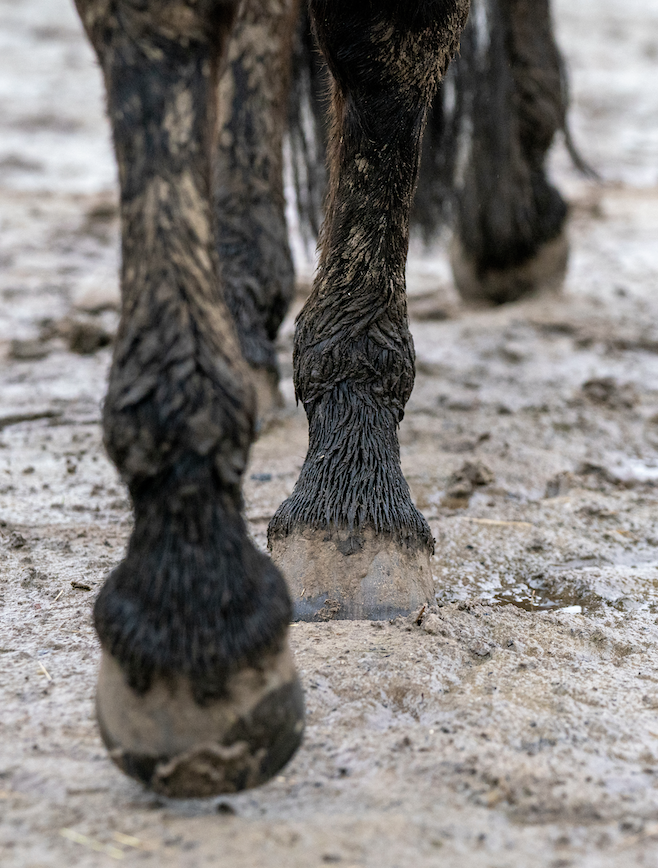
The wet/dry cycles common in milder climates can also lead to scratches, a painful bacterial infection of the skin behind the fetlocks. Scratches begins when repeated exposure to moisture followed by drying causes the skin in this area to chap and crack. Bacteria invade these small openings, and once infection takes hold, the affected skin begins to ooze and crust over, forming hard, painful scabs. Cases can range from mild — easily overlooked during routine grooming — to severe enough to cause lameness.
When treating scratches, resist the urge to pick at the scabs. Pulling them off is extremely painful for the horse and could put you at risk of being kicked. Instead, gently trim the pastern hair and wash the area with an antiseptic shampoo. Afterward, dry the skin thoroughly—using a hair dryer if needed. Finish by applying an antibiotic ointment followed by a thick layer of an emollient cream, such as one used to treat diaper rash. Repeat this process every other day, and the scabs will eventually loosen and fall off on their own.
2. Sun
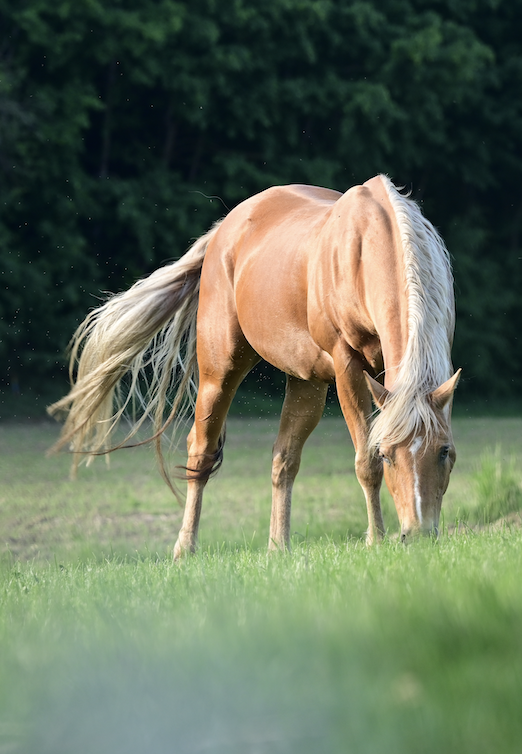
You’ll also want to be aware of the damage sun can do to your horse’s skin. While we don’t often think of horses as being vulnerable to sunburn, it can happen. Pink skin under white markings is especially susceptible because it contains less of the protective pigment melanin. A horse’s sunburn will look much like your own—the skin will be inflamed, red and tender to the touch.
Extended exposure to ultraviolet (UV) light can also lead to the development of squamous cell carcinoma. These lumpy, inflamed tumors most often form on pink skin around the eyes or genitalia. They usually do not metastasize, meaning they are unlikely to spread to other organs, but they can become locally invasive. Left untreated, squamous cell carcinomas can become large and ulcerated (raw) and be very difficult to cure.
And while it’s not technically sunburn, sun exposure combined with ingestion of certain plants or medications can also lead to a painful condition called photosensitivity. In primary photosensitivity, a horse ingests plants containing photodynamic chemicals. When sunlight reaches these compounds through pink skin, they activate and damage the tissue, leading to swelling, blisters, and eventually tight crusts that slough off in sheets. In secondary photosensitization, liver disease prevents the horse from filtering these compounds from the blood. The resulting skin reaction is the same.
You can shield a horse’s skin from sun in a number of ways: By providing shelter and with UV blocking masks and garments. You can also use topical sunblocks, such a zinc-oxide cream, directly on areas of pink skin. These products tend to be thick and messy but provide good protection from the sun and are easily spread over fleshy areas. For spots with thicker hair, try a non-greasy sunscreen specially formulated for horses.
3. Insects
Insects are more than just annoying; their bites can trigger serious and long-lasting reactions in your horse’s skin. One of most significant is insect bite hypersensitivity, commonly called “sweet itch.” An allergic reaction to the saliva of certain biting insects, particularly tiny midges of the Culicoides species, sweet itch causes swelling and intense itchiness. Horses may rub themselves raw seeking relief. Areas where the insects like to feed—the chest, midline, crest and top of the tail—sustain the most damage.
Studies show that horses of some breeds have a genetic predisposition to develop the condition, with Icelandic, Shetland and Friesians being most susceptible. Sweet itch often gets worse as a horse ages.
It’s impossible to keep all flies away during the summer months but do your best with the use of fly sprays, masks, sheets and boots. Also consider the larger environment, making sure manure is managed properly and that standing water isn’t an issue. If you can, keep sensitive horses indoors during insects’ prime feeding hours, which are usually dawn and dusk. A stall outfitted with window screens and a fan—tiny insects find it hard to fly in a breeze—is ideal but, failing that, any shelter you can provide during those crucial hours will be helpful.