

QUESTION: I’m in the process of retraining my 6-year-old off-the-track Thoroughbred for lower-level dressage. Things have been going well, but he’s pretty tense when we canter. My last instructor told me it was because his back hurts and “proved” it by poking him pretty aggressively along each side of his spine with the pointy end of a hoof pick. He reacted by dipping his back and scooting sideways. My veterinarian says she doesn’t see any sign of back pain and my horse’s tension is likely due to his personality. How accurate is the hoof-pick poke test? Should I get a third opinion?
ANSWER: I would recommend getting another opinion, but I am also happy to provide some guidance for checking your horse’s back on your own.
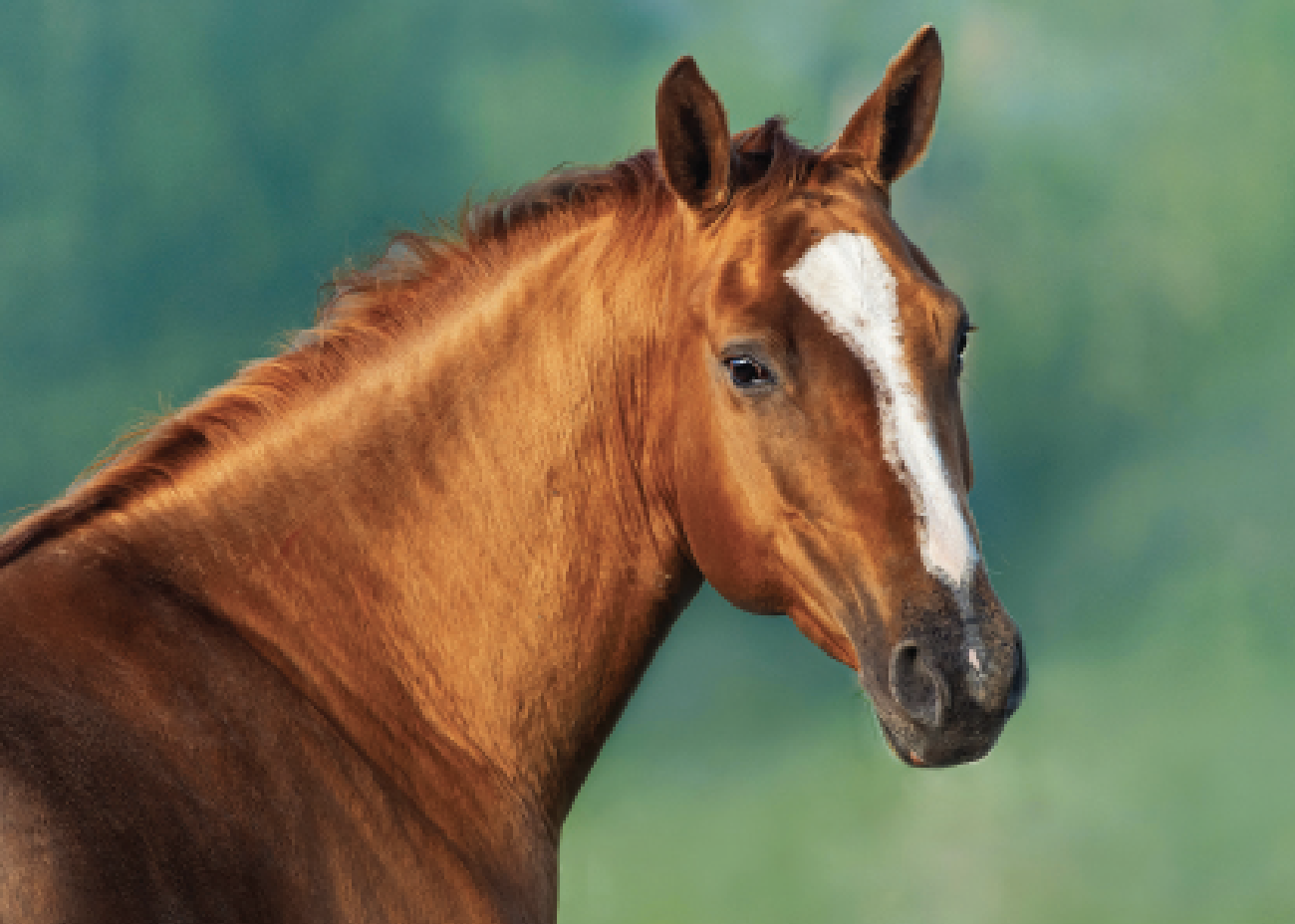
First of all, when we apply direct, downward pressure with hoof picks or fingertips over the back muscles, it creates a reflex reaction. The horse will automatically extend (dip) the spine. This isn’t necessarily a sign of back pain; it is just a response to the applied pressure.
Beginning your investigation
Instead, I advise taking a holistic approach to investigating whether your horse has back pain. When assessing for back soreness, how your horse moves and feels is very important. When you longe your horse, does he move comfortably going in both directions? Can he turn tightly in hand, stepping under himself as he turns? If the answer to either of these questions is “no,” he might be stiff through his back. Assessing his movement in hand is useful because it allows you to see him move without the added variable of the rider, which can change what we see.
With regards to palpating his back, it is useful to start on one side near the shoulder blade/withers. Using the flat pads of your middle-three fingers, apply moderate pressure and sweep slowly down the long back muscle to the pelvis. Then return to the shoulder region and apply your moderate pressure across the long back muscle in a zigzag movement, all the way to the pelvis.
Finally, sweep again down the long muscle from shoulder blade to pelvis. Any sign of soreness will result in a spasm, or flicking, of the muscle. If it is very sore, the horse will often dip his back or step away or turn towards you.
Repeat the palpation three times. This will desensitize your horse to your touch, but any areas of soreness will give you a repeatable reaction. The muscle should feel plump and springy, like marshmallow, under your fingers. A muscle that feels very stiff (“woody”) and spasms may be sore. Repeat this technique on the opposite side and compare findings.
Soft tissues
Applying pressure directly down the spine (over the dorsal spinous process) can be worthwhile but is not a good indicator of muscle pain in the trunk. Palpation of the muscles and connective tissue (fascia) over the back will frequently provoke more pain responses. In addition, the gluteal muscles are often very reactive and sensitive, so I’d advise assessing them using the same zigzag motion, using moderate pressure from your middle-three finger pads.
Even if you investigate on your own, I urge you to have your horse examined by a veterinarian or qualified physiotherapist who can assess soft tissues and joint range of motion.
Other things to review are hoof balance and saddle fit. Does your horse receive regular farriery work and are his feet in balance? Foot imbalance can cause issues in the back but is relatively easily corrected in most cases. Saddle fit is also essential. Is your saddle fitted specifically to this horse, and if so, when was it last checked? Is the flocking even? Does the saddle slip in trot and canter? Is it tipping?
All these things can cause discomfort, resulting in your horse becoming tense when ridden, and indeed, back pain afterward. I recommend that saddles be checked by a professional saddle fitter two or three times a year. As your horse’s muscle development changes, the flocking may need to be adjusted to maintain good fit.
Finally, consider whether you might be contributing to your horse’s back pain. How is your own seat? Do you have any issues/previous injuries/back pain/hip pain? Again, a full assessment with a physiotherapist will allow for these issues to be investigated and dealt with.
Often, pain is caused by a combination of the issues I mentioned above rather than a pathology.
Lynne Harrison BSc, MSc, PhD candidate
University of Queensland School of Veterinary Science
Brisbane, Australia
Our expert

Lynne Harrison, BSc, MSc, is working toward her doctorate at the University of Queensland in Australia. An internationally qualified physiotherapist for 14 years, Harrison is a member of the Australian Physiotherapy Association. In addition, Harrison is director of Horse & Rider Physiotherapy on the Sunshine Coast and is a clinical tutor for Master of Science (postgraduate) Veterinary Physiotherapy courses.