

Researchers in Scotland have come up with an ingenious way to monitor how much pasture grass a horse is eating—they listen.
Typically, monitoring equine grass intake involves visual observation—spending hours watching horses graze either directly or by reviewing video footage. Looking for a better method, researchers at the University of Edinburgh fitted field-safe halters with tiny recording devices that could capture the distinctive noises horses make when grazing: the sharp “rip” of incisors tearing grass and the rhythmic grinding of molars chewing. Next, using audio editing software, the researchers correlated grazing noises with distinct sound wave patterns that enabled them to quantify chews per minute, bites per minute and grass intake durations.
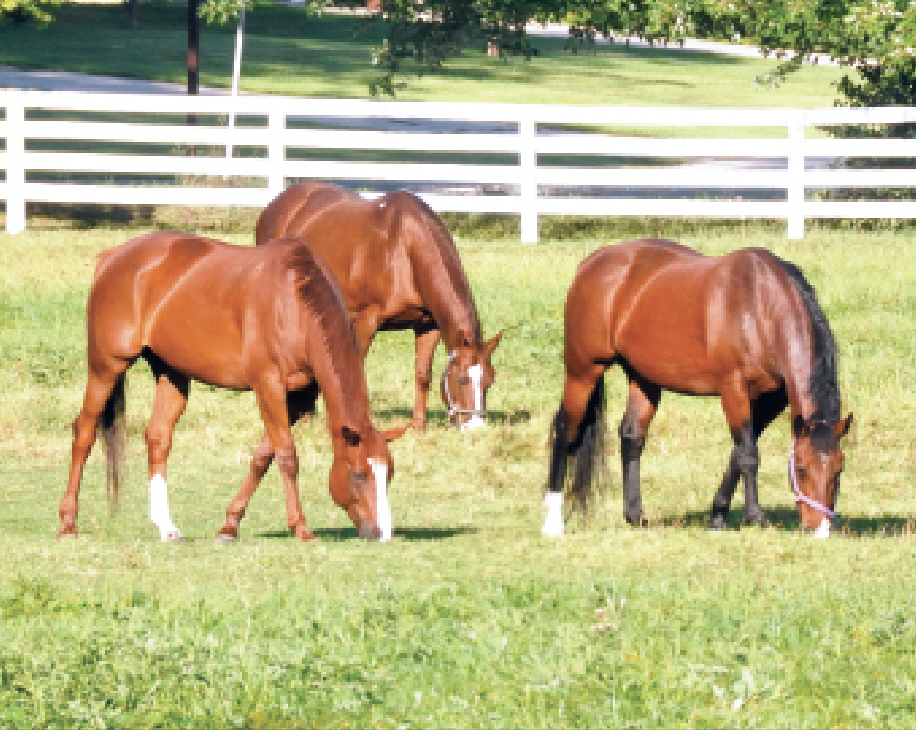
In two subsequent pilot studies, the researchers determined that the recording devices measured grazing behavior with accuracy comparable to that of direct observation of horses or viewing them via video footage. Specifically, they noted, the technology could be used to “accurately record grass intake time and chews in grazing horses during moderate weather conditions.”
Beyond strictly scientific applications, this technology could advance understanding horses and their natural feeding patterns. Wearable sound recorders “could offer a low-cost and non-invasive method of measuring foraging behavior in pasture and stabled settings,” the researchers say. “Their use could also be expanded to quantify bite and chew behavior patterns according to feedstuffs and feed presentation across different breeds. Furthermore, sound recorders could be used to assess welfare conditions through determining whether foraging times meet horses’ ethological requirements or evaluating the presence of oral stereotypies or dental abnormalities.”
Reference: Taylor et al. “The use of sound recorders to remotely measure grass intake behaviour in horses,” Animals, August 2025
Click here to sign up for the FREE weekly EQUUS newsletter!