

LEXINGTON, Ky. (Aug. 17, 2026)—According to a news release by Jordan Strickler, a new University of Kentucky Martin-Gatton College of Agriculture, Food and Environment (CAFE) program is betting that a beloved Kentucky animal can pull more students into science-based careers.
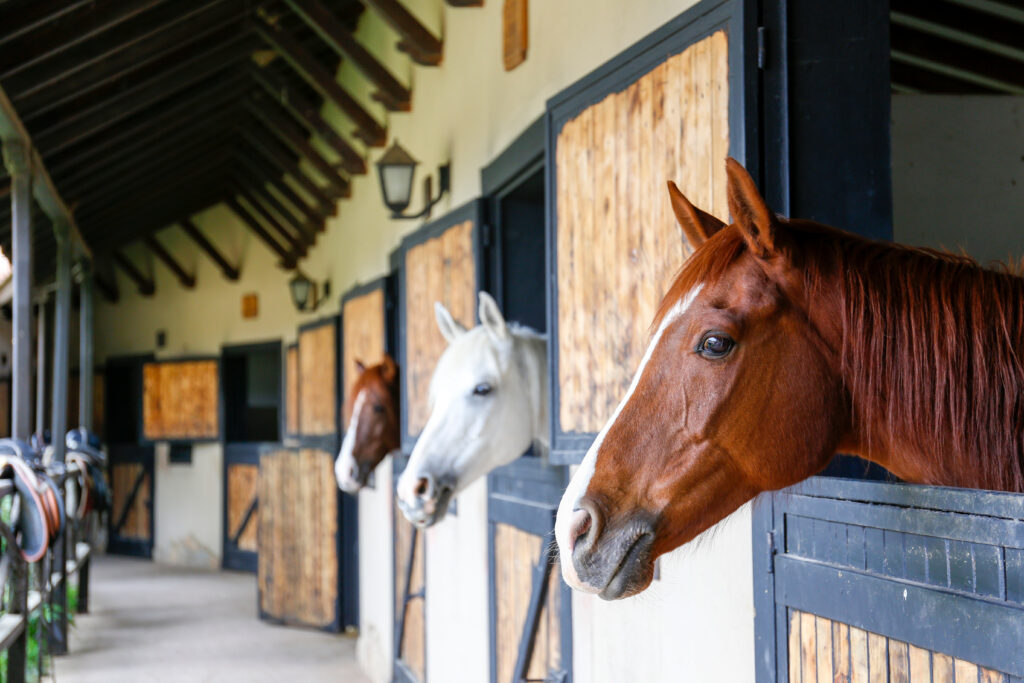
Backed by a five-year, $750,000 grant from the U.S. Department of Agriculture’s National Institute of Food and Agriculture, Stable to STEM (S2S) will bring college undergraduates to Lexington each summer. The attraction: a nine-week, in-residence research and Extension experience built entirely around the horse.
The program is led by Director of Strategy for Equine Initiatives Meghan Wulster-Radcliffe, Ph.D., and Department of Animal and Food Science professor Kristine Urschel, Ph.D. It leans on a signature Kentucky industry to introduce students to research, mentorship and Extension work in the animal sciences.
A gateway species
“Students come through, learn techniques and work as a group on horse-related research,” Wulster-Radcliffe said. “Additionally, we have multiple industry partners throughout the Lexington area who help the students translate the scientific knowledge they acquire into practical use.”
The approach utilizes a species that already attracts students as a gateway into the world of agricultural and food-system sciences. Participants will rotate through equine research projects across Martin-Gatton CAFE, learning laboratory and field techniques.
S2S receives funding through the USDA’s Research and Extension Experiences for Undergraduates program. This is part of the agency’s larger education and workforce development effort.
Growing the science-based career pipeline
“The goal is to get students interested and grow the science-based career pipeline,” Wulster-Radcliffe said. “Essentially, we are using horses to get students interested in science and research.”
The grant will support eight students per year for five cohorts—40 students total—with recruitment beginning each September. The first residential session is slated for the summer of 2027. At least half of each cohort will come from outside UK, drawn nationally through institutional partners. These will include Lincoln Memorial University and Kentucky State University.
The program is open to students across majors. However, Wulster-Radcliffe and Urschel expect many participants already tied to the equine world to leave thinking about it differently.
“I believe most of the students are probably coming in with an interest in horses and the equine industry,” Urschel said. “Hopefully, this puts them more on the science side or emphasizes the use of science in their business-based decisions.”
Building on Saddle to STEM
S2S builds on a related UK effort, Saddle to STEM. This is an earlier program that applies the same animals-as-an-entry-point philosophy to middle and high school students. That program has already produced two scientific publications, with a third currently in review and expected to appear later this summer. By the end of June, more than 100 students will have moved through the Saddle to STEM program.
“Together, the two programs reflect a single wager being made in the heart of horse country,” Wulster-Radcliffe said. “These animals are already woven into Kentucky’s identity and might also be the ones that draw its next scientists, researchers and Extension professionals.”
This material is based upon work that is supported by the National Institute of Food and Agriculture, U.S. Department of Agriculture, under award numbers 2024-67037-42791 and 2026-67037-46155. Any opinions, findings, conclusions or recommendations expressed in this publication are those of the author(s) and do not necessarily reflect the view of the U.S.Department of Agriculture.
About the University of Kentucky
As the state’s flagship, land-grant institution, the University of Kentucky exists to advance the Commonwealth. It does that by preparing the next generation of leaders and transforming the lives of Kentuckians through education, research and creative work, service and health care. The university prides itself on being a catalyst for breakthroughs and a force for healing, a place where ingenuity unfolds. It’s all made possible by the visionaries, disruptors and pioneers who make up 200 academic programs, a $1.02 billion research and development enterprise and a world-class medical center, all on one campus.