

A recent French study seems to verify what many old-time horsemen have long believed: that horses can smell fear in humans, and that this can, in turn, make them fearful.
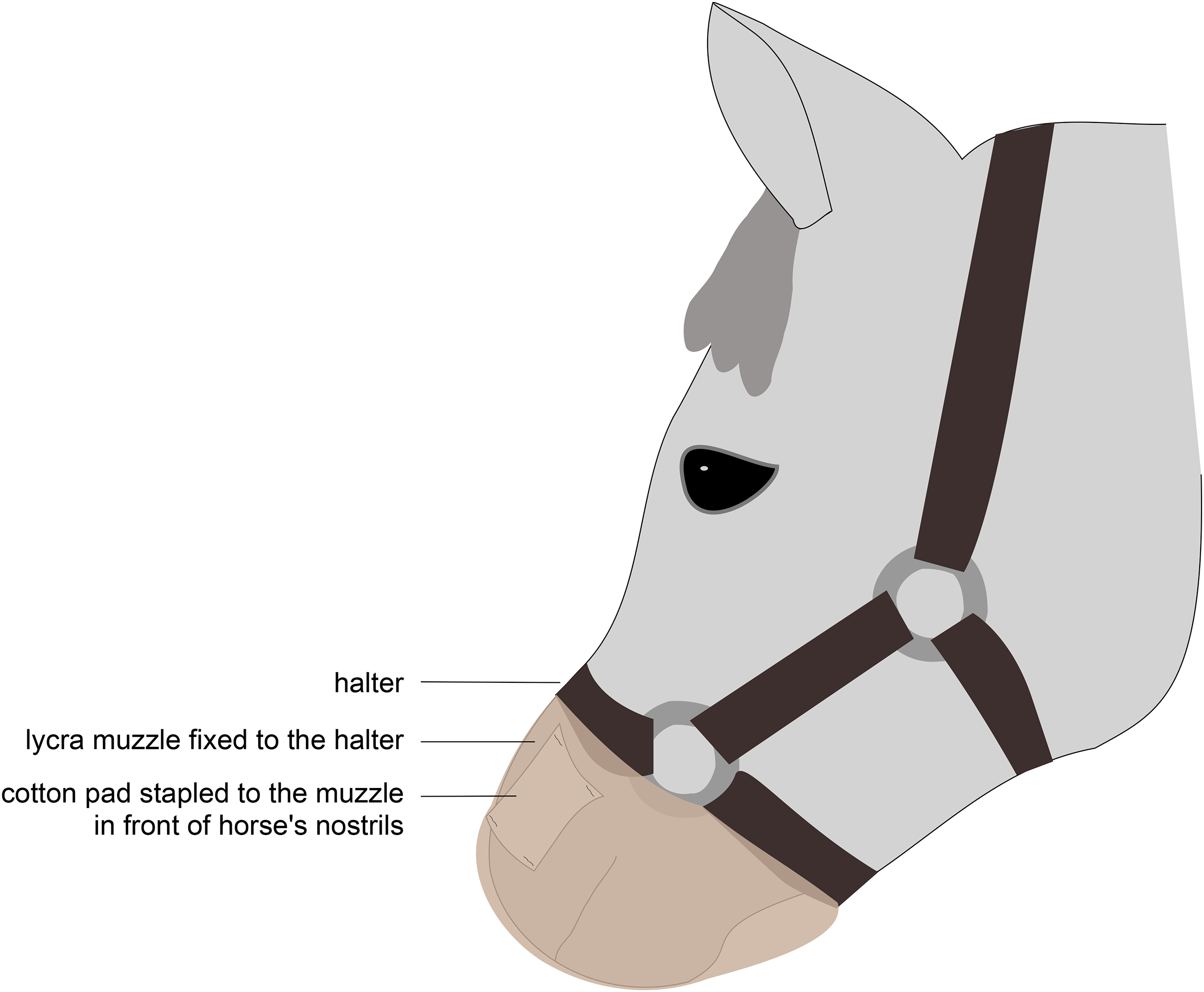
https://doi.org/10.1371/journal.pone.0337948.g001
Researchers from France’s National Research Institute for Agriculture, Food and Environment (INRAE) and Horse Riding Institute (IFCE) demonstrated that fear-related human chemical cues influence horse behavior through emotional contagion. These findings, published January 14 in PLOS One, highlight the importance of olfactory signals in interactions between different species. Chemical communication of emotions does indeed exist, and it crosses species barriers.
At the heart of the study were 43 regularly handled Welsh mares that, when exposed to chemical cues from humans experiencing fear, exhibited significantly higher fear responses. They also interacted less with humans than when exposed to human odors associated with joy or to neutral cues.
“There is a chemical communication of emotions, and it crosses the species barrier,” confirmed Léa Lansade, INRAE research director and co-author of the study. “This new study … shows that, when exposed to the odors of humans experiencing fear, horses in turn exhibit fear responses through a mechanism of emotional contagion.”
Olfactory signals
Olfaction, or the sense of smell, is the sense most widely used by animals to communicate. The signals conveyed through scent can include important emotional information, everything from reproduction to resource finding to imminent danger.
Although this sense has been studied mainly in the context of reproduction within a species, its broader role remains largely unknown. Recent data suggest that olfactory signals may also be involved in interactions between individuals of different species, facilitating emotional communication. Ethologists from INRAE and IFCE are exploring this hypothesis through studies of human–horse interactions.
Exposing horses to human emotional odors
The research team collected fear- and joy-related odors from 30 adult volunteers. To do so, they placed cotton pads under the armpits of participants while they watched 20-minute video clips. In order to evoke fear, an excerpt from the horror film “Sinister” was shown. To elicit joy, the participants saw a montage of various excerpts from comedy sketches, musicals and comedies.
Using muzzles fixed to halters, the researchers then presented the 43 horses with pads impregnated with the human odor of fear, the human odor of joy, or no odor at all—used as a control. They measured behavior, heart rate and cortisol (stress hormone) levels in saliva during various tests:
- Two interaction tests: one in which the experimenter groomed the horse, and an approach test in which the experimenter stood in a defined area to measure whether the horse would approach
- Two “fear” tests: a suddenness test in which an umbrella was suddenly opened next to the horse, and a test in which an unknown object was placed near the horse
Smell of fear triggers fearful behavior
Horses exposed to the smell of human fear exhibited higher levels of fearful behavior and were less inclined to interact with humans. In the suddenness test, they showed stronger reactions to the sudden opening of an umbrella and reported more gazes at the unfamiliar object. Their heart rates were also higher. In the interaction tests, they had less physical contact with humans, both in the approach test and during grooming.
More than a simple reaction to a smell, these findings suggest that horses adopt the emotional state of fear. The results point to emotional contagion of fear through chemical cues between two different species, humans and horses. While this phenomenon has already been demonstrated in dogs, this is the first time such emotional communication has been documented in another animal species.
These findings highlight the importance of olfactory signals in interactions between different species and provide new insights into the impact of domestication on emotional communication between humans and animals.
Understanding to improve welfare
This work is of interest to a wide range of stakeholders, with the shared aim of improving the welfare of domestic animals.
Specifically, the scientists/authors wrote, “In equine management and training contexts, human emotional states could directly influence horses’ behavioral and physiological responses, particularly when handlers experience fear or stress. This suggests that caretakers’ and riders’ emotional regulation could be an important component of equine welfare, safety and training effectiveness.
“For instance, in equestrian sports, therapeutic riding programs or clinical handling, human fear-related odors might inadvertently increase horses’ reactivity, potentially raising the risk of accidents or impairing human–horse interactions.”
Reference
Jardat P, Destrez A, Damon F, Tanguy-Guillo N, Lainé A-L, Parias C, et al. (2026) Human emotional odours influence horses’ behaviour and physiology. PLoS One 21(1): e0337948. https://doi.org/10.1371/journal.pone.0337948
Landing page image: Getty Images/MV Photo