

According to an April 22 post on the Livestock Conservancy‘s social media, the Mountain Pleasure Horse is now at “Critical” status on its Conservation Priority List (CPL), having been separated from the Rocky Mountain Horse into its own distinct listing.
One of 17 North American equine breeds on that list, the Mountain Pleasure Horse is a versatile, reliable family horse with a smooth, easy-to-ride gait.
“This moment is a call to action—and an opportunity to strengthen support for this distinct heritage breed,” the Conservancy’s post reads. “With focused effort, breeds like the Mountain Pleasure Horse can recover and grow.”
About the breed
The Mountain Pleasure Horse, sometimes called the “Old Kentucky Saddler,” is a docile animal with deep roots in Appalachia. “In these steep hills and valleys, the horses had to be easy keepers and sure-footed over miles of rough terrain,” the Conservancy website says. “The Mountain Pleasure reflects the primitive Appalachian gaited horse type and are thought to have contributed to modern breeds developed in the region, including the American Saddlebred and the Tennessee Walking Horse.”
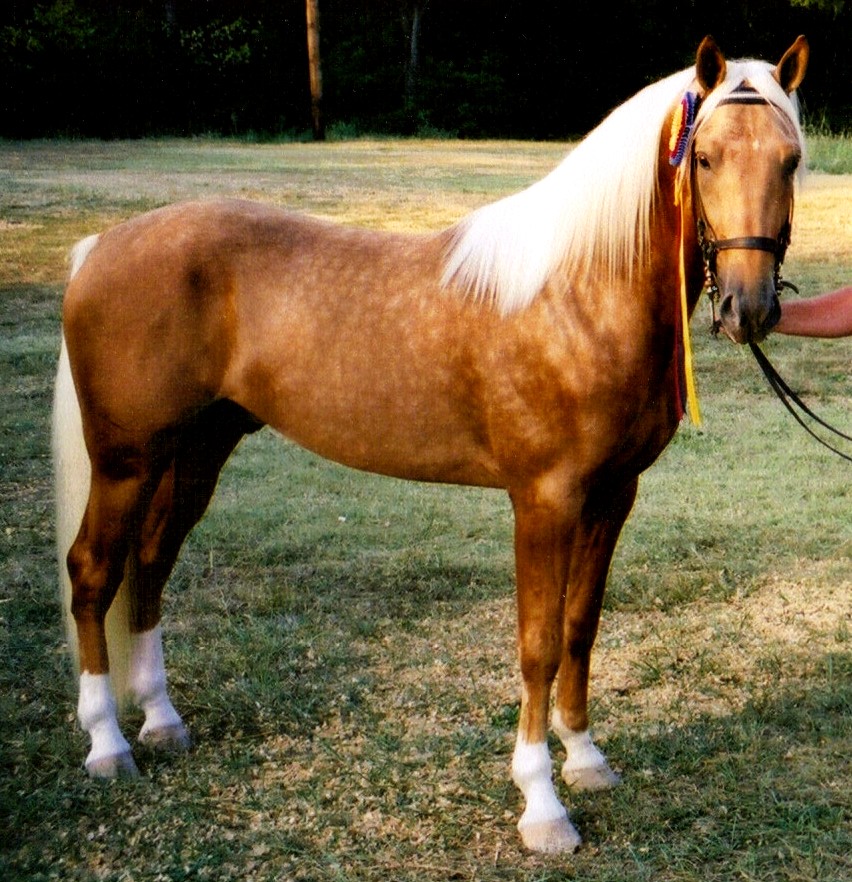
Mountain Pleasure Horses stand 14.2-16 hands in height and can weight anywhere from 900 to 1100 pounds. They can be almost any solid color, with white markings in many bloodlines. However, their most characteristic coloration is a “strikingly golden palomino,” the website notes.
“The Mountain Pleasure Horse Association was formed in 1989 to conserve the valuable heritage, type and versatility of these horses, with an emphasis on their kind disposition and comfortable natural gait,” the Livestock Conservancy’s description continues.
“This was the first mountain horse breed association to require blood-typing (and now DNA testing) as proof of parentage for registration. While the Mountain Pleasure is closely related to the Rocky Mountain Horse, each has a long and continuing history under separate associations and registries.”
According to the Conservancy’s 2026 update, the organization had previously linked the Rocky Mountain and Mountain Pleasure Horses on the CPL due to their close genetic relationship. The decision to unlink them was made “out of respect for their long and continuing history under separate associations and registries. Mountain Pleasure Horses move to Critical, while Rocky Mountain Horses remain in Threatened.”
Conservation status designations
On the CPL, Critical (C) breeds like the Mountain Pleasure Horse are those with fewer than 200 annual registrations in the United States and an estimated global population of less than 500 (or less than 2,000, depending on the criteria used). The chief concern with these rarest of rare breeds is generally the number of breeding animals.
Threatened (T) breeds are those with fewer than 1,000 annual registrations in the U.S. and an estimated global population of less than 5,000. Watch (W) breeds are breeds that present genetic or numerical concerns or
have a limited geographic distribution, with fewer than 2,500 annual registrations in the United States and an estimated global population of less than 10,000. Recovering (R) breeds are those that were once listed in another category, but that have exceeded Watch category numbers and still need monitoring.
About the Livestock Conservancy
The Livestock Conservancy is a non-profit membership organization based in North Carolina. Its mission is to protect endangered livestock and poultry breeds from extinction. Included in that mission are more than 150 heritage breeds of donkeys, cattle, goats, horses, sheep, pigs, rabbits, chickens, ducks, geese and turkeys.
Since its inception four decades ago, no breed on the Livestock Conservancy’s Conservation Priority List has gone extinct. Over the last 12 years, 14 endangered breeds have graduated from the CPL. Learn more at www.livestockconservancy.org.
Landing page image from Livestock Conservancy website