

The Cornell Equine Hospital and Cornell Cooperative Extension have announced the next installment of their Equine Seminar Series. They will host “Beyond the Cresty Neck: What Horse Owners Should Know About EMS” via Zoom at 6 p.m. on November 17.
Every month, equine experts present these virtual talks on important equine health and management topics. The seminars are free to attend and open to the public. You must register via this link in order to attend.
Beyond the Cresty Neck: What Horse Owners Should Know About EMS
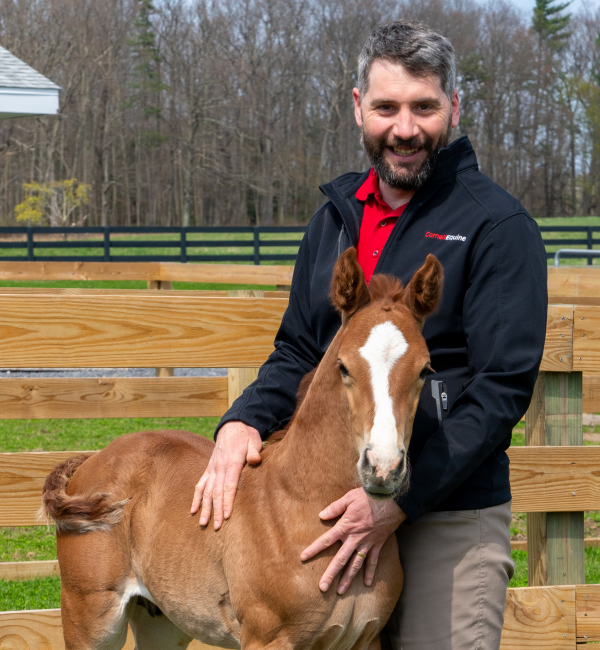
The presenter for this seminar is Callum Donnelly, BVSc, PhD, DACT, DACVIM (LAIM)(Cornell University College of Veterinary Medicine Department of Clinical Sciences).
Why do some horses seem to gain weight just by looking at grass? And why do others struggle with serious metabolic problems despite careful management? This seminar will explore the science behind equine metabolic syndrome (EMS). It will explain how insulin dysregulation contributes to obesity, laminitis and other health concerns.
Donnelly will discuss how to recognize horses at risk and understand diagnostic testing. He will also address practical strategies for nutrition, exercise and long-term management. Drawing on current research, the seminar will help horse owners separate common misconceptions from scientific evidence and make informed decisions to keep their horses healthy.
About Callum Donnelly
Callum Donnelly is an assistant professor of theriogenology at Cornell University’s College of Veterinary Medicine. He leads a research program exploring the complex relationships between metabolism, reproduction and early-life development in horses. His research focuses on understanding how insulin regulation, reproductive hormones and bile acid signaling influence metabolic health, fertility and pregnancy outcomes.
By studying both metabolic disease, including equine metabolic syndrome and the unique physiological adaptations of healthy pregnancy, his laboratory seeks to uncover mechanisms that protect against metabolic dysfunction. A key goal is to identify new approaches to improving equine health and reproductive performance.
Landing page image: Getty Images