

In a year that’s seen wild temperature swings and extreme weather worldwide, horse owners might be wondering what surprises the next few months could bring. “Winter’s worst” may mean just about anything these days, from a freak warm spell to record snow and ice.
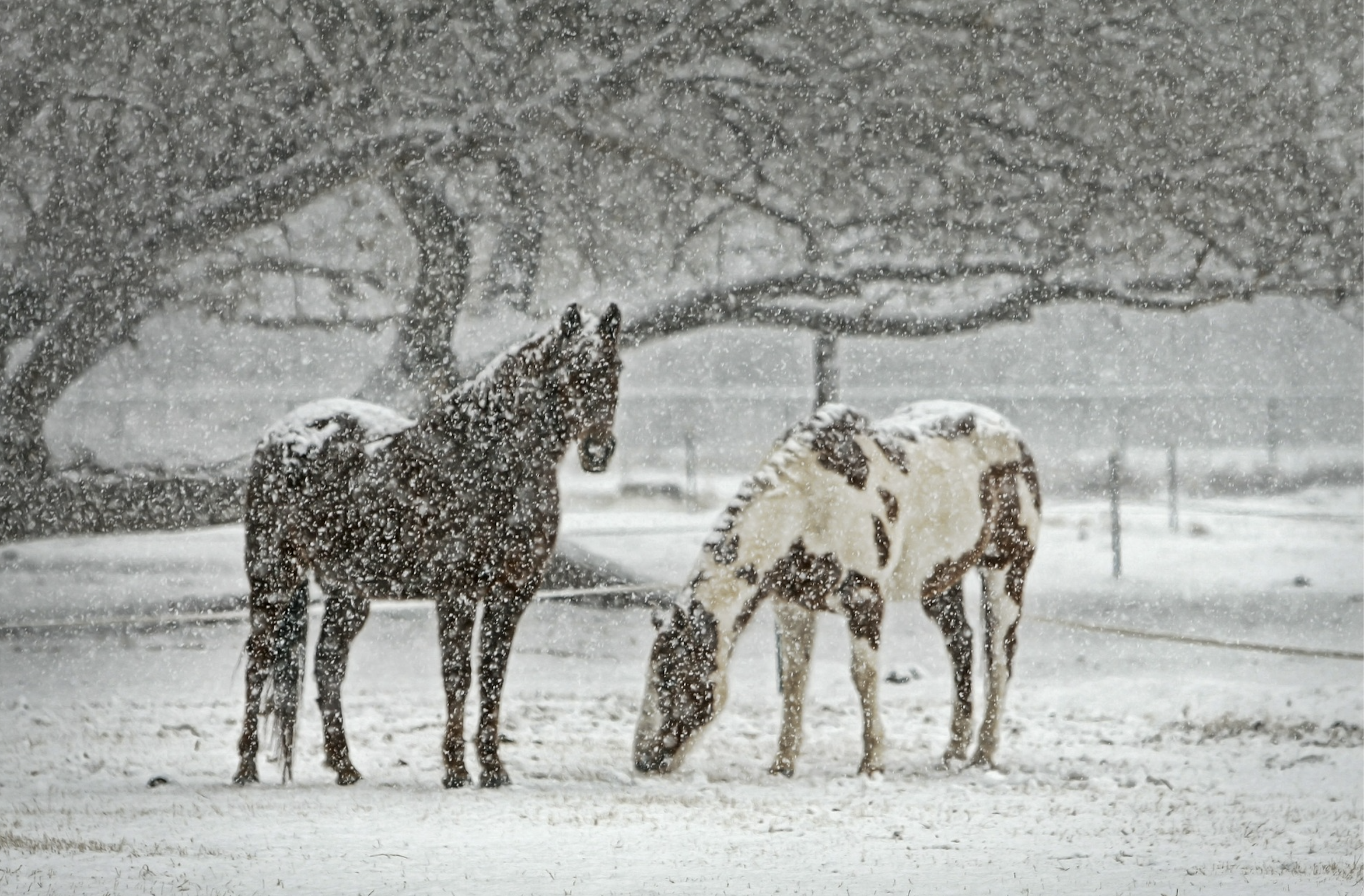
All this might seem a distant worry as you sit down to your morning coffee, the autumn chill barely kissing the air. But “snow or no,” Mother Nature will soon be calling the shots at your barn. Now more than ever, it’s good to have a game plan for not only the usual seasonal challenges that lie ahead, but for any curve balls that may come your way. Are you ready for whatever winter may bring? Read on for help reviewing your game plan.
The Basics
Stocking up on hay and feed and checking water sources are obvious top priorities as you gear up for winter. But there’s a lot more to this than just buying in bulk and paying a utility bill—hay, feed and water are not the only supplies you’ll need with potentially rough weather on the horizon. Here’s a more detailed look at basic supplies to have on hand:
Forage
If you haven’t already, get on the phone and lay in as much quality hay as you can safely store this winter. Ideally, you’ll have enough to last the entire winter, plus a little extra. Horses depend on hay to stay warm—it is “slow-burning,” producing metabolic heat longer than concentrated feeds. In addition, hay is critical to equine digestive well-being—and having continuous access to it is a proven boredom beater. If your horse is an easy keeper, opt for long-stemmed, high-fiber grass hay that’s free of dust or weeds. This will provide the necessary bulk to his diet without excess calories.
Remember that hay supplies will dwindle as the demand goes up. This is especially true if recent crops have been affected by weather variations, such as drought or excessively wet conditions. It doesn’t hurt to keep hay cubes or other forage substitutes on hand to help stretch your supply. If you do, be sure to contact your veterinarian for guidance as these constitute a dietary change and can contribute to colic or other troubles if added to a horse’s ration too quickly.
Tip: Safe hay storage is important during the winter to preserve nutrients and prevent mold formation and spontaneous combustion. Stack hay loosely in a well-ventilated, covered structure away from where you house your horses, since hay dust can cause respiratory issues.
Feed
Your horse’s nutritional requirements change when the mercury plummets. Between the decreasing nutritional value of pasture grass and the need to keep warm, this is a challenge that must be met on a case-by-case basis, because each horse is different.
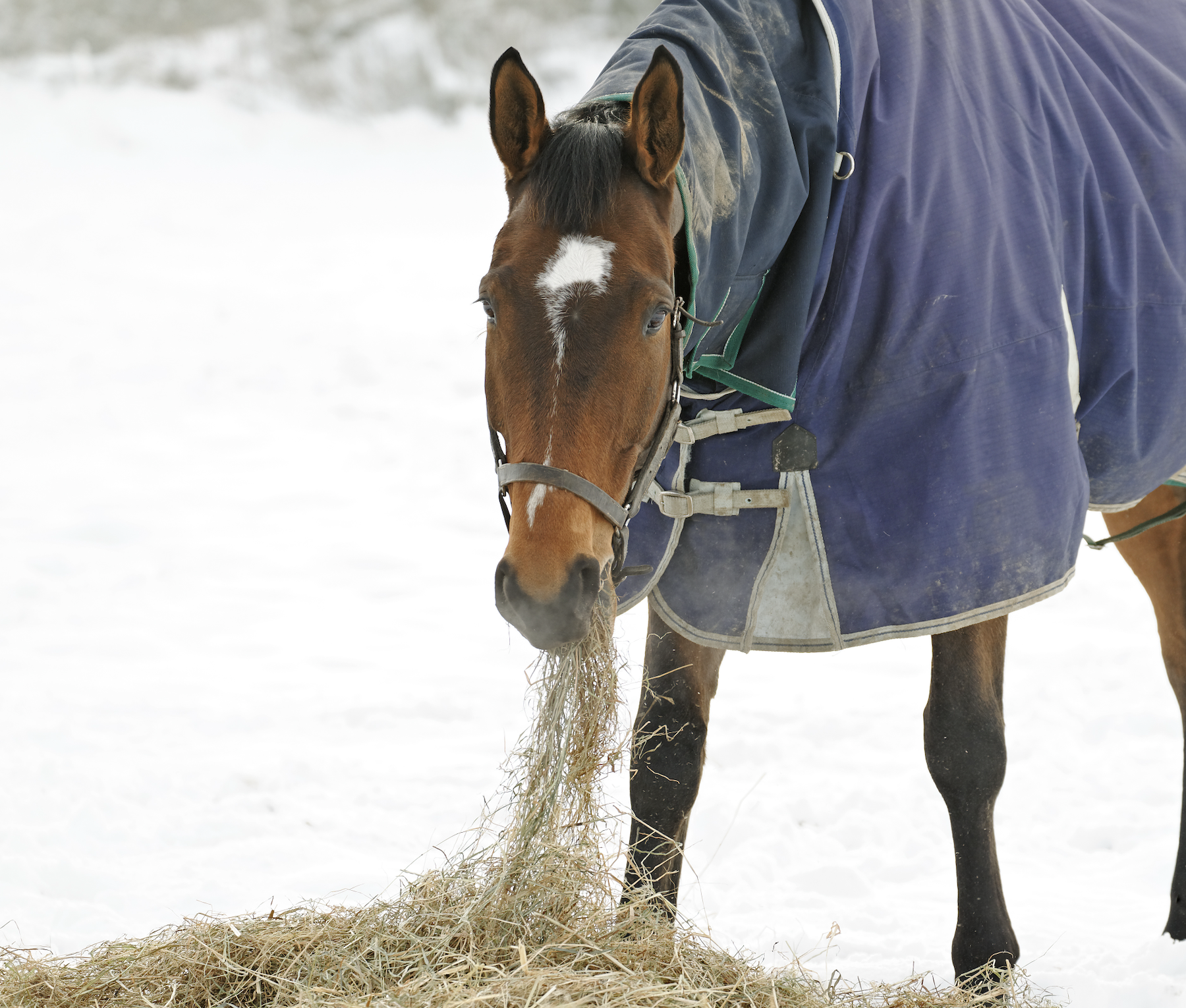
For example, while hay alone might be more than enough to maintain weight on an easy-keeper —especially during an unseasonably warm winter—his stablemate might need extra calories or fat. This can be accomplished with the addition of a low-starch, high-fat concentrate (grain or a “complete” feed) in appropriate amounts, a supplement formulated for weight gain or a cup or two of corn oil poured over his daily ration.
Also keep an eye on the weather, which might dictate a change in what—and how much—you feed. For example, if a horse in active work suddenly becomes stall-bound due to severe flooding, it might be wise to cut back on his concentrates and increase the proportion of hay in his diet to keep his digestive track moving along. Remember, though, that any significant change in a horse’s diet can trigger problems such as colic, excess energy or even laminitis, so you’ll want to make any adjustments carefully. Consult your veterinarian or equine nutritionist for advice before altering your feeding regimen.
Water
Chipping ice out of water tanks seems a thankless ritual and hauling a kettle of boiling water around to thaw iced-up buckets is equally tiresome. However, it’s essential that your horse has access to fresh, unfrozen water at all times, all winter long. Keep in mind that horses cannot stay hydrated by eating snow. This means it’s important to check water buckets and tanks twice daily and keep them clean in all conditions.
Horses need at least eight to 12 gallons of water each day, but they often drink less in colder weather. Dehydration puts horses at risk for developing potentially deadly impaction colic. Obviously, it’s far better to prevent colic than to wonder whether your veterinarian can reach you in the middle of a snowstorm.
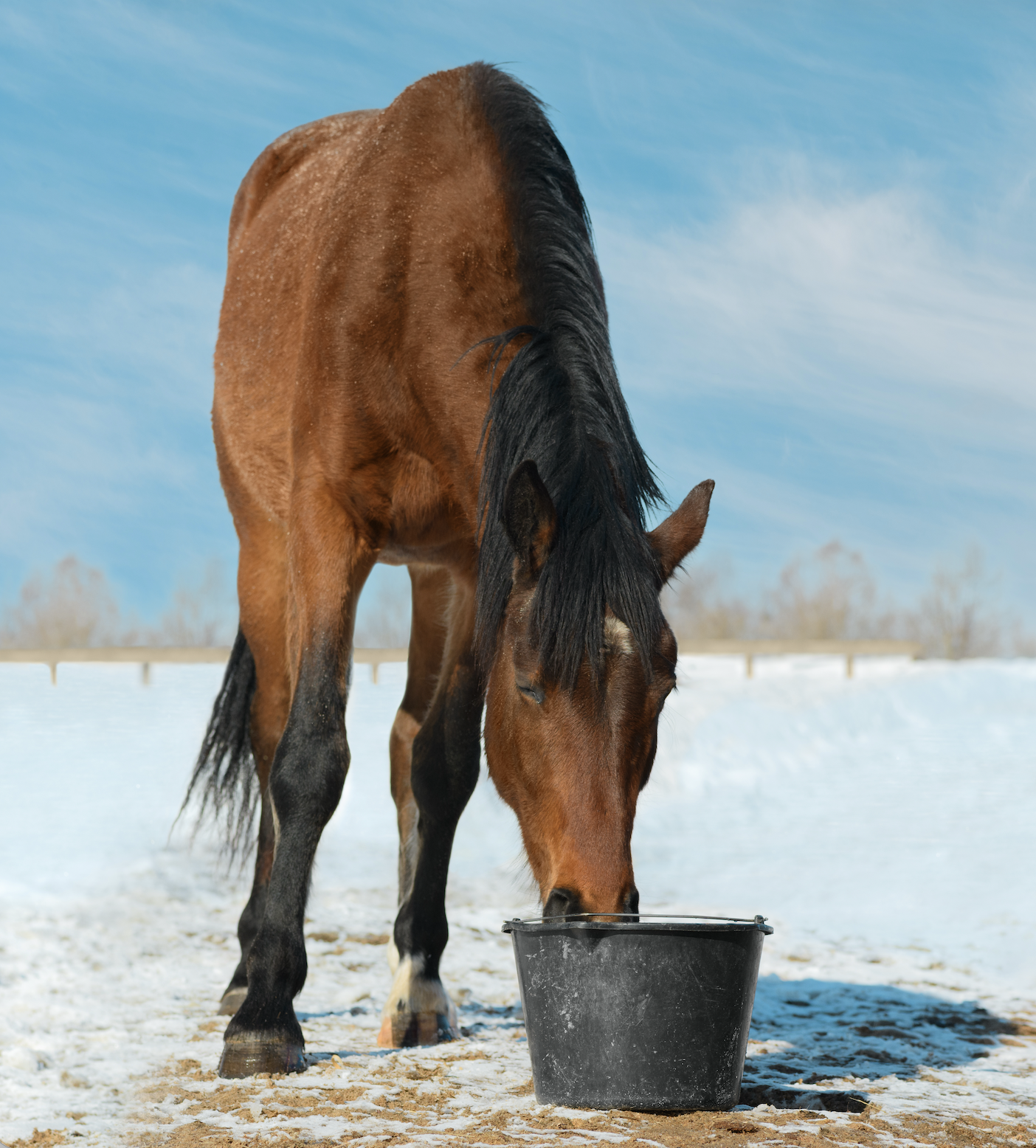
Stroll around your facility now and assess the condition and functionality your water tanks, automatic waterers and water-heating units. Repair or replace any damaged or “iffy” elements, as even a mild shock when drinking can be enough to put your horse off his water (use a voltmeter to check).
Insulated water buckets are an electricity-free option that can keep water cool in soaring temperatures and delay its freezing in colder weather. These buckets are best installed in sheltered areas with high traffic given that water movement also helps prevent ice formation.
Tip: If your horse isn’t drinking as much water as you’d like during winter, try adding powdered electrolytes to a second bucket of water to stimulate thirst. Water with added electrolytes will also take longer to freeze.
General supplies
Discovering that you’re out of a maintenance drug for a horse with a chronic condition, or anti-inflammatories to handle a minor flare-up of joint pain in an old horse is never fun. It’s even less so when the roads won’t be clear for days. Now is the time to take an inventory of your barn and farm supplies.
Medication and first aid supplies
Restock common medications and first-aid supplies. If your horse is on a prescription-only medication and you live in an area where heavy snowfall or otherwise unpassable roads are the norm, ask your veteri-narian about ordering extra now, just in case. While you’re at it, check your supply of any supplements you feed to ensure you have enough to get through the season.
Flashlights and batteries
Stock up on flashlights and batteries for those early morning and late evening treks out to the fields. Extra light bulbs for the barn and emergency light sources for power outages are also a good idea. Battery-powered lanterns with energy-saving modes, solar lamps and crank-powered lights can be literal lifesavers.
Fuel
Ensure that you have enough oil and gasoline to keep your tractors, vans and generators powered up and ready to go when you need them most. Store these in a building separate from the horses and hay. While you’re at it, make sure your horse trailer and all essential farm machinery and attachments are in good working order—especially snowblowers and plow blades. A trip to the mechanic now for an oil change, radiator flush and lube job can save a lot of heartache and expense later.
Snow and ice management
Dig out the shovels, pet-friendly ice melt and/or sand to apply to pathways in the event of snow or ice. While you can spread dirty bedding to increase traction, it doesn’t do much to melt the slippery stuff. Ice scrapers and strap-on ice cleats for your boots are also useful if stashed in appropriate spots.
Health Check
Before snow and ice make travel difficult, ask your veterinarian to perform a wellness check on your horse. The idea is to get a reading of his current health and to nip developing issues in the bud.
There are a few health details to pay particular attention to this time of year:
Teeth:
Schedule a dental exam to ensure your horse can chew his food comfortably and com-pletely during the months when he’ll need good nutrition most.
Body condition:
Strive to put some fat on the ribs of leaner horses before the colder weather makes it harder for them to maintain weight. Use the Body Condition (BCS) Scoring System for a less subjective measure— a score of at least 5 out of 9 is ideal— and take pictures that you can refer- ence in a few weeks’ time if you suspect there’s been a change.
Hooves and shoeing:
If you’ll be riding outdoors, shoes outfitted with traditional calks, studs or borium can improve your horse’s grip on slick surfaces. But the extreme traction afforded by these add-ons can also stress joints and ligaments, leading to injuries. Ask your farrier about other types of shoes that offer some traction, such as “fullered” and “swedged” shoes. You might also inquire about snowball pads or rim pads to prevent ice balls. And although barefoot might be best for some horses turned out in the winter, other shoeless horses might benefit from boots with treads.
Tip: Exercise during the winter will go a long way toward keeping your horse warm, helping him maintain a healthy weight and contributing to his overall well-being. If you can’t ride your horse, turn him out as much as possible as long as the footing is safe. Even hand-walking or longeing can help.
Skin:
While it’s tempting to skip daily grooming in frigid weather, wet, muddy conditions combined with the use of blankets set up ideal conditions for rain rot and other skin woes. To prepare for this, consider buying a good antimicrobial scrub or spray and go through your grooming kit, disinfecting brushes and replacing any old ones. Also, mark your calendar (or set a smartphone reminder) to vacuum the dead hair and dirt from inside his blanket every week or two.
Deworming and vaccinations:
Involve your veterinarian in these programs early in the season, giving special attention to respiratory illnesses, as horses are more prone to these during the winter when they are kept in closer quarters with each other. For example, if it’s been more than three months since your horse’s last flu/rhino vaccine, you might consider a booster.
Winterizing Your Barn and Farm
An organized, tidy barn presents a pretty picture in the winter and makes horsekeeping easier. Around the farm, an emphasis on safety will help foster a trouble-free season, no matter how unpredictable the weather. A defensive approach to farm main-tenance and management can really pay off in terms of time and money:
Increase ventilation:
Though a warm, cozy barn sounds inviting, resist the urge to close everything up tight in cold weather. Good airflow is crucial to maintaining your horse’s respiratory health, regardless of temperature. That means opening windows and doors to help dispel airborne dust, reduce condensation and rid the air of ammonia—all of which are detrimental to the lungs. For the same reason have a plan for cleaning stalls daily, even when weather conditions are difficult.
Minimize fire risks:
The increased risk of barn fires during the winter is a good reason to ban smoking and install and maintain smoke detectors. Now is a good time to check their batteries. Frequent sweeping to clear cobwebs can further reduce the risk of fire. Have an electrician check your barn’s circuits for possible overloads or wires chewed by mice. In addition, make sure you have fire extinguishers in easy-to-reach places and that their locations are clearly marked. Check that they are fully charged and operational, with no corrosion or leaks. Your local fire department can help with all of this.
Strive for safe footing:
Be prepared to keep walkways between your barn and turnout areas safe by shoveling snow and applying de-icer frequently. If a major snowstorm is predicted, cover tractors, plows and other four-wheel drive vehicles beforehand for easy access. Once the storm begins, try to shovel or plow every couple of hours rather than waiting until the accumulation becomes too heavy to remove at once. Churned-up mud that freezes near gates and water tanks makes for especially precarious footing. Have a plan to transfer horses to other areas until these spots thaw. You can also try to stabilize the ground and minimize ruts by spreading gravel or installing woven geotextiles in the area.
Maintain and repair fences:
Don’t let winter’s challenges prevent you from continuing this duty, even if you have to commandeer an all-terrain vehicle to do it. Inclement weather has a nasty way of bringing trees down on fences and sheds, as well as flooding low-lying areas. Field-kept horses could be injured or escape through a break in the fence. The bigger your property, the more important it is to be ready to patrol it regularly for potential problems in the winter.
On the topic of repairs, take time this autumn to patch holes in roofs, clean out gutters and repair leaky drain spouts. Also check that all barn and building doors are in good shape, opening and closing easily and securely.
Tip: Worried about “static snap” when shifting blankets? Static-prevention products can help prevent this. The trick is to spray these on the blanket lining before blanketing your horse to avoid setting off a static charge.
Predicting winter weather these days is tricky. It could be the mildest season in decades, or you could get unprecedented snow and cold. The best way to handle the unknown is to imagine each scenario and be prepared to cope with whatever comes your way. Now finish your coffee and get to work—the game is afoot!