

Changes in gut flora may signal an increased risk of colic in mares who have recently delivered a foal. Those are the findings of a study from Canada.
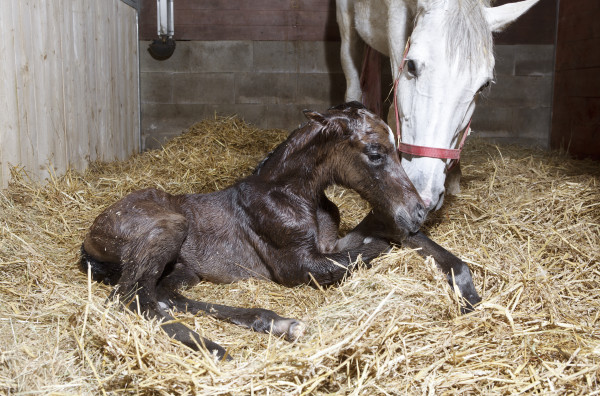
In general, postpartum mares are known to be at a greater risk of colic, particularly large colon volvulus (“twisted gut”). But earlier studies have shown that advanced age, abrupt changes in diet and other factors can exacerbate that risk.
Investigating further, researchers at the University of Guelph in Canada, with help from researchers at Michigan State University, devised a study to identify changes in the microbiota of a mare’s digestive tract immediately after foaling.
The role of microbiota
The microbiota, explains Scott Weese, DVM, “is the community of bugs that are naturally present in a horse’s intestinal tract.” And while its function is still not fully understood, he continues. “We know that gut microbiota has complex and far-reaching effects. Beyond traditional considerations such as digestion and intestinal disease, it’s becoming clear that the microbiota plays a major role in various functions, such as interacting with the immune system, which makes it related to conditions such as allergies or inflammatory bowel disease.”
The initial study group was based on 221 mares from three Thoroughbred farms in Kentucky. Fecal samples were collected 14 days prior to each mare’s due date, then four, 14 and 28 days after foaling. The samples were analyzed using gene extraction and sequencing to identify the types of bacteria present in the mare’s gut.
Comparing mares who colicked with those who didn’t
Looking at pre- and post-foaling microbiota populations among study mares who did not colic, the researchers found little change. On the other hand, they discovered significant changes in the microbiota of the 24 mares that developed colic during the study period, even before clinical signs of gut pain appeared.
“That’s the interesting part,” says Weese. “We didn’t see a change from what we assumed would be a pretty major event (foaling). Yet we saw a change in mares that were still clinically normal, but in advance of a colic episode.”
Whether the change in microbiota is cause or effect of colic isn’t clear yet, says Weese. “But since it occurred days before the onset of signs of colic, it’s reasonable to think that we were seeing an initiating effect.” What this means is unclear, but “the microbiota could be involved in many ways,” he says. “That could include gas production—more means gas colic plus a greater chance of the colon moving out of place—gut motility, inflammation and probably various other factors.”
Understanding the differences
Weese says that the type of microbiota changes identified in the mares could be significant. “Different bugs do different things,” he says. “We have certain groups that consistently come up as important in studies of horses and other species. These are mainly the Clostridia order and include a range of bacteria of the Lachnospiraceae and Ruminococcaceae families, groups that were unrepresented in the mares that went on to colic.”
While more research is needed, Weese says monitoring gut flora in postpartum mares would be “an ultimate goal. [We could] identify high-risk mares and potentially restore the microbiota to a normal state to prevent disease.”
Reference: “Changes in the faecal microbiota of mares precede the development of postpartum colic,” Equine Veterinary Journal, October 2014
Don’t miss out! With the free weekly EQUUS newsletter, you’ll get the latest horse health information delivered right to your in basket! If you’re not already receiving the EQUUS newsletter, click here to sign up. It’s *free*!