

You’ve just heard that a horse in your barn has been diagnosed with equine herpesvirus, which can spread like wildfire. Or perhaps there’s an outbreak of strangles, and you’re anxious to keep other horses from contracting this highly contagious infection.
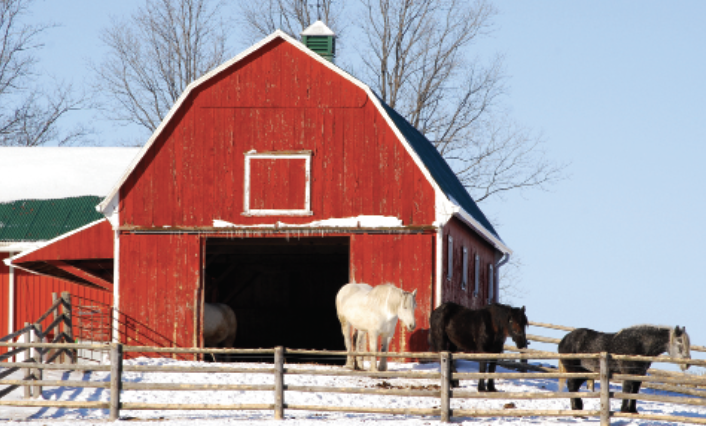
Stopping the spread of disease at a horse barn is a challenge in any season, and during winter it can be especially daunting. But, says Katie Flynn, BVMS, disinfecting stalls and shared spaces at an equine facility can help thwart disease transmission. Flynn, who serves as senior veterinarian of Equine Health and Biosecurity for the United States Equestrian Federation/US Equestrian, advises horse owners to follow these four basic rules:
Clean before disinfecting.
A critical first step in the process of sanitizing a stall or any equine space is clearing, washing and rinsing all the hard, non-porous surfaces to remove organic matter and other debris. That’s because “many of the disinfectants are inactivated in the presence of organic material,” explains Flynn.
What does this mean in a barn full of horses? After you’ve removed manure and soiled bedding from a stall, scrub down the walls with soap and water. Sweeping or vacuuming stone floors or stall mats, followed by mopping with soapy water, should eliminate any visible mud or dirt. To attack stubborn manure stains or caked-on material on walls or floors, consider using a dish detergent. Finish by rinsing all surfaces thoroughly and allow them to dry completely before proceeding to the next step.
Choose the right chemicals.
The specific chemicals in a disinfectant determine how likely it is to be effective against particular viruses, bacteria or fungi—and in which situations. That means it’s important to choose a product labeled for use against the specific pathogen you’re hoping to eradicate. “Reading the label will guide in the disinfectant selection and use,” Flynn says. “Factors such as type of pathogen, surface type, contact time and safety precautions play an important role in selecting an appropriate disinfectant.”
Give the disinfectant time to work.
“Contact time”—how long you leave a disinfectant on a surface after application and how long it stays wet—is critical for effective disinfection. “The amount of time the disinfectant needs to stay wet on the surface to effectively kill the pathogens is an important consideration,” says Flynn. “Some disinfectants evaporate quickly, especially under some weather conditions, [and] thus require re-application of the product to meet the required contact time.” Again, it pays to read the label!
Keep safety in mind.
When preparing and applying a disinfectant, follow the directions and take precautions to protect humans, animals and your environment. “Reading the labels prior to use is critical,” Flynn says. “Some disinfectants must be diluted to an appropriate concentration, and some disinfectants require personal protective equipment—eye protection, gloves and/or masks—when being prepared and applied.” Limit animal exposure as much as possible and follow local guidelines for disposing of disinfectant containers.
When it comes to implementing effective biosecurity measures, preparation is key. Don’t wait for an outbreak to become familiar with disinfection procedures or to collect the materials you’ll need to perform them. In fact, you may want to periodically disinfect your horse’s stall as a precautionary measure: When it comes to protecting horses from infectious diseases, it pays to create an environment where pathogens struggle to take hold. Think of it as preventive maintenance for your horses’ health.
Click here to sign up for the FREE weekly EQUUS newsletter!