

Brought to you by Silver Honey
Caring for wounds is an inevitable part of horse ownership. But not all wounds are the same. Different types of wounds require different management strategies.
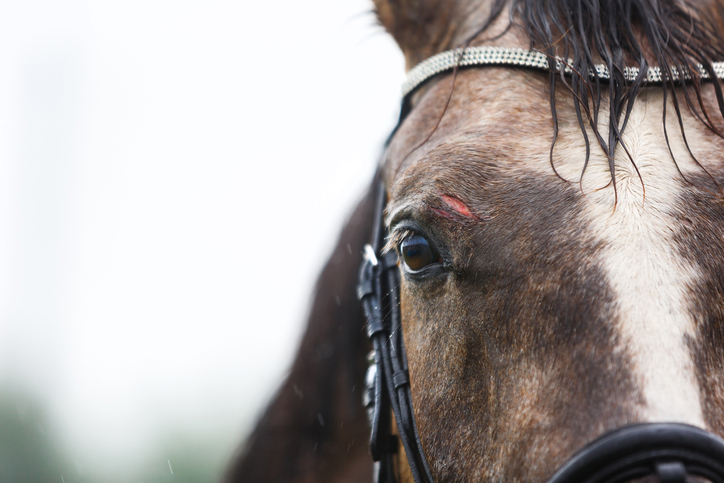
Getting equine wound care right starts with identifying the type of wound you’re dealing with, understanding the treatments for each type, and building an effective equine first-aid kit.
Keep reading to learn about the most common wound types in horses, how to recognize each one, what wounds you can manage at home and when your veterinarian needs to be involved.
Common types of equine wounds
Abrasions, lacerations, puncture wounds and avulsions account for the vast majority of wounds horse owners encounter. Each has its own recognizable appearance and appropriate response.
Abrasions
An abrasion occurs when skin is scraped or rubbed away. This type of wound affects only the superficial layers of the skin and does not penetrate all the way through. It causes hair loss and leaves a raw, reddened surface that may ooze fluid.
Abrasions rarely bleed heavily, but their exposed surfaces are vulnerable to irritation from dirt, debris and insects. Keeping these wounds clean and protected is essential for healing.
Most abrasions are manageable with topical treatments at home, provided the area isn’t over a joint and shows no signs of infection. However, choosing the right topical treatment is critical to avoid inadvertently slowing or complicating the healing process.
Lacerations
A laceration is a cut or tear through the full thickness of skin. The edges may be jagged or relatively clean. Underlying tissue is often visible, and bleeding is common.
Depth and location are the biggest factors to consider when evaluating this type of wound. Any laceration near a joint, tendon sheath or synovial structure warrants an immediate call to your veterinarian, regardless of how the horse appears to be moving.
Deep lacerations may require sutures to speed healing and reduce the risk of infection. A fresh laceration that’s a candidate for suturing needs immediate veterinary assessment, as tissue changes in an older laceration can make successful closure more difficult.
Puncture wounds
A puncture wound is deeper than it is wide. At the surface, it may look entirely unremarkable. These wounds are often missed due to their small opening and sometimes minimal bleeding.
However, that understated appearance is exactly what makes puncture wounds dangerous. Contact with a pointed object drives bacteria into a deep, enclosed space with ideal conditions for infection. Without timely intervention, a serious infection can become life-threatening.
Punctures near the sole of the hoof, near joints or on the lower leg need same-day veterinary attention. Don’t probe the wound, and if the penetrating object is still in place, don’t attempt to remove it without veterinary guidance.
Tetanus is a significant concern with any puncture wound, so ensure your horse stays up to date with their vaccinations. If you don’t know your horse’s vaccination status, your veterinarian may recommend a tetanus booster.
Avulsions
An avulsion is among the most alarming wounds to find on your horse. In this type of wound, tissue has been torn completely away, and the edges can’t be pulled back together.
Unlike a laceration, an avulsion can’t be sutured closed. These wounds always require veterinary involvement.
Avulsions heal as the body fills the wound with granulation tissue that contracts as new skin grows inward from the edges. This process takes weeks or months, and consistent wound management throughout that period shapes the outcome.
When to call the vet
When you discover a wound, assess your horse’s overall condition and the characteristics of the wound to determine severity. When in doubt, call your veterinarian and send photos if possible.
Call your veterinarian right away if:
- The wound is near or over a joint or tendon sheath
- Blood is spurting or won’t slow with direct pressure after 10 to 15 minutes
- You can see internal structures (fat, muscles, bone)
- The wound is a puncture, especially on the sole of the hoof
- A foreign object is embedded in the wound
- The wound has large skin flaps that may require sutures
- Your horse is non-weight-bearing on the affected limb or severely lame
- The wound shows signs of infection (swelling, heat, fever)
- Your horse’s tetanus vaccination isn’t current
While your vet may advise you to clean a wound before they arrive, skip ointments and sprays until after their assessment. Topical treatments can mask the depth of the injury and interfere with suturing.
While you wait, keep your horse calm, minimize movement, and control any active bleeding with gentle pressure.
Treating minor horse wounds at home
Minor abrasions that don’t involve deeper structures are often manageable at home by horse owners following proven wound care fundamentals.
Wound cleaning
Cleaning is the first step of home wound care for horses. If the wound is actively bleeding, press clean gauze against it and maintain steady pressure until the bleeding slows.
To clean minor wounds, flush with a gentle stream of clean water or saline solution. If you use antiseptic solutions, dilute them with water and rinse thoroughly to prevent irritation.
The goal is to remove dirt, debris and bacteria without damaging tissue. High-pressure spray attachments can drive foreign material further into the wound, so keep the flow gentle.
If hair around the wound is long enough to fall into the site, clip it back carefully to keep the area clean. Clipping can also help you and your veterinarian more accurately assess the wound.
Topical treatments
Topical treatments are popular options for managing minor horse wounds. Apply a topical antimicrobial that fights bacteria without damaging healthy tissue, and avoid preparations that interfere with the natural healing process.
Absorbine’s Silver Honey® line combines Manuka Honey and MicroSilver BG® to support wound healing. These two natural antimicrobials stop 99.9% of bacteria while protecting the skin’s beneficial flora.

Manuka Honey maintains a moist wound environment and encourages the natural shedding of dead tissue. MicroSilver BG® clings to the skin surface and hair follicles without being absorbed, delivering lasting broad-spectrum coverage.
The Silver Honey Rapid Wound Repair Spray Gel® works well for open wounds and sensitive horses with a no-touch application that minimizes handling. Silver Honey Rapid Wound Repair Ointment® provides greater moisture retention and long-lasting coverage.
For open wounds, consider Silver Honey Rapid Wound Repair Maximum Strength Dry Spray®. This innovative dry powder spray helps keep wounds clean, dry, and protected with 10x more MicroSilver BG® than the Spray Gel®.
When using a topical treatment, apply the product beyond the wound edges and don’t rinse it off. Reapply the topical treatment daily until the wound heals.
Protection and bandaging
Lower-leg wounds often benefit from bandaging. These areas are subject to higher capillary pressure, more exposure to dirt, increased motion and a greater risk of proud flesh, an overgrowth of granulation tissue that can prevent the wound from closing.
Topical treatments, such as the Silver Honey Rapid Wound Repair Ointment® or Spray Gel®, help protect minor wounds that don’t need bandaging.
Ongoing support during the healing process
Veterinarians can provide advanced treatments and prescribe medications when necessary. But consistent cleaning, monitoring, bandage changes and topical treatment in the days and weeks that follow acute veterinary care are largely the owner’s responsibility.
The basic principles of wound care and treatment also apply to ongoing management. Follow your veterinarian’s instructions, keep wounds clean, use a proven topical treatment and protect vulnerable tissue to support healing.
For more severe wounds, like avulsions and open lacerations, pay close attention at every dressing change. Stalled healing, proud flesh, increased discharge, odor, heat or swelling all warrant a call back to your vet.
Equine first aid kit checklist
Here’s a checklist of essential items to keep in a basic equine first aid kit for wound care:
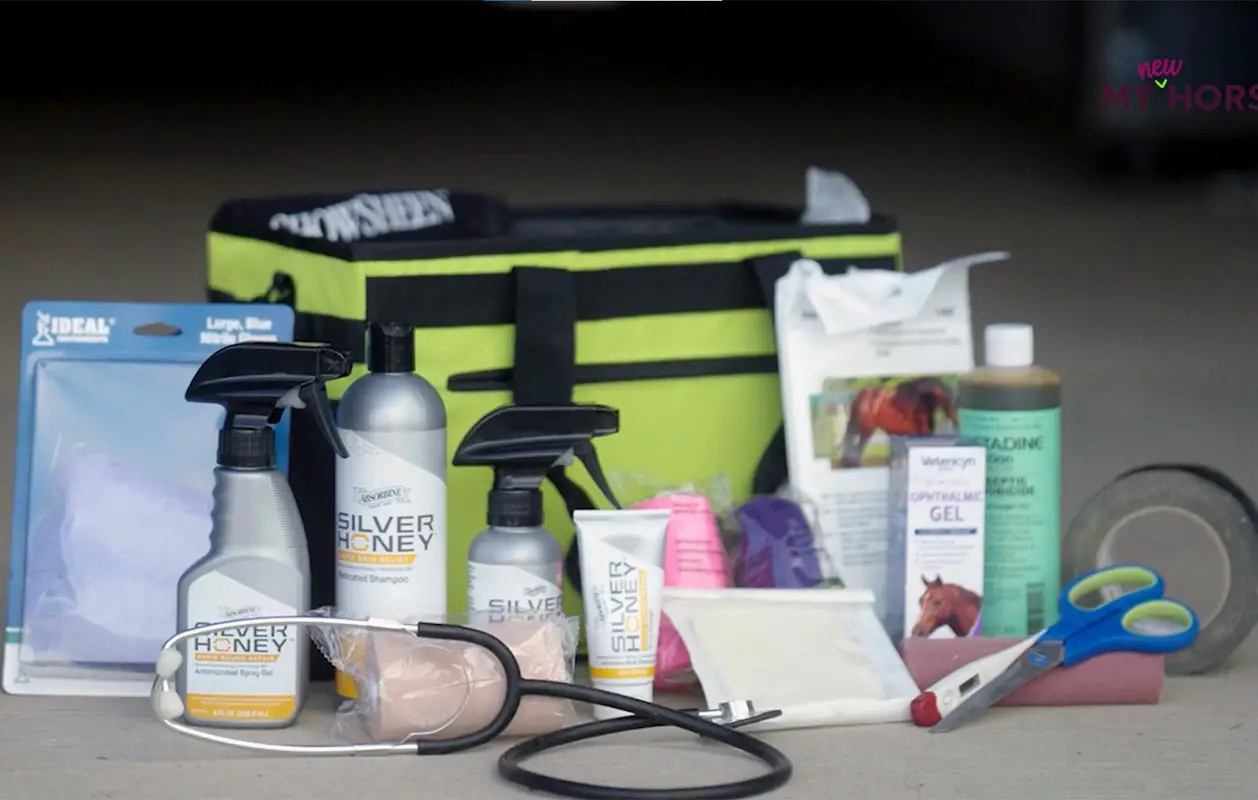
- Saline solution or access to clean water for flushing
- Sterile, non-adherent gauze pads in multiple sizes
- Cotton quilts, gauze roll and self-adhesive bandaging wrap
- Blunt-tipped scissors and clippers for clipping hair around wound sites
- Silver Honey Rapid Wound Repair Ointment®, Spray Gel® and/or Dry Spray®
- Your veterinarian’s emergency contact
- Current vaccination records, including tetanus status
Store your kit where every caretaker can find it quickly. Check and restock it quarterly.
What every horse owner should know about wound care
Horses will always be horses. It’s impossible to prevent your horse from ever having an accident or coming in from turnout with another mysterious injury. But understanding wound care essentials can help you prepare for the inevitable.
Recognize the differences between wounds, know when your vet needs to be involved and treat minor wounds with products that support healing rather than hinder it.
By learning how to identify and treat different types of wounds, you can ensure your horse gets the quality care they need to heal and recover.
Brought to you by Silver Honey
*MicroSilver BG is a registered trademark of BioGate AG