

By Mad Barn
Nutrition isn’t always straightforward, and appearance doesn’t tell us the whole story. A horse can look deceptively healthy and in good condition even when the diet has significant gaps.
So what is the best way to determine whether your horse’s diet is truly balanced? Experts recommend evaluating the entire ration.
The hidden issue
Let’s face it: Most equine feeding programs are assembled in a rather piecemeal fashion. You choose a hay, add a concentrate, introduce a hoof, skin or other targeted supplement—then reach for something else when the horse’s work or condition changes. Each decision might seem reasonable, but the resulting ration can contain gaps or excesses. You might even be inadvertently feeding several products whose nutrient contents overlap.
That’s where an equine nutritionist can help. These professionals approach feeding programs differently, first establishing what the individual horse requires. Then, they calculate what the entire diet provides and adjust only what needs correction. Mad Barn offers owners access to that same systematic process through its free nutrition services.
What ‘balanced’ really means
No single feed or supplement can balance every horse’s diet, because balance is relative to the individual animal. There are many key variables to consider. Proper assessment of a feeding program must also reflect what the horse is actually eating every day, not simply what is offered.
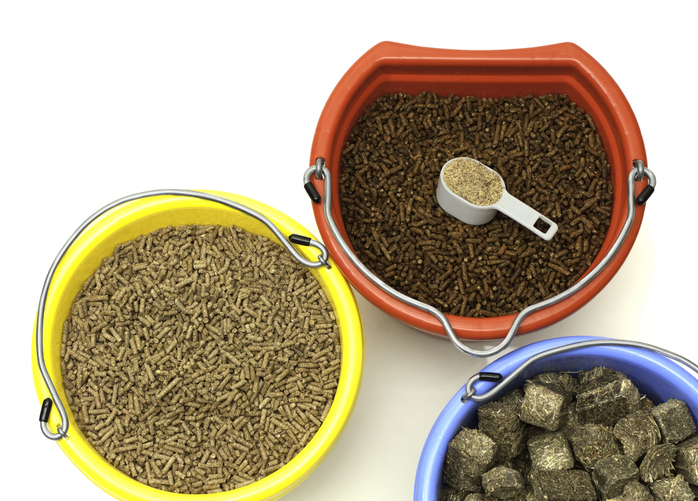
To evaluate a horse’s diet, a nutritionist begins by asking these questions:
- What does the horse weigh, and is his condition changing?
- How much work is he doing?
- Is he growing, breeding, reaching an advanced age, or dealing with a metabolic concern?
- What forage, feeds and supplements are supplied each day (and how much of them is he really eating)?
- Are there specific health, hoof, muscle or performance goals?
The aim is to provide enough energy and protein for the horse’s specific needs without significantly exceeding them. Vitamins and minerals must also be adequate, with certain nutrients maintained in appropriate ratios so they can be absorbed and used by the horse’s body.
Start with the basics: forage, water and salt
Forage is the foundation of most equine diets, providing substantial calories, protein and fiber. Fiber is particularly important, as it supports normal digestive function and provides fuel for the microorganisms responsible for hindgut fermentation.
Because forage contributes so much to the horse’s diet, variability in its nutrient quality can make a difference in overall dietary balance. Hay and pasture can fluctuate widely in energy, protein, sugar, starch, fiber and mineral content. Much depends on the plant species, its maturity, growing conditions, harvest and storage. Here again, appearance alone cannot tell you the full nutrient profile.
A forage analysis turns guesswork into hard data. It gives equine nutritionists like those at Mad Barn objective values to use when balancing the rest of the ration. It can also show whether the forage suits the horse and which feeds or supplements will complement it.
Fresh water and adequate salt are the other two basic requirements in every equine diet. Water is necessary for digestion, circulation, temperature regulation and normal gut motility. Salt supplies sodium and chloride, supports fluid balance and helps stimulate thirst. Horses that sweat heavily might also need additional electrolyte support.
Calories vs. nutrient gaps
Mature horses can often obtain enough calories and protein from good-quality forage to maintain a good body weight. Not surprisingly, horses in heavier work, growing youngsters, lactating mares and hard keepers often need more. A nutritionist can help determine whether the best addition is higher-calorie forage, digestible fiber, fat, a fortified feed or another appropriate source.
However—and this is important—just because your horse is getting enough calories and protein doesn’t guarantee he is getting adequate vitamins, minerals or amino acids.
Again, looks don’t tell us everything. Forage-based diets can still fall short in copper, zinc, selenium, iodine, vitamin E or essential amino acids, depending on the source.
The solution depends on which problem you actually have. If your horse needs more calories, you may want to add higher-quality forage, fat, digestible fiber and/or a fortified feed. If it’s micronutrients your horse needs rather than additional calories, a concentrated vitamin/mineral supplement might fit the bill.
Matching the supplement to the horse
For a horse that already receives sufficient calories and protein, a concentrated vitamin and mineral supplement can fill these gaps without requiring a larger serving of calorie-containing feed.
Omneity® is Mad Barn’s complete vitamin and mineral supplement recommended for most horses on forage-based diets. It provides vitamins, organic trace minerals, B-vitamins, biotin, essential amino acids, digestive enzymes and live yeast culture. The formula helps balance common nutrient gaps while supporting hoof and coat quality, muscle function, digestive health and overall well-being.
Omneity® is a logical starting point when the horse maintains condition on forage and needs broad vitamin, mineral and amino-acid coverage without significant added calories, sugar or starch.
AminoTrace+ is an enhanced vitamin and mineral supplement for horses with different or greater nutritional demands. Compared with Omneity®, it supplies more copper, zinc, magnesium, essential amino acids and natural vitamin E, as well as chromium. Its low-NSC formula contains no added iron and includes a proprietary gut-support blend.
AminoTrace+ is appropriate for horses with metabolic concerns, a history of laminitis, high-iron forage or water, poor hoof quality or increased antioxidant and muscle-support needs. These are distinct nutritional situations, which is why selecting between Omneity® and AminoTrace+ is best done in the context of the complete ration.
Adding specialized support
Once essential requirements are met and any gaps are filled, functional supplements can be considered for more specialized goals. These might include joint function, digestive health, omega-3 intake, respiratory support or muscle recovery.
While such supplements can support a particular physiological system, they cannot replace a balanced diet with adequate forage, vitamins and minerals. And here’s the thing: Balancing the base diet first prevents overspending on unnecessary or redundant products. (And who doesn’t appreciate that?)
Keep checking
So you’ve done your homework, enlisted professional help and balanced your horse’s diet. Good for you! Keep in mind, however, that this process is never a “one-and-done” thing. New hay, changing pasture, increased or reduced work, aging, pregnancy, illness and changes in body condition can all alter your horse’s requirements. Therefore, you will need to rebalance his diet to accommodate every major change.
Any dietary modifications should, of course, be made gradually. Keep monitoring your horse for shifts in weight, appetite, behavior, performance, hoof and coat quality, and manure consistency.
One caveat here is that pain, dental disease, parasites, endocrine disorders and other medical conditions can sometimes look like nutritional problems. So it’s important to remember that any sudden or unexplained signs warrant veterinary attention.
Expert input
If you want to check whether your horse is getting everything he needs, you can request a free diet evaluation from Mad Barn. During the assessment, an equine nutritionist will review your horse’s forage, feeds, supplements, workload, body condition and health status. Owners receive personalized recommendations to address gaps, reduce unnecessary overlap and meet their horses’ training and management needs.
In the end, more products do not necessarily create a better ration. A professional evaluation brings the full feeding program into view so every ingredient has a clear purpose and is present in the correct amounts.