

Winter can be a tough time to take care of horses. Between the shorter days, colder temperatures and extra gear, everything seems more difficult at this time of year. The learning curve is steep, but after one or two winters on the job most equine caretakers develop systems and habits that help them meet the typical seasonal challenges. Still, the demands of winter horse keeping are notoriously unpredictable. One day you’re coping just fine, and the next you’re faced with an unanticipated and daunting problem. Whether it’s extreme weather, equine illness or a supply shortage, winter curveballs can stress even the most experienced caretaker.
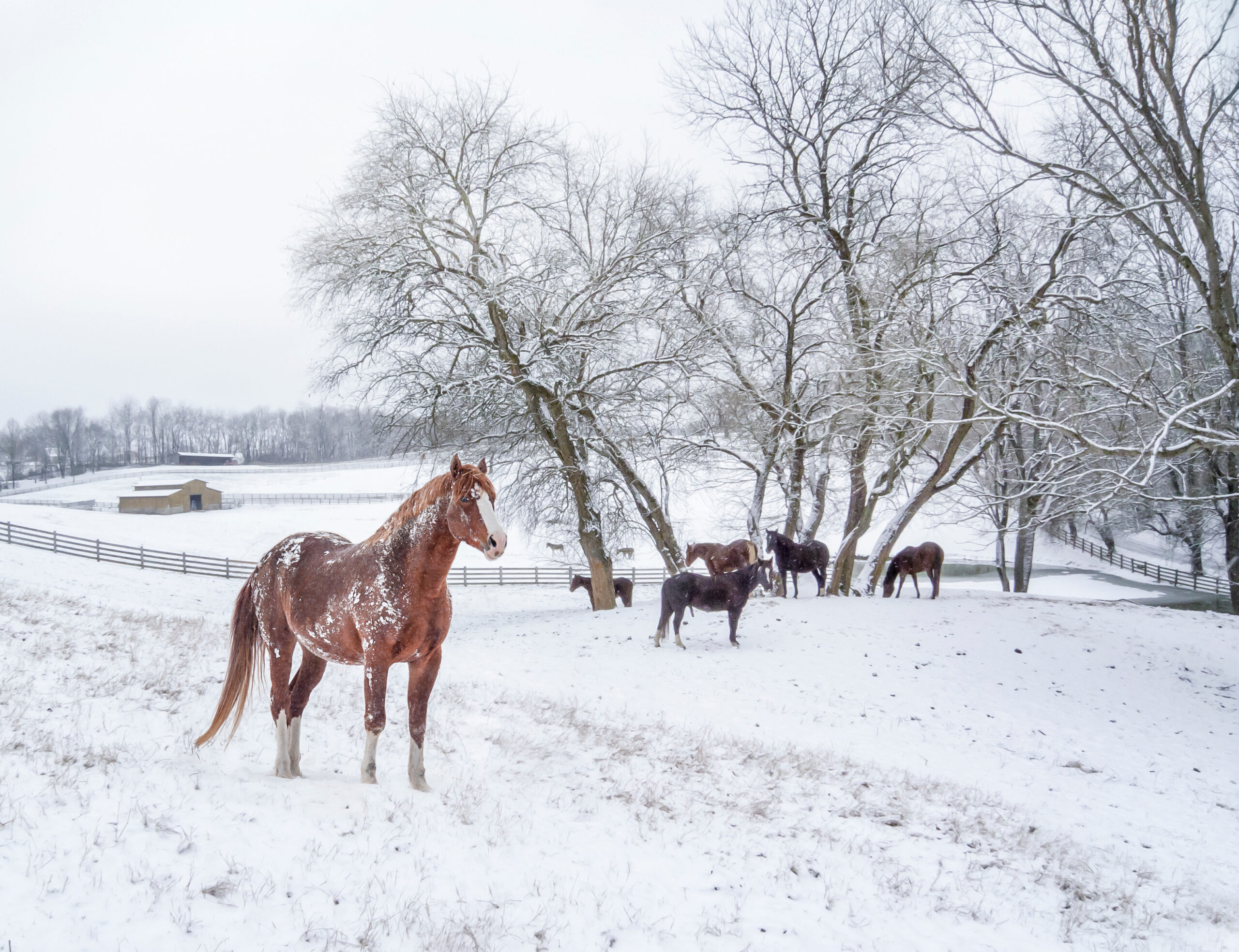
In addition to preparing for what you know winter will bring this year, it’s wise to take some time to contemplate the unexpected—and what you might do if it actually happened. Of course, it’s impossible to prepare for every scenario, but you can put yourself in a better position to respond quickly, keeping you and your horses safe.
Here are four ways winter can surprise you, and what you can do to keep your horse as healthy and comfortable as possible.
Challenge 1: Significant snowfall
A few inches of snow isn’t that big of a deal, especially in places accustomed to it. But when the white stuff accumulates beyond hoof-deep, a few management adjustments may be necessary.
A healthy horse can handle moving through deep snow well enough, though he may get tired. Snow isn’t slick like ice so it’s safe to turn horses out in it. They will trample paths between important locations like hay, water and shelter. You can make this process even easier by turning horses out while the snow is still falling, so they can create pathways as it accumulates. That way, they’ll never have to wade through deeper drifts to reach a vital resource.
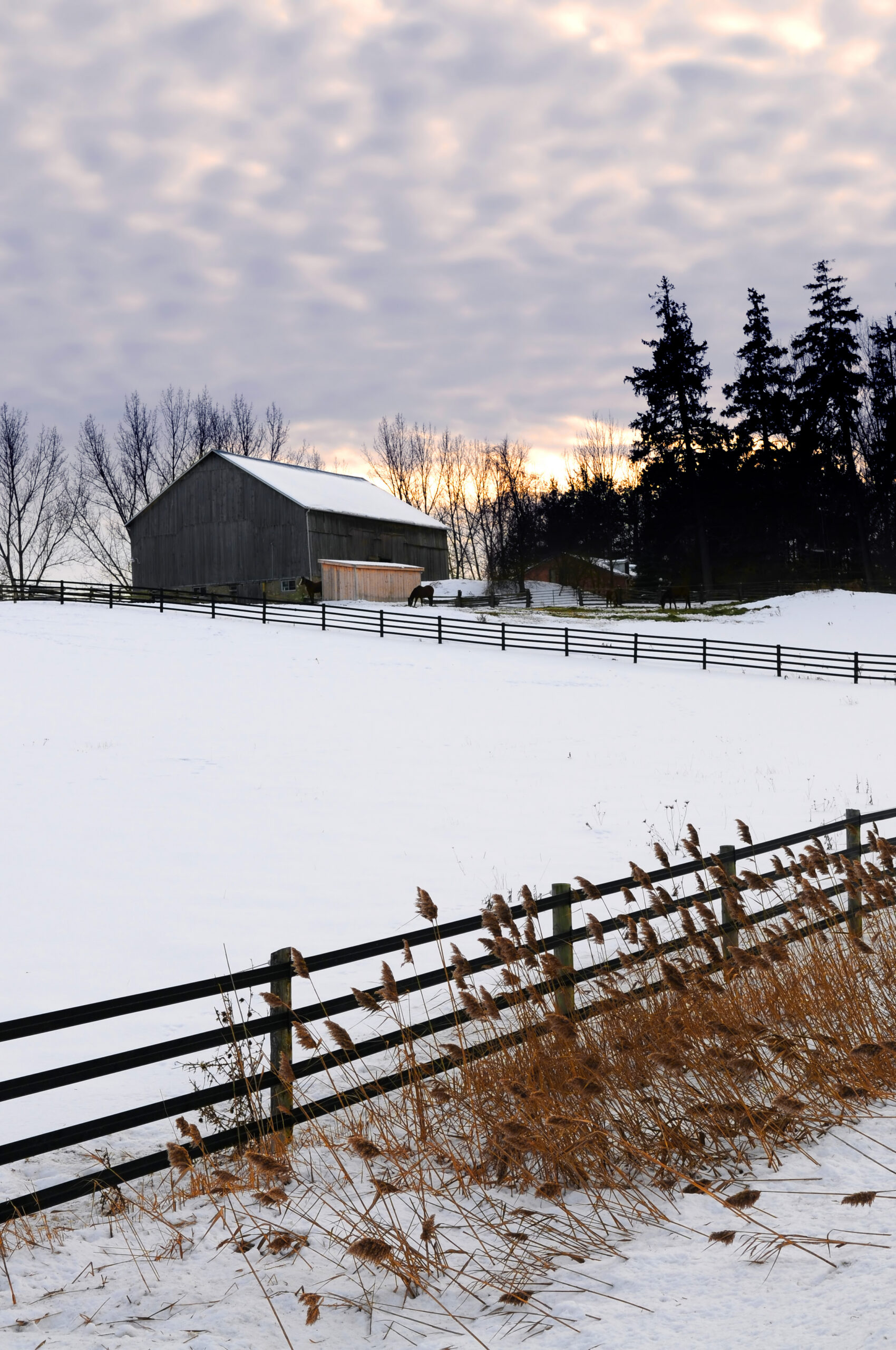
An older horse—or one with mobility issues—will find it much harder to navigate snowy fields. For these horses, a better plan may be turnout in an indoor arena several times a day or even hand-walking in the barn aisle until conditions improve. What you don’t want to do is let a horse stand in a stall for days at a time because of snow. Not only will this make an arthritic horse stiffer, but it can increase his susceptibility to colic and respiratory complications. Even if you have to use a tractor to clear a loop around a small paddock, do whatever you can to give horses the opportunity to keep moving, even in heavy snow.
Getting in and out
You’ll also want to make it possible for people to navigate heavy snow. The first priority is clearing the driveway and a parking area to ensure a veterinarian has quick access to your barn if necessary. Then you’ll want to clear a path to your trailer in case you need to get a horse to a clinic. After that, focus on creating footpaths from the barn to paddocks, manure piles and other resources. Pushing a wheelbarrow down a snowy path can be arduous, but a children’s “saucer” sled that glides over packed snow can help you more easily deliver hay and other supplies to paddocks.
Don’t forget the roof!
One final point about snow: A significant accumulation on a barn, shed or arena roof can lead to a deadly collapse. If you doubt the structural integrity of any building, evacuate all people and horses until the snow melts, even it means horses stay outdoors in snowy conditions. Take any creaking, cracking or popping noises very seriously.
Challenge 2: Ice
As difficult to deal with as snow can be, ice is downright treacherous. On a slippery surface, a horse doesn’t even have to fall to injure himself. A misstep or the effort to avoid falling can strain a horse’s muscles, tendons and ligaments. And, of course, an actual fall can be catastrophic.
Whenever the forecast calls for icy conditions or even a “wintry mix,” keep a close eye on the footing, though you’ll want to remember that not all ice is visible. And be aware that shod horses will be more likely to slip on ice unless their shoes have borium or other traction aids.
It’s essential to treat all the iced-over areas around the barn before taking horses out of their stalls. Road salt may seem like a logical choice, but it can burn the paws of small animals and kill vegetation, so it might not be the best option for around a barn. Alternatives include sand, ash or nonclumping kitty litter. In a pinch you can even use old bedding. Unlike salt, these materials won’t melt the ice but will provide needed traction. When the weather warms, though, keep in mind that these materials may act as an insulator, slowing the melting process.
Provide shelter
Horses who are outdoors when frozen precipitation falls will naturally seek shelter. After the storm is over, you’ll most likely find your herd congregating in a run-in shed or under the thick cover of trees. So long as the horses have access to water and hay where they are—and that none are bullied out of the protected area—they can remain there until the ice melts on its own. If you must remove a horse from a frozen-over field, create a path through the ice first. Depending on the depth of the ice, you can use a pick or shovel, but if the ice is thin enough, driving a heavy tractor can help establish the intended path.
Beware snow over ice
In some areas it’s not uncommon to have several inches of snow on the ground covered by a layer of ice. This hybrid winter footing poses a unique injury risk to your horse. As he walks, his hooves break through the top layer of ice and sink several inches through the snow. Then, as he lifts each foot, the sharp edge of the icy layer surrounding the depression may scrape—or even lacerate—the skin on his coronary bands and pasterns.
Do hoof checks
Whenever you’ve got a snow/ice combination on the ground, check your horse’s feet several times a day. Bell boots can provide protection but avoid wraps, which will get crusted and heavy with wet snow. A layer of petroleum jelly or another thick ointment can protect the skin behind the pasterns from irritation, but if you find a laceration, bring the horse into a stall or arena and call your veterinarian.
Don’t forget the plumbing!
Also remember that frozen ground often means frozen plumbing. Check pipes daily to ensure horses have constant access to clean water. If your pipes freeze, make immediate arrangements to haul water from another source until the problem can be resolved. Horses cannot eat snow to stay hydrated, and even a day without water poses a serious health risk.
Challenge 3: Colic
Any type of colic can happen at any time of year, but when the weather turns cold the incidence of impaction colic rises sharply. Horses tend to drink less when the weather is cooler, causing ingesta to become drier and more likely to become impacted. And a lack of exercise slows gut motility. If a horse is drinking less and standing still more, the stage is set for a bout of winter colic.
Of course, it’s best to take steps to prevent winter colic (more on that later), but if your horse is already showing signs of gastrointestinal distress, you’ll need to make quick, informed decisions.
Don’t give painkillers without veterinary guidance.
First, don’t give your horse any type of painkiller until you’ve consulted with your veterinarian. Analgesics, like Banamine, can mask the seriousness of a colic for hours, which in turn can allow the condition to worsen dramatically—particularly when strangulation-type colic compromises the blood supply to the intestines. Your veterinarian will want to see how your horse looks unmedicated for a more accurate diagnosis.
Don’t “wait and see”
Likewise, taking a “wait and see” approach to colic, any time of year, can have heartbreaking results when crucial time is lost. Winter conditions will only add complications that can lead to even further delays. If your horse appears to be colicking, call your veterinarian immediately and have the trailer cleared of snow, ready to go to a referral clinic if necessary.
Encourage hydration
As far as colic prevention goes, the very best thing you can do in the winter is ensure that your horse drinks plenty of water. While researchers haven’t pinned down an ideal winter water temperature, heated buckets and in- sulated waterers are invaluable tools. Just ensure your barn’s electrical system can support them safely.
Keep your horse moving
Another way to prevent impaction colic during the cold months is to keep your horse moving. Exercise, even just walking around a pasture, encourages gut motility. Keep your turnout schedule as consistent as you can all season. Even on cold, snowy days, turn your horse out if he has shelter and the footing is safe.
Challenge 4: Supply shortages
Even in this modern era, winter can be a time of scarcity. Extreme weather, poor planning or supply chain issues can disrupt access to hay, feed, medication and other essentials. Your best course of action depends on what exactly you need:
• Feed
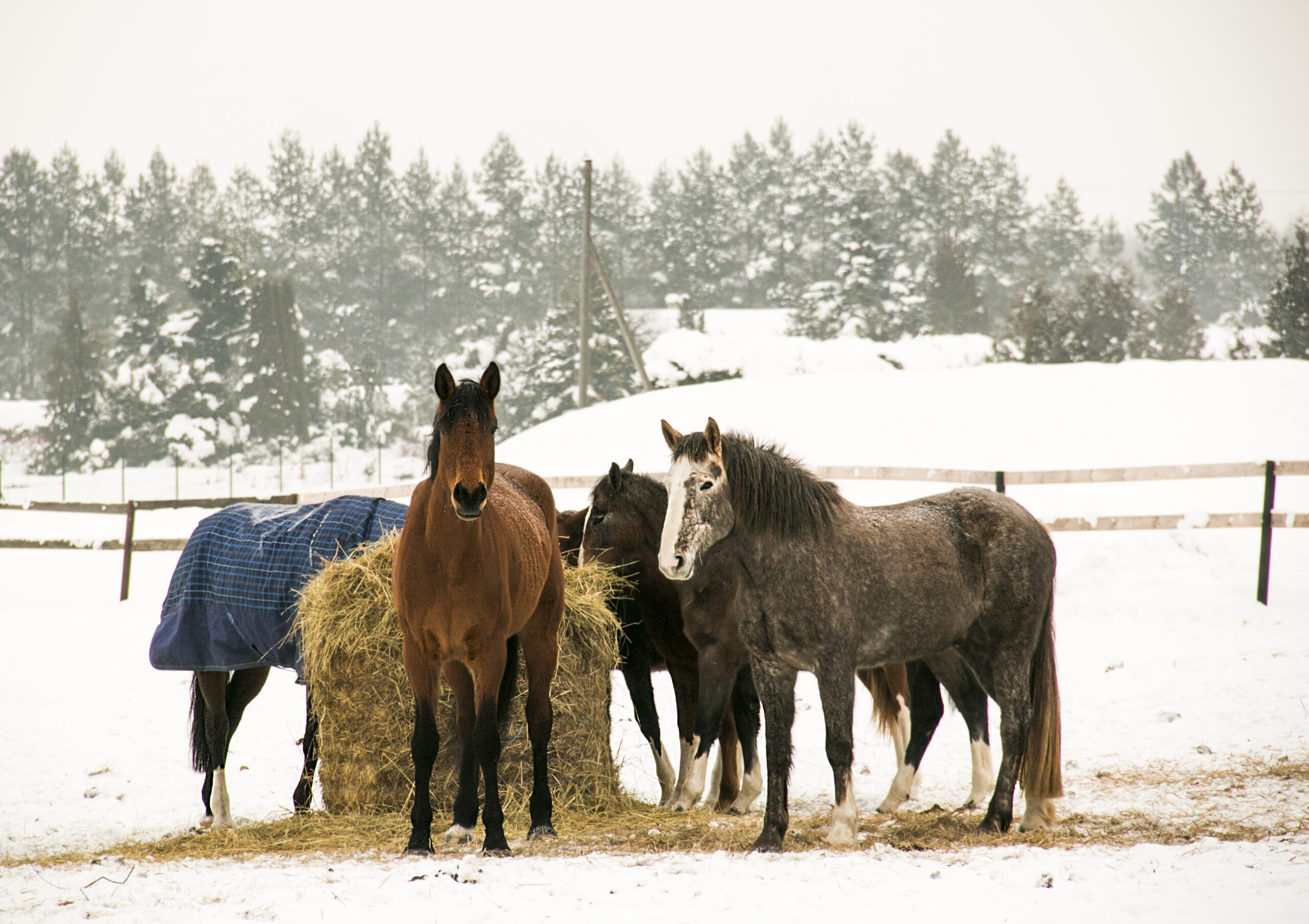
If icy roads delay a grain delivery, don’t panic. If your horse has adequate body weight—at least a score of 5 on the Body Condition Score scale—he can safely miss a few days or even a few weeks of grain. By increasing his hay ration, you can easily meet the average horse’s energy requirements. Even for horses with somewhat higher caloric needs, going without grain isn’t likely to lead to weight loss for several weeks. Assuming you are providing adequate water, the increase in hay isn’t going to lead to colic or other gastrointestinal distress. In fact, the microbes in a horse’s gut are much better able to handle a reduction of the grain component in a diet than an increase in grain or a change to a different type of grain.
• Hay
Running low on hay midwinter is a much bigger concern. The average horse needs to eat 2 percent of his body weight in forage each day to maintain his weight and digestive health. That’s 24 pounds of hay or other roughage source per day for a 1,200-pound horse. You can, of course, simply purchase more hay if you run out, assuming you can find it and afford the premium you’ll likely pay.
Don’t jump on the first batch you find, though. Check it for mold and dust; bad quality hay your horses won’t eat isn’t much better than no hay at all.
You can also stretch your remaining hay supply by adding alfalfa cubes or pellets to your horse’s diet. Begin mixing the alternative forage in slowly, then changing the ratio as your hay supply dwindles to maintain the two-percent threshold. Finally, you can replace hay entirely with chopped forage, alfalfa cubes and complete feeds. You’ll want to make that transition gradually and be aware that the lack of “chew time” can lead to boredom and behavioral issues.
• Medications
You probably keep close track of our horse’s health needs, so unexpectedly running out of medications means something has gone dramatically awry. Maybe a huge storm has halted deliveries, or a leaky roof ruined your existing supply. However it happened, the first step if you find yourself without the medication your horse needs is to consult with your veterinarian. He can advise you on just how urgent the situation is, replace the medication or prescribe a substitute. What you don’t want to do is use medication that looks altered or contaminated—and never “borrow” a medication meant for another horse without veterinary guidance.
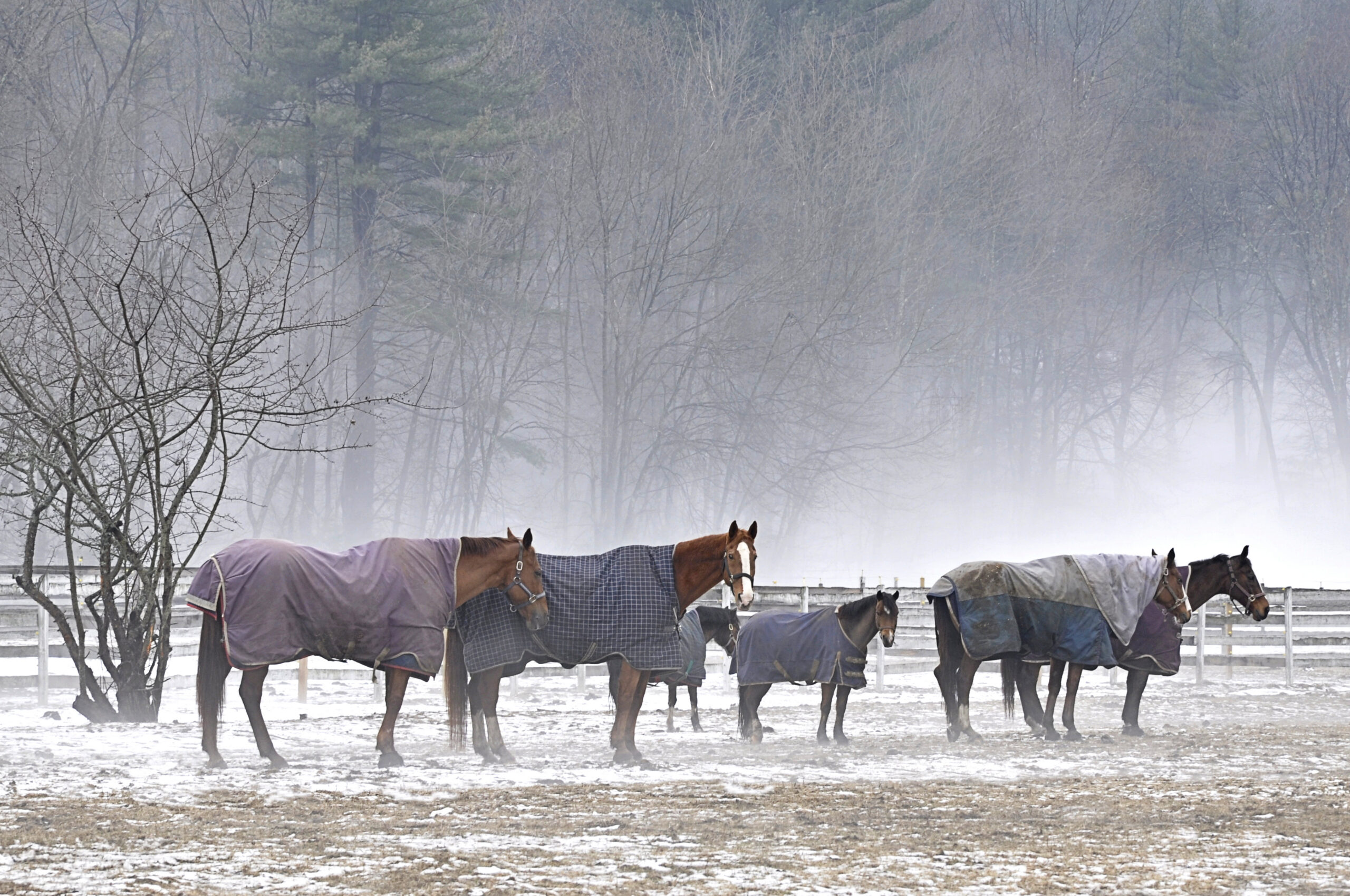
As winter approaches this year, make all your usual preparations: Pull the horse’s blankets from storage, insulate the spigots, and treat yourself to a new pair of warm work gloves. But also take some time to consider how you might handle unexpected winter developments. You can’t possibly anticipate every situation, but having a rough plan in place will give you peace of mind that you can rise to the challenge.