

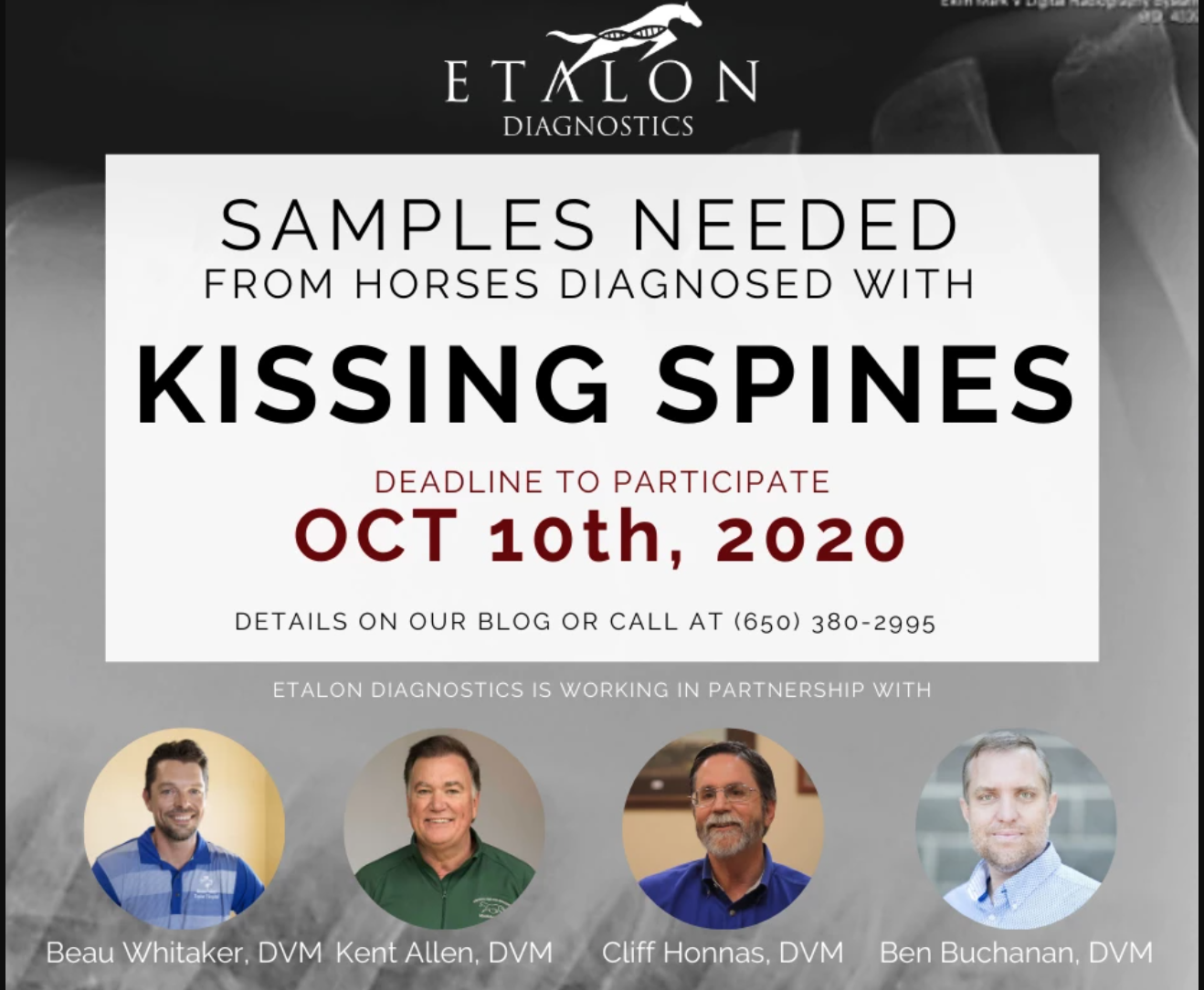
Etalon Diagnostics is expanding a large genetic study for Kissing Spines in the horse and looking for help.
DEADLINE TO SUBMIT SAMPLES: OCTOBER 10th, 2020
To participate in the study, horse owners must submit the following:
– Mail in a pulled hair sample from affected horse (mailing directions below)
– Include the diagnosis by Veterinarian AND radiographs (upload them online on your horse’s profile under “gallery photos”, or email them to us at study@etalondx.com)
Also helpful for this study are samples of Thoroughbred horses with clean spinal x-rays (NEGATIVE for Kissing Spines)
To submit samples, visit www.etalondx.com and click “order”. Create an online profile and click “Order Testing”.
Choose package “STUDY_KS” to send in your sample free of charge. Those whose samples are included in the study will receive follow-up information for results and publications.
Mail hair samples to:405 El Camino Real, #234 Menlo Park, CA 94025
Kissing Spines, officially known as “overriding dorsal spinous processes” or “spinous process impingement”, describes the touching or “kissing” of the long, thin bones that project upward from the vertebrae of the spinal column in the horse’s back. Kissing Spines can occur in any horse but seem more prevalent in Thoroughbreds, horses 5 years of age and under, and dressage horses. The radiograph below illustrates a “normal” spinal x-ray, in comparison to that of a horse diagnosed with Kissing Spines. You can note the impinged areas with narrowed spacing between the vertebrae.
Etalon Diagnostics is working on this study in partnership with Dr. Beau Whitaker of Brazos Valley Equine Hospitals, Dr. Ben Buchanan of Brazos Valley Equine Hospitals, Dr. Kent Allen of Virginia Equine Imaging, Dr. Charlie Buchanan of Brazos Valley Equine Hospitals, and Dr. Cliff Honnas of Texas Equine Hospital.