

1. Make your property less hospitable
Muck stalls daily and consider applying a non-toxic drying agent like sodium bisulfate to your stall floors to reduce moisture. Also regularly pick up the manure from run-in sheds and areas in the paddocks or fields where horses congregate. Deposit manure and soiled bedding in an area away from the barn and implement a removal or composting program. If you can’t remove stored manure, cover it with a tarp to raise the internal temperature. This will make it unsuitable for fly development.
Also reduce or eliminate any standing water on your property where fly and mosquito larvae can develop. Look for poorly draining gutters and low areas where puddles form. If your property has a pond or marshy area, ask your local cooperative extension about ways to control insect populations.
2. Use physical barriers and deterrents
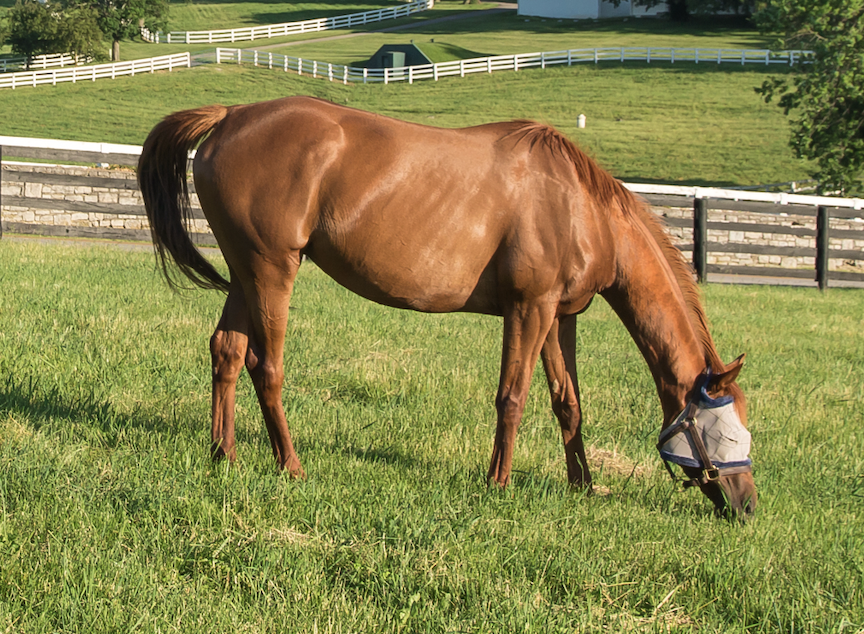
Protect turned out horses from flies and other pests by outfitting them with fly masks, fly sheets and boots. In addition, a variety of options can help reduce the fly population in and around your barn. These include window screens, electronic “bug zappers,” and electric agricultural fans in the barn will discourage flying pests.
3. Leverage biological controls
Fly predators — tiny parasitoid wasps that neither sting nor bite horses or people — are one of the most effective biological controls available. These insects work by laying their eggs inside fly pupae, preventing house flies and stable flies from ever reaching adulthood. Fly predators arrive packaged in the cocoon stage and are simply sprinkled onto manure piles and other fly-friendly areas around the barn. You may also want to encourage natural fly predators such as birds or bats to live around your barn.
4. Deploy chemical controls
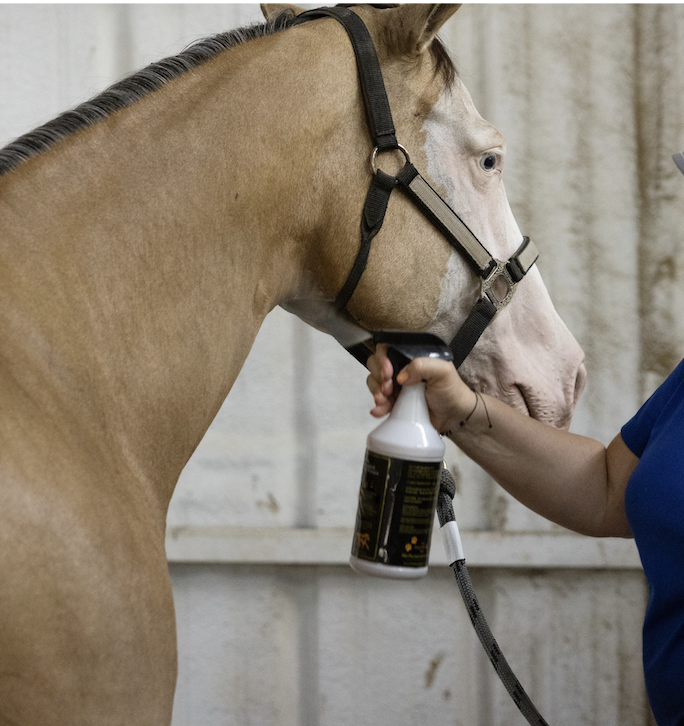
Four main categories of chemicals can help fight flies: repellents and insecticides, residual or space sprays, insect growth regulators, and bait stations. Most fly sprays are either repellents, which drive flies away, or insecticides, which kill them on contact. But some products combine both actions for maximum effect.
The specific formula is another important consideration. Oil-based products offer longer-lasting protection but can attract dirt and irritate skin. Water-based formulas are gentler but break down faster in wet conditions. For the barn itself, residual pesticides can be applied directly to surfaces like rafters, door frames, and screens.
Space sprays are dispersed into the air for a rapid knockdown of flying pests — effective in the moment, but short-lived and requiring frequent reapplication to maintain results. Bait products, which contain both an insect attractant and an insecticide, also help reduce fly populations. Depending on the formula, bait products are scattered in fly breeding areas or placed in stations around the barn.
Finally, another chemical fly control option is feed-through products that insect growth regulators (IGRs). The larvicide in IGR feed-through products is formulated to be activated in the horse’s manure rather than his body, preventing the formation of fly larvae exoskeletons and thus inhibiting their development.
Fly control is rarely a one-and-done effort — you’ll need to devise a multi-layered strategy, apply it consistently and adjust your approach as the season progresses. By tackling the problem at each stage of the fly life cycle rather than simply reacting to the mature pests buzzing around your barn, you’ll see better results with less frustration. Over time, this integrated approach will not only reduce the fly burden on your horses but may also reduce your reliance on chemical treatments — making it a win for your horses, your property, and your wallet.