

Protecting a horse’s respiratory health during transport can be as easy as tying him with a longer lead rope.
Trailer rides—especially long ones—can increase a horse’s susceptibility to illness, particularly pleuropneumonia (commonly called “shipping fever”). Previous studies have shown that this infection is associated with high levels of bacteria in the airways. Now research from Japan links those high levels to tight restraint of a horse’s head during travel.
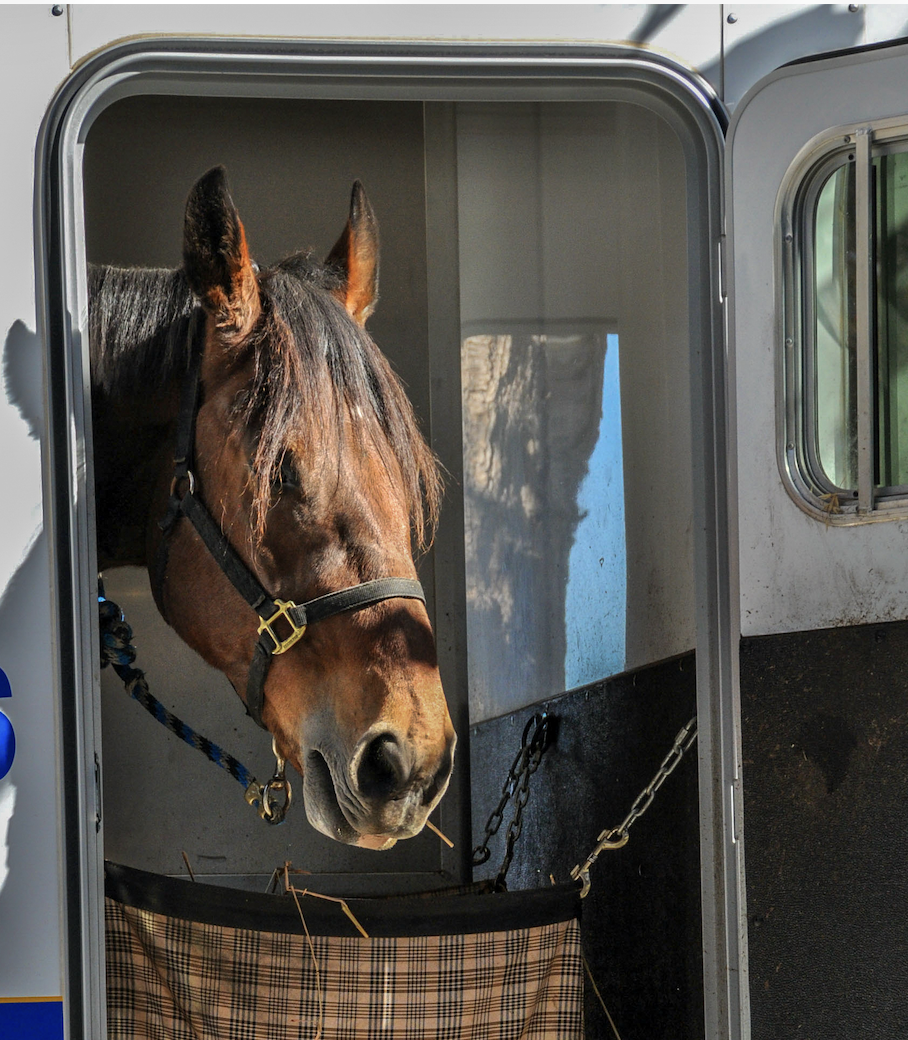
For the study, six healthy Thoroughbreds were transported in a commercial six-horse trailer for 22 hours on two separate occasions, four weeks apart. On each trip, half the horses were tied with 20-inch ropes that prevented them from lowering their heads below the withers. The other half were tied with 37-inch ropes, which allowed those horses to drop their heads to knee level. For the second trip, the lead ropes were switched. On both trips, each horse had access to a hay net hung at the same height.
Six days before each trip and again immediately afterward, the horses underwent tracheal washes—flushing with sterile saline solution. Fluid was collected from each horse’s upper airway and analyzed microbiologically.
Short Rope = trouble
After each trip, the researchers compared the samples. They found that when the horses were tied with short ropes, their airways harbored significantly higher bacterial loads. In fact, the effects of travel were evident even without microbiological analysis, says Yuji Takahashi, DVM, PhD, of the Japan Racing Association’s Equine Research Institute. “Samples taken before transport were clear and transparent. After transport, samples in the short-rope group were turbid and yellow in color.” When the horses were tied with long ropes, he adds, there was no increase in their respiratory bacterial load.
A likely explanation is an impairment of the horses’ cilia—the tiny, hair-like structures that line the upper airways. With wave-like motions, cilia “sweep” pathogens out of the airway and toward the throat to be expelled by coughing or swallowing. “One of our research members has clearly demonstrated that horses with heads elevated for 24 hours in the stall showed a reduction of tracheal mucociliary clearance capability,” says Takahashi. “This can facilitate accumulation of certain types of bacteria, which would lead to deterioration of airway hygiene.”
The bacteria found in most of the samples were Streptococcus, a family “known to cause transport-related respiratory diseases through opportunistic infections,” says Takahashi. “Not all diseases are caused by this bacterium, but it is considered to be a significant bacterial family.” Among the horses tied short for the trips, two coughed frequently afterward and one had a fever. None of the horses tied long during transport showed signs of illness.
More stress, too
The researchers also filmed the study horses during each trip to document their behavior. Subsequent analysis revealed that the horses tied on shorter leads not only had higher bacterial loads but exhibited more stress-related behaviors than did those tied with longer ropes. “Several previous studies have shown that licking during transport is indicative of stress,” says Takahashi. “In our study, the short-rope group showed licking behavior more frequently than the long-rope group.”
Takahashi says these findings are relevant even for horses going on much shorter trailer rides. “Our research involved a 22-hour road transport, a significantly long journey. Our findings suggest that head position during transportation is likely a more important determinant of airway hygiene and distress than duration of travel,” he says. “So the message is quite simple: Avoid tying horses tightly.”
Reference: “Increased freedom of head movement mitigates stress and bacterial load in the airways of horses during transport,” Frontiers in Veterinary Science, October 2024