
Exploring the research behind a new approach to equine fly control and insect behavior

Audra Mulligan is the Director of Regulatory Affairs & Development at W.F. Young, Inc., with a career deeply rooted in pesticide regulation and EPA compliance, including product registrations, claims review, and multi‑state regulatory strategy. A lifelong horse owner, Audra brings practical, real‑world insight to the development and oversight of equine and animal health products. In addition to her regulatory leadership, she leads sustainability and packaging compliance initiatives and recently earned her Sustainability Excellence Associate (SEA) credential through the International Society of Sustainability Professionals (ISSP).
EQ: Can you start by explaining what FlyShield® Technology is and how it works in practical terms for horse owners?
AM: FlyShield® Technology is built around how biting insects actually find a host, your horse. Flies and mosquitoes rely heavily on their sense of smell, using highly sensitive receptors on their antennae and mouthparts to detect carbon dioxide, skin-associated odors, and other volatile compounds released by a horse. FlyShield® Technology disrupts that process and interferes with the insects’ ability to accurately detect and interpret those scent cues, effectively confusing them. Instead of being drawn in, insects receive signals that cause them to avoid the area altogether.
For horse owners, the takeaway is simple: fewer insects land on the horse. That’s what makes FlyShield® Technology different. It helps stop flies before they ever become a problem.
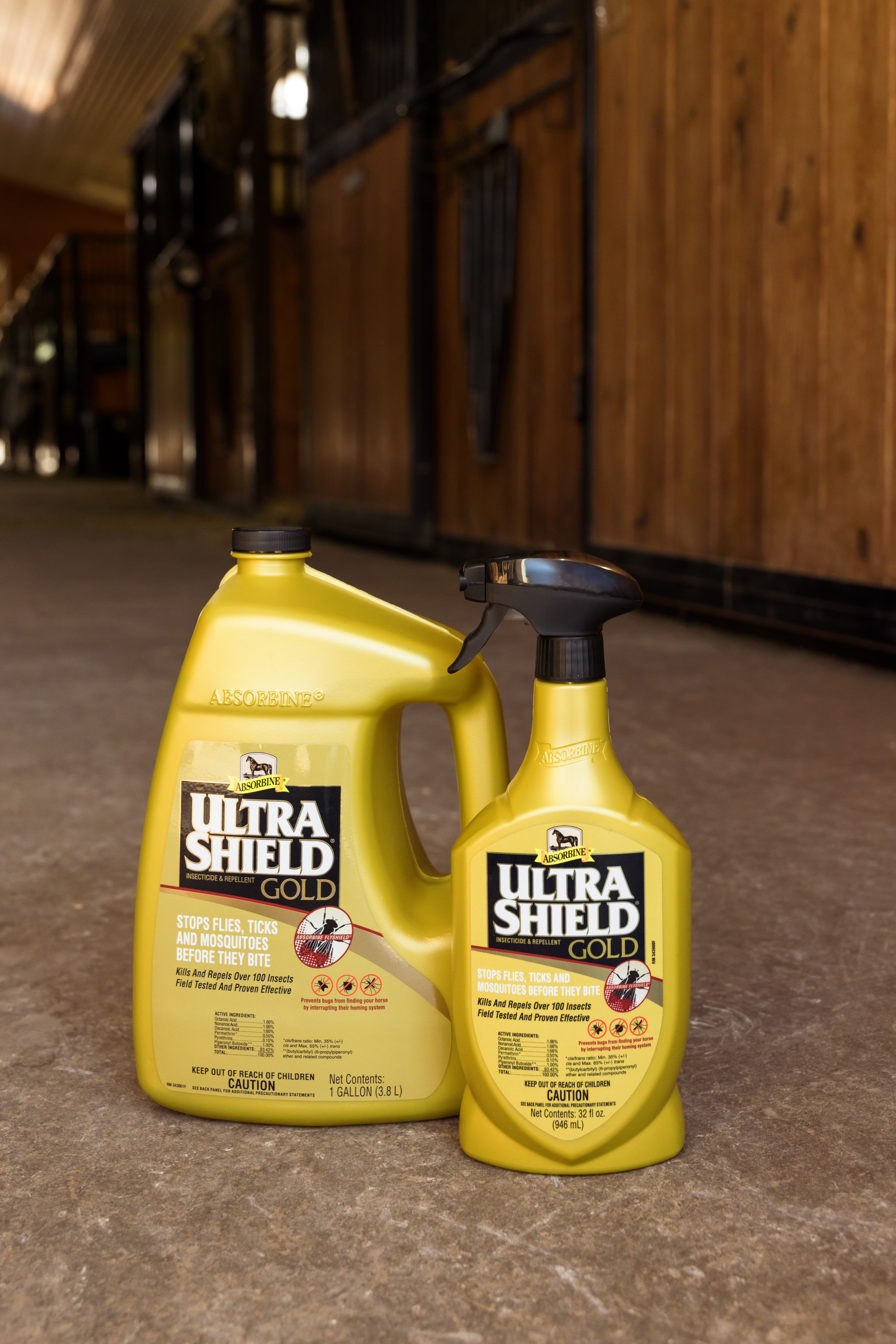
AM: FlyShield® Technology was developed using extensive scientific research focused specifically on the insects that affect horses. Ingredient selection and formulation were guided by peer-reviewed entomology and pesticide science, helping ensure each component contributes to effective repellency and control of key equine pests.
The formula was thoroughly evaluated through laboratory testing for safety and performance, along with field testing to confirm it works in real-world barn, pasture, and turnout conditions. UltraShield® Gold was reviewed and registered by the U.S. Environmental Protection Agency, with additional data review required at the state level, providing multiple layers of scientific and regulatory oversight.
Compared to traditional fly sprays, the goal was to deliver a science-based, equine-focused solution that horse owners can trust to perform beyond the lab.
EQ: Fly control can feel inconsistent from season to season. What role does evolving insect pressure play in that, and how does FlyShield® Technology address it?
AM: Fly pressure truly is a moving target. Weather and environmental conditions play a major role. Mild winters can allow more insects to survive into spring, wet conditions can increase breeding sites, and different seasons can shift which insects are most problematic. On top of that, insect populations themselves can adapt over time, making control feel less predictable from year to year.
FlyShield® Technology was designed with this variability in mind. Its multi-pronged approach provides broad-spectrum protection, so changes in pest pressure, whether it’s more mosquitoes one year or more gnats the next, don’t require a completely different solution. Just as importantly, FlyShield® helps stop insects before they bite, which is especially valuable during peak pressure when horses would otherwise be constantly bothered.
Since UltraShield® Gold is also long-lasting, it provides a consistent baseline of protection. That helps smooth out seasonal ups and downs, keeping horses more comfortable even when insect populations spike unexpectedly.
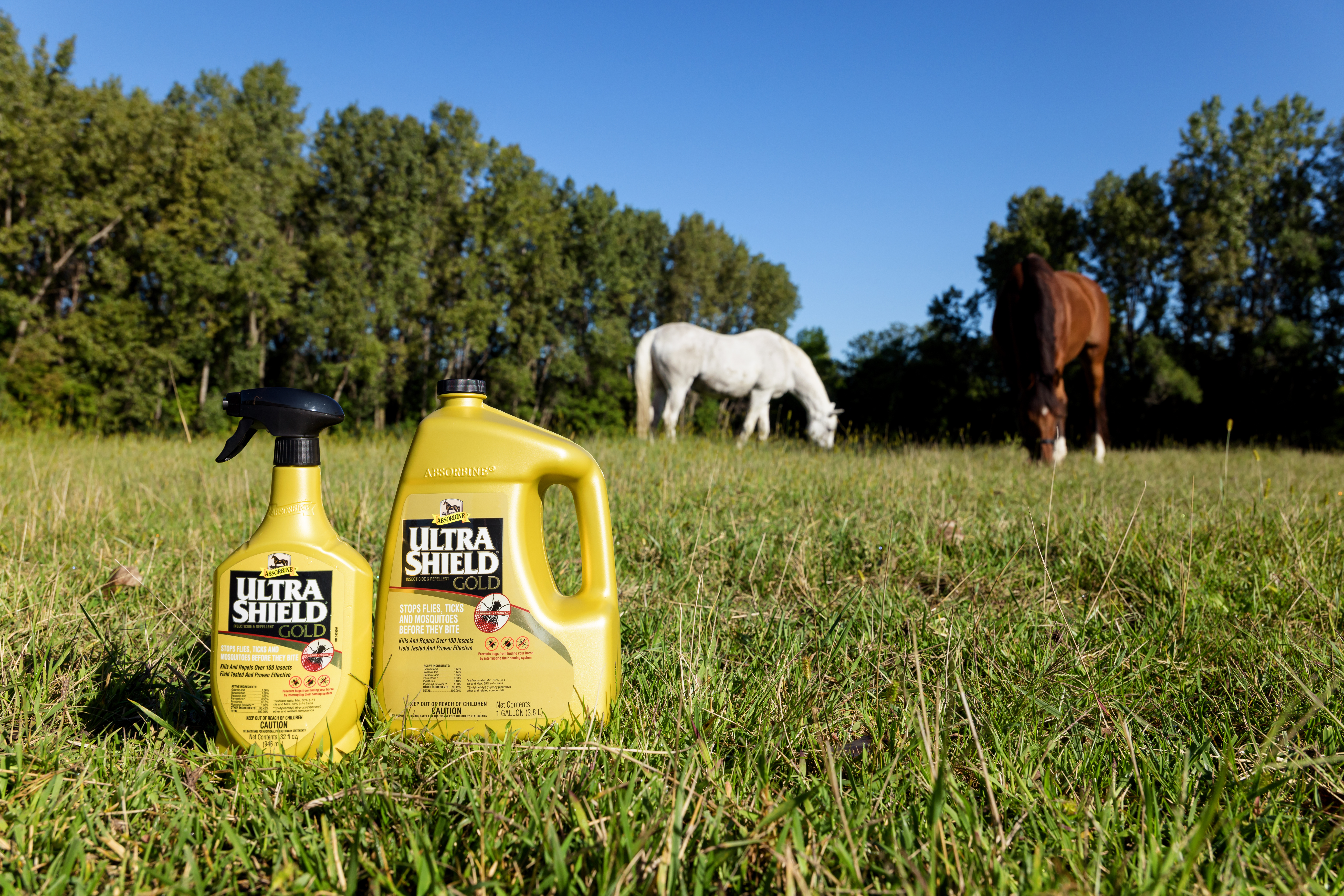
EQ: UltraShield® Gold uses multiple active ingredients. How does that combination contribute to both immediate knockdown and longer-lasting protection?
AM: UltraShield® Gold works as a true multi-modal defense. Each active ingredient plays a specific role, and together they deliver both fast relief and extended protection.
Pyrethrins provide quick knockdown for immediate fly relief, while permethrin delivers longer-lasting residual protection that continues working over time. Piperonyl butoxide enhances the effectiveness of both, helping them act faster and more efficiently. Layered on top of that, organic fatty acids disrupt insects’ ability to locate a horse, actively repelling and discouraging landing from the start.
The result is synergy. Flies are knocked down quickly, future pests are repelled, and ongoing protection stays in place. For horse owners, that means immediate comfort plus durable coverage without having to choose one over the other.
EQ: We often hear about “mode of action” in fly control. How does FlyShield® Technology fit into that conversation, especially when it comes to resistance management?
AM: Research shows that flies and mosquitoes rely on multiple biological systems at the same time, such as sensory input, movement behaviors, and nerve signaling, when locating a host. Because these processes work together, targeting just one pathway often isn’t enough to deliver consistent control.
A multi-pronged approach works better by addressing insect behavior from more than one angle at once. By combining ingredients that complement each other, fly control becomes more effective across different insect species and conditions, delivering more reliable results in real-world use.
EQ: From a practical standpoint, how should horse owners think about incorporating a product like UltraShield® Gold into their existing fly control program?
AM: UltraShield® Gold works best as part of an overall fly control strategy, not as a standalone fix. Good fly management always starts with the basics, including manure management, minimizing standing water, premise management, and using physical barriers like fly masks or sheets. Those steps help reduce overall insect pressure in the horse’s environment.
UltraShield® Gold fits in as the on-horse layer of protection, providing broad-spectrum, long-lasting control where it matters most. Because FlyShield® Technology helps stop insects before they bite and continues working over time, it gives horse owners a consistent baseline of protection, even when pest pressure fluctuates.
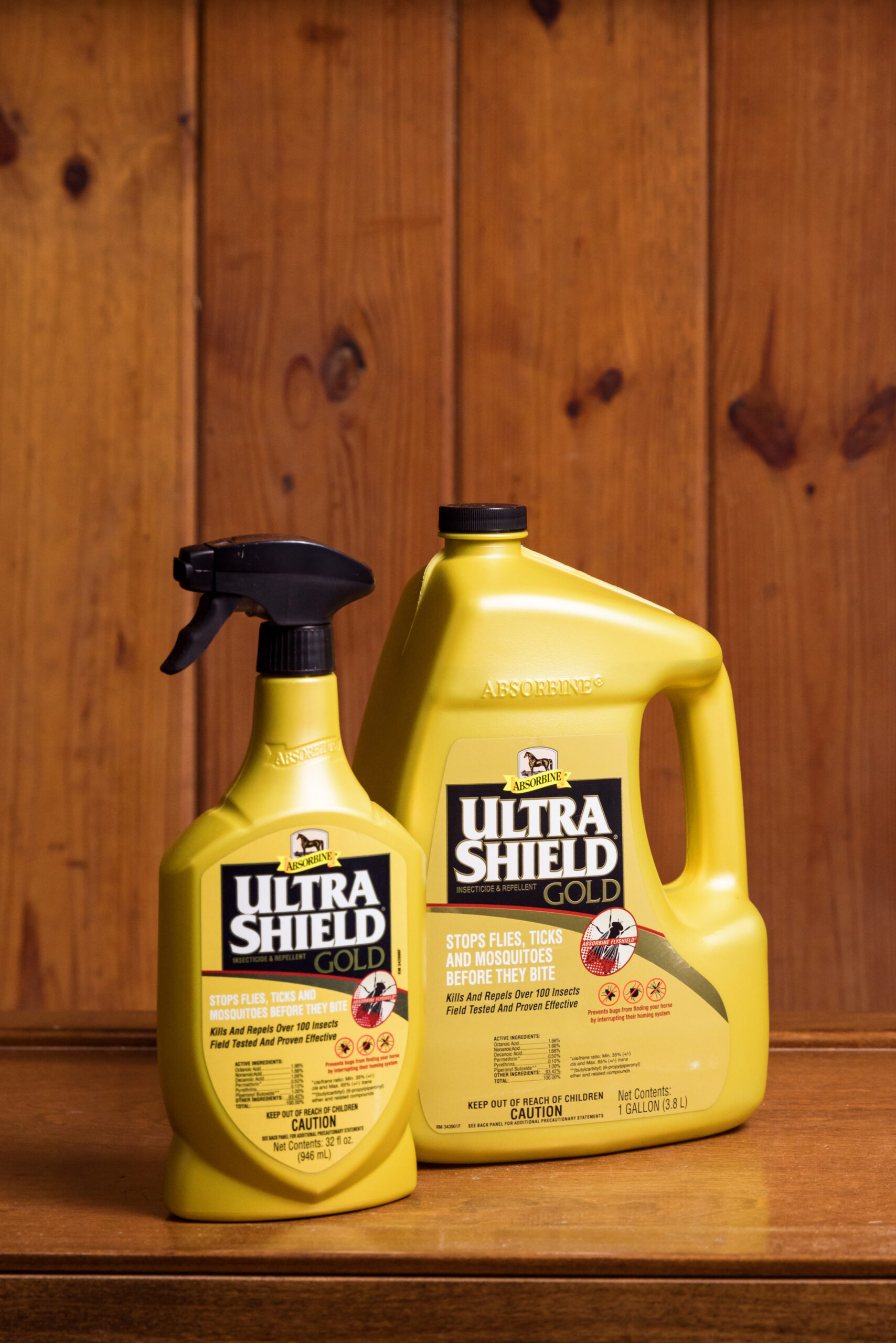
EQ: What differences might a horse owner notice when using a formula with FlyShield® Technology compared to more traditional approaches?
AM: Many horse owners notice a difference right away. One of the most immediate signals is the distinct aroma of UltraShield® Gold, which reflects a unique blend of ingredients working together rather than a typical single-note fly spray scent.
Compared to more traditional sprays that rely heavily on contact alone, FlyShield® Technology delivers a different experience, including faster visible relief, longer-lasting coverage, and a noticeable reduction in fly pressure on the horse day to day.
EQ: Are there specific environments or conditions where FlyShield® Technology tends to be especially beneficial?
AM: FlyShield® Technology is especially beneficial in high-pressure environments, such as trail rides, wooded areas, and locations near water where flies, mosquitoes, and gnats tend to be more intense. These conditions often expose horses to a broader mix of biting insects that are highly active and persistent.
EQ: How does FlyShield® Technology support a longer-term approach to fly control rather than just short-term relief?
AM: FlyShield® Technology supports long-term fly control by working both on the horse and in the horse’s environment. In addition to on-horse use, UltraShield® Gold can be applied as a premise spray in barns, stalls, run-ins, and other areas where flies tend to rest and congregate. Treating these spaces helps reduce fly activity where it starts, not just where it lands.
By combining premise applications with long-lasting on-horse protection, FlyShield® Technology helps create a more consistent level of fly control over time. Instead of reacting only when flies are at their worst, horse owners can proactively manage pressure in both the environment and on the horse, resulting in more sustained comfort throughout fly season.
EQ: Looking ahead, how do you see fly control continuing to evolve, and what role will technologies like FlyShield® play in that future?
AM: Looking ahead, safety will continue to be a key driver in fly control innovation. I expect to see newer, comparatively safer chemistries enter the market, ingredients designed to be effective for pest control while maintaining a strong safety profile for horses, people, and the environment.
I also see Integrated Pest Management becoming even more standard. Fly control will continue to move toward programs that combine good barn management, environmental controls, and targeted product use rather than relying on a single solution. Alongside that trend, we will likely see more products that are biological or behavior-based in nature, working with how insects interact with their environment rather than relying on one-dimensional control.
Technologies like FlyShield® fit well into this future by reflecting those same principles. Science-based, safety-focused, and designed to work as part of a broader, more thoughtful approach to fly control.
To learn more or Shop FlyShield® and more Absorbine Fly Control products click here!