

Clipping equine coats is both an art and a science. Particular patterns serve different purposes and there are numerous variations. Choosing the right one can make all the difference in your horse’s comfort and performance. Here are four popular winter clips:
Trace clip
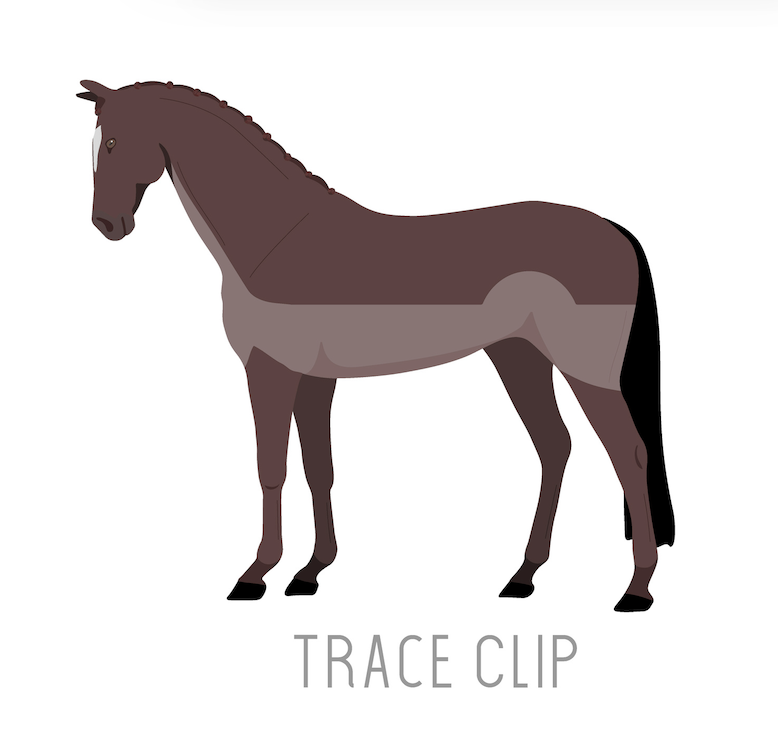
The trace clip, which originated with carriage and draft horses, is a practical option for horses in light to moderate work. This pattern removes hair in a wide strip, roughly where the traces and driving harness rest against the horse. The clipped areas include the underside of the jaw and neck, the chest, the lower part of the barrel, the underside of the belly and sometimes the head, flanks and gaskin area. The upper neck, shoulders, back, loins and legs are generally left untouched. It’s like giving your horse a natural blanket—the areas that generate the most heat during exercise are clipped and the natural coat remains over areas that need protection from the elements.
Blanket clip
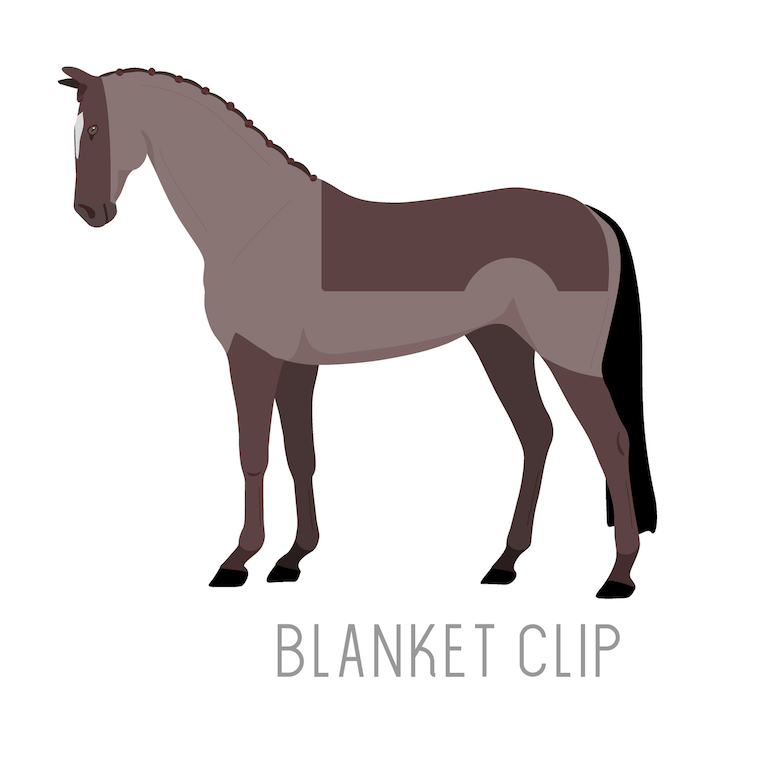
For horses in heavier work, a blanket clip might be more appropriate. This removes hair from the neck, chest, shoulders and belly, while leaving a “blanket” shape of hair over the back and loins. It facilitates cooling while maintaining protection over the horse’s kidneys and spine.
Hunter clip
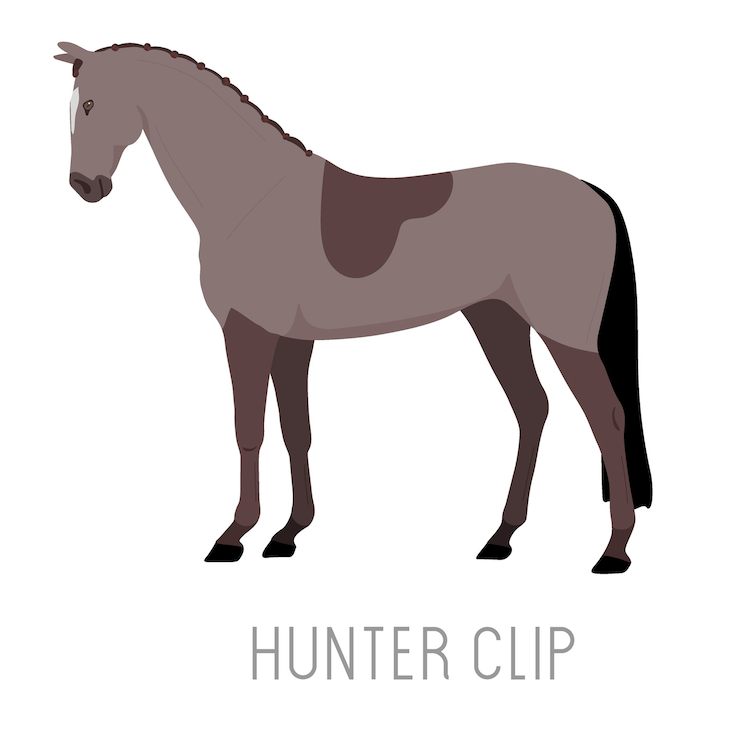
The hunter clip, with roots in the sport of foxhunting, takes things further. It removes most of the body coat while leaving hair on the legs and where the saddle sits. This pattern works well for horses in consistent work but still offers some protection against cuts and scrapes on the legs.
Full body clip
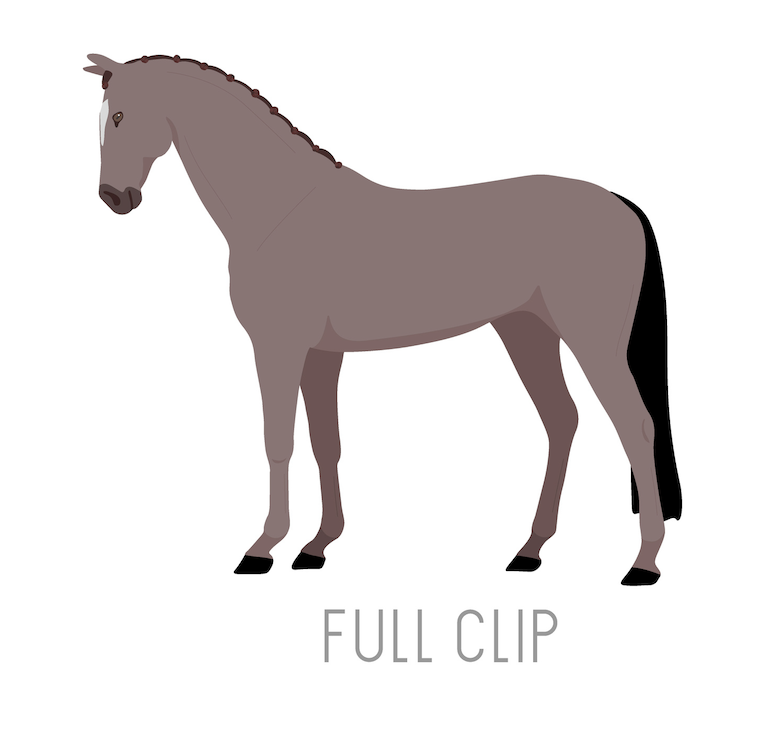
For horses in heavy work—think upper-level eventers or horses in intensive training programs—a full body clip might be necessary. This removes virtually all the coat except sometimes the legs below the knees and hocks. These horses typically require significant blanketing to stay comfortable.
For the average horse in moderate work, Alena Meacham, lecturer and Director of Horse Riding in the University of Connecticut’s Department of Animal Science, favors a blanket clip because of its versatility. “It leaves hair on the horse’s back and hindquarters for warmth, while removing hair from high-sweat areas like the neck, chest and girth,” she explains. “For horses with more exposure to the elements, such as those turned out in a run-in shed, I recommend a trace clip, which retains more hair on the neck and belly. Horses in competition may benefit from a full clip or hunter clip, depending on their discipline.”
Images by Adobe Stock