

New research from the team at Virginia Tech’s Marion duPont Scott Equine Medical Center is “helping horses survive one of the most feared diseases in the industry,” according to a recent post on the center’s social media.
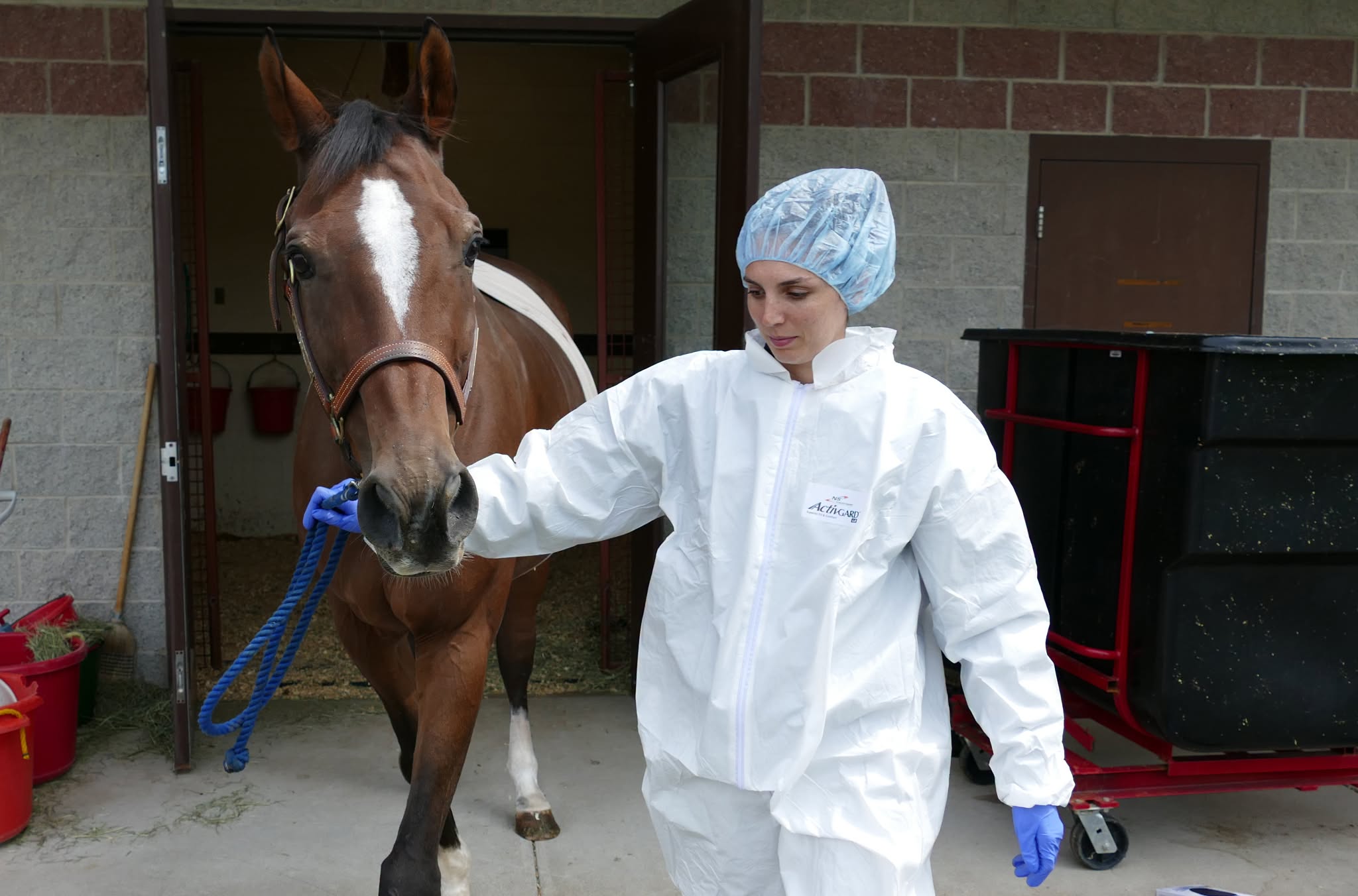
A study led by Megan Marchitello, DVM, DACVIM (LAIM); Krista E. Estell, DVM, DACVIM (LAIM); Elsa K. Ludwig, DVM, PhD, MS, CVA, DACVS-LA; Professor Emeritus Nathaniel White of Virginia Tech’s Marion duPont Scott Equine Medical Center; and former Virginia State Veterinarian Abby M. Sage found that combining valacyclovir (an antiviral) with heparin (an anticoagulant) significantly reduced the incidence of equine herpesvirus Myeloencephalopathy (EHM), the severe neurologic form of EHV-1. It also improved survival rates during naturally occurring outbreaks.
Looking back at a real-world EHV-1 outbreak, the team found that horses treated with the combination therapy had dramatically better outcomes than those that didn’t receive it. This included several EHM-affected horses that survived and returned to work.
In terms of clinical relevance, the team’s article noted, “In confirmed EHV-1 outbreaks, the administration of valacyclovir prior to the development of EHV-1 clinical signs and the administration of heparin after the development of clinical signs may improve patient survival.”
The American Veterinary Medical Association (AVMA) published the team’s full article on July 10, 2026. To access it, click here.
About Virginia Tech’s Marion duPont Scott Equine Medical Center
Virginia Tech’s Marion duPont Scott Equine Medical Center is a premier, full-service equine hospital located in Leesburg, Virginia. It is one of three hospitals of the Virginia-Maryland College of Veterinary Medicine. The center offers advanced specialty care, 24-hour emergency treatment and diagnostic services for all ages and breeds of horses. Its equine specialists are training today’s and tomorrow’s veterinarians in the latest medical technologies and procedures. The center also advances new knowledge through innovative scholarship and clinical discovery.