

WHAT TO FEED
Old Horses
Age is just a number, but age-related horse health and nutritional challenges are very real. Here are 6 tips to help you formulate the optimal diet for your horse's golden years.

Sponsored by Purina
Purina has been leading the industry with innovation since 1894, and over the years our purpose has never changed. We have always been driven to unlock the greatest potential of every animal. Over the last 125 years, our ideas and research-backed nutritional solutions have modernized the way animals are fed.

By Lucile Vigouroux, MSc, for TheHorse.com
Horses today are living longer and more productive lives than ever. We can thank advances in nutrition, veterinary care, and management for the extra years we get to share with our beloved equine partners. Nowadays determining when your horse qualifies as a senior citizen that needs a specialized diet depends on his individual aging process.
Indeed, rather than abiding by arbitrary timetables of equine life stages (i.e., considering all horses older than 15 years of age to be seniors), veterinarians and researchers now recommend watching for signs your aging horse is no longer thriving on the diet you’ve maintained him on throughout his adult life. Anna Dunaway, MS, PhD, of Purina Animal Nutrition, supports this practice. “What generally triggers the need to switch to a senior diet is when a horse’s teeth or gut starts to decline,” she says.
Much like these animals’ athletic or reproductive careers, nutrition should be approached on a case-by-case basis. If you’re unsure about your own horse’s status, you can find common indicators he might be ready for senior feed below.
“Essentially, if your senior horse is in good condition, he does not need more than a forage-based diet with a fortified ration balancer,” says Amanda Adams, PhD, of the University of Kentucky Gluck Equine Research Center. “Just being ‘old’ doesn’t mean a horse needs senior feed. However, if the aged horse is in poor body condition because he’s become a hard keeper, these tips could help.”
Signs it Might Be Time to Switch Your Aging Horse to Senior Feed
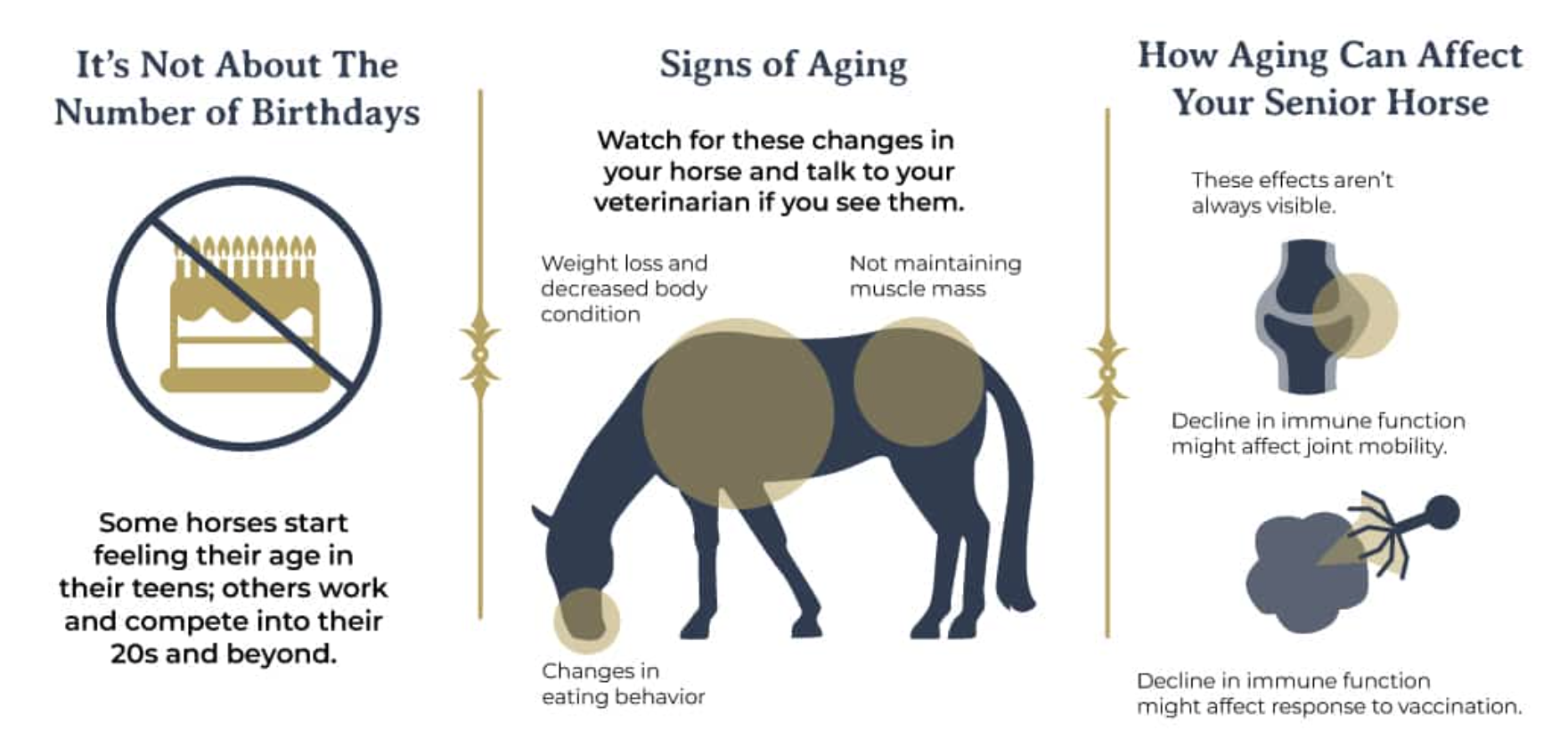
- Changes in eating behavior, loss of appetite
- Decrease in body weight or body condition
- Changes in musculature, generally a ‘melting’ topline and/or atrophied muscles
- Reduced immune function, frequent illness, and/or nonhealing wounds
- Decline in energy and mobility
- Difficulty chewing hay, quidding
Horses that score between 5 and 6 on the Henneke Body Condition Scale are considered to be in good condition:
Moderately Thin
Negative crease along back. Faint outline of ribs can be seen. Fat can be felt along tailhead. Hip bones cannot be seen. Withers, neck, and shoulders not obviously thin.
Moderate
Back is level. Ribs can be felt but not easily seen. Fat around tailhead beginning to feel spongy. Withers are rounded and shoulders and neck blend smoothly into the body.
Moderately Fleshy
May have a slight crease down the back. Fat on the tailhead feels soft. Fat over the ribs feels spongy. Fat beginning to be deposited along the sides of the withers, behind the shoulders, and along the neck.
is a nutritionist on the equine technical solutions team at Purina Animal Nutrition. She is responsible for helping bring innovative solutions from the research team out to the field. She received both her MS and PhD in animal nutrition from the University of Nebraska. Her graduate research focused on the use of high-fat diets and manipulating the microbial community in the gut. Dunaway resides in Aiken, South Carolina, and is a lifelong equestrian with a special interest in the nutrition and development of the future sport horse.
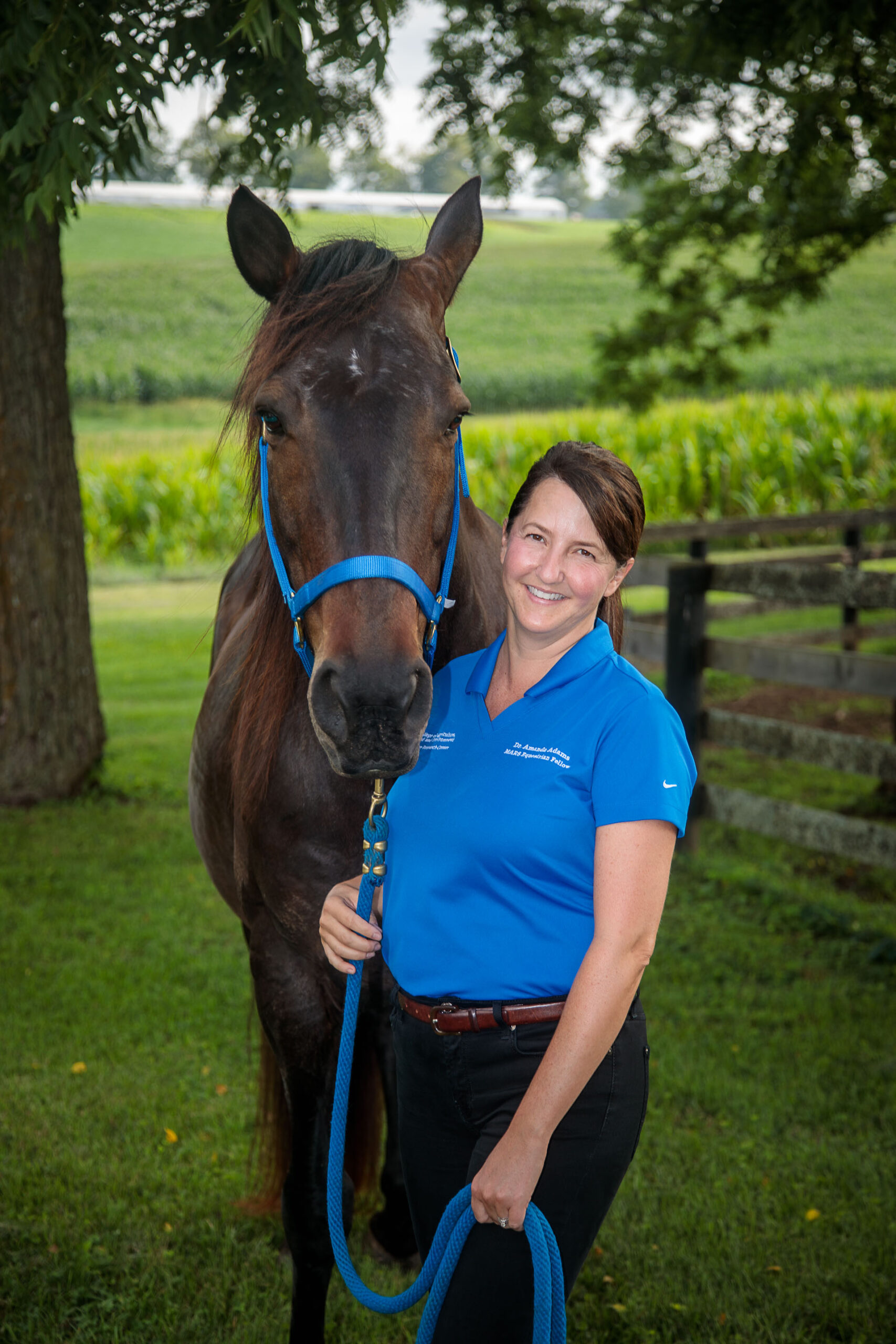
is an associate professor at the University of Kentucky’s Gluck Equine Research Center, in Lexington. She is also adjunct faculty at Lincoln Memorial University’s College of Veterinary Medicine, in Harrogate, Tennessee. Currently, her research program studies include equine immunology and endocrinology in the context of aging, obesity, endocrine diseases, laminitis, and stress.
Tips for Age-Related Nutrition Challenges
1. Understand the impact of inflamm-aging.
Immune function declines naturally with age—a process known as immunosenescence. In the aging horse immunosenescence manifests as weakening immunity and translates notably to a decreased antibody response to vaccination. To add insult to injury, the aging process increases the body’s own secretion of pro-inflammatory cytokines (chemical messenger proteins) and other inflammatory mediators. This leaves many older horses dealing with a particular type of systemic (bodywide) inflammation called inflamm-aging.
“Inflamm-aging is not your typical acute inflammation (such as from a wound) but, rather, low-grade and chronic,” explains Adams. “Not all horses’ immune systems age at the same rate; we are still trying to understand why this phenomenon happens more quickly in some individuals than others. What contributes to these changes—genetics, lifestyle, management, diet? We don’t have all the answers yet, but we do know that the overall goal of senior horse nutrition is to support this aging immune system.”
With that goal in mind, she says, her team is working to understand if they can modulate inflamm-aging with various ingredients or compounds. “Currently, we are studying the effects of CBD (cannabidiol) on inflamm-aging in senior horses,” she says. “The preliminary results are promising, but this kind of research, when done properly, takes time.”
2. Take metabolic and endocrine disorders into account.
In humans there is a known correlation between inflamm-aging and both Type 2 diabetes and degenerative joint diseases (Rezus et al., 2019). Inflamm-aging in horses might also be associated with increased morbidity and mortality for a variety of chronic illnesses. Researchers are investigating whether the combined effects of immunosenescence and inflamm-aging might leave horses more susceptible to infections and inflammatory-mediated conditions. These include arthritis, laminitis, and pituitary pars intermedia dysfunction (PPID, formerly known as equine Cushing’s disease). Veterinarians commonly diagnose PPID, insulin resistance (IR), and equine metabolic syndrome (EMS) in older horses. Therefore, Adams recommends annual endocrine testing of all senior horses to monitor health status and adjust diet and any medications accordingly.
Many of the endocrine conditions we see today were rare or nonexistent in past centuries because horses simply didn’t live long enough to develop them. Longer life spans come with more time and opportunities for immune systems and other parts of your horse to break down, so to speak.
3. Consider dental issues.
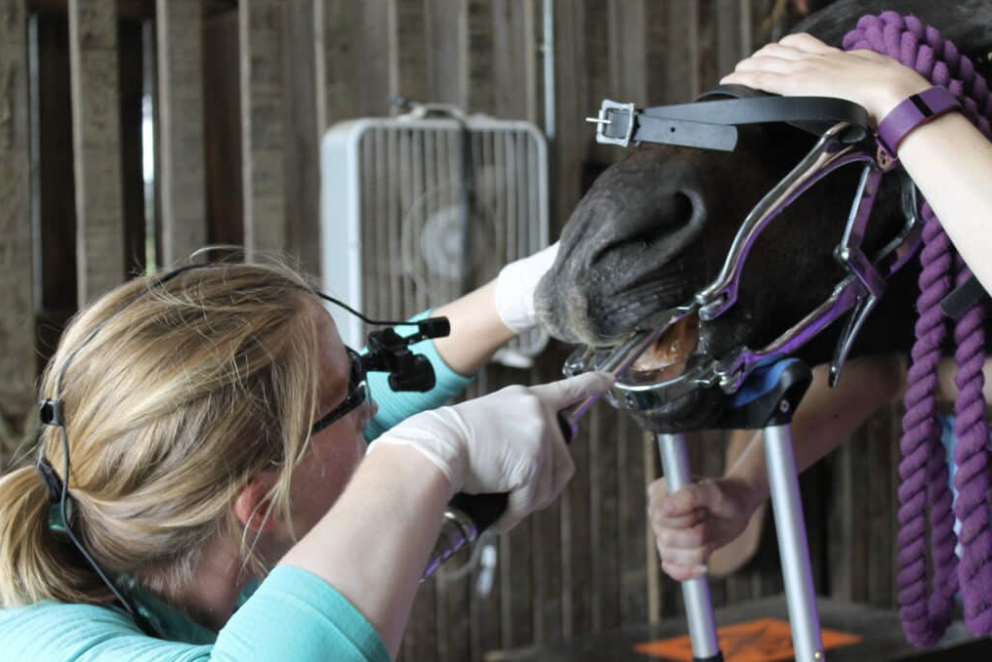
“As a horse owner, you might be noticing quidding (dropping feed) or other issues with chewing,” says Dunaway. “Or perhaps your vet comments that your horse doesn’t have much grinding surface left during his annual dental exam.” Horses that have a hard time chewing long-stemmed hay still need the nutrients a forage-based diet provides, which is where owners need to get creative. In those instances soaked hay pellets or cubes, soaked beet pulp, or soaked complete senior feeds can be good alternatives.
To prolong the usefulness of your horse’s dentition, veterinarians and nutritionists alike recommend scheduling annual to biannual oral exams, especially in older horses. This allows you to address dental irregularities early, before they snowball into bigger issues that affect digestion and, ultimately, body condition and overall health.
Glossary of Endocrine Disorders
Pituitary pars intermedia dysfunction (PPID):
Be sure to schedule annual or biannual oral exams for senior horses. Animals with declining dentition might need soaked hay pellets, hay cubes, soaked beet pulp or soaked complete senior feeds.
Insulin dysregulation:
Equine metabolic syndrome:
Be sure to schedule annual or biannual oral exams for senior horses. Animals with declining dentition might need soaked hay pellets, hay cubes, soaked beet pulp or soaked complete senior feeds.
Tips for Feeding Your Senior Horse
4. Cut back on sugar for horses with insulin dysregulation.
The No. 1 recommendation for feeding horses with insulin dysregulations (such as IR or EMS) is restricting their nonstructural carbohydrate (NSC) intake. Consuming large amounts of it can lead to harmful insulin peaks in the bloodstream that further contribute to IR and could push a horse over the edge into a laminitic episode. Companies have formulated a variety of products low in soluble carbohydrates, at a variety of calorie levels (from ration balancers to high-fat feeds), appropriate for horses prone to or diagnosed with IR. Be sure to consult the guaranteed analysis for maximum start and sugar values. And, because obesity is the leading cause of metabolic disorders, owners of overweight horses should confer with a veterinarian to safely create a calorie deficit in the diet. During the consultation the practitioner will likely check the animal’s blood insulin levels to help guide dietary choices.
5. Look for easily digested fiber, and consider complete feeds.
Again, many older equids have a reduced ability to consume forage. “Sometimes the sign that a horse might benefit from senior feed is slow weight loss that (medical) reasons can’t rule out,” explains Dunaway. “If you’ve already tried to improve his weight by simply increasing his feed or feeding more calories from a regular (nonsenior) feed, and that hasn’t worked, that tells you that it’s time for a senior feed—because it’s the fiber portion of the specialized senior feed that your horse really needs. I tell people a lot that their horse didn’t get skinny from a lack of fat—he got skinny from a lack of digestible fiber.”
Laminitis
“I tell people a lot that their horse didn’t get skinny from a lack of fat—he got skinny from a lack of digestible fiber.”
—Dr. Anna Dunaway
Complete feeds will be labeled accordingly; manufacturers have designed them to fulfill 100% of horses’ nutritional needs without supplementation of hay. These are high-fiber, highly digestible formulations and provide all dietary needs to senior horses that have poor dentition and can’t chew forage, our sources explain. On the other hand, noncomplete concentrate labels will indicate the need for supplementation with forage.
What to feed is only half the equation. How much to feed is the other half. Calculating the quantity of a certain feed to scoop into your horse’s bucket daily depends on his weight, body condition, and activity level.
In addition, switching a horse to a complete senior feed too early—or using it for the wrong purpose—risks nutrient deficiencies, says Dunaway. Complete senior feeds have higher minimum feeding rates than concentrate feeds. (Purina) Equine Senior, for example, has roughly double the minimum feeding rate of a typical concentrate feed. Underfeeding a complete senior feed can therefore leave significant gaps in a horse’s vitamin and mineral intake.
Scroll through the photos below to learn what factors to consider when determining the amount of feed needed:
Photo Credit: istock.com
Photo Credit: The Horse Staff
Photo Credit: iStock
6. Understand the value of prebiotics and probiotics.
Horses of all ages depend on a robust microbiome to keep their digestive tract healthy. Certain probiotics and prebiotics (beneficial microorganisms and the fiber sources they feed on, respectively) can help support not only gut health but also immune function and metabolism in aging horses. Horse owners often add these live cultures to the diet as supplements, but manufacturers of certain commercially formulated senior feeds incorporate them directly into their formulas.
Always keep in mind that “research-based evidence is crucial to determine whether what you are feeding or supplementing your senior horse’s diet with is actually effective or not,” says Adams.

How Much Complete Senior Feed Do I Need to Give My Horse?
Complete feeds replace forage and should be fed at a rate of 1.2-2.0% of a horse’s body weight (BW) depending on their individual calorie needs. That could be up to 24 pounds for a 1,200-pound horse. In contrast, feed concentrate diets at a rate of 0.3-0.4 pounds/100 pounds BW (3-4 pounds for a 1,000-pound horse), in addition to 1-2% BW of forage.
“As the senior feed market has evolved, there are now many more products specifically designed for older horses—and they’re not all complete feeds like they used to be,” says Dunaway. “That’s why it’s so important to pay attention to what type of feed you’re using.”
Looking Ahead: The Future of Senior Horse Nutrition
“As the senior feed market has evolved, there are now many more products specifically designed for older horses—and they’re not all complete feeds like they used to be,” says Dunaway. “That’s why it’s so important to pay attention to what type of feed you’re using. A senior-labeled product could be a complete feed, intended for partial or total forage replacement, or it could be a concentrate feed, which is more like a traditional feed. Concentrates are formulated to provide calories, protein, vitamins, and minerals, but they’re not meant to replace forage at all.”
Our horses are living longer lives and experiencing the effects of their immunity declining and bodywide inflammation rising. However, several new studies looking into the use of nutraceuticals and diet to manage inflamm-aging are on the horizon. For the time being, Adams, who is at the heart of this research, also recommends ensuring you feed your senior horse a balanced diet that meets all his health and nutritional needs.
Sponsor message
Do you have a senior horse that’s trying to age gracefully?
Purina Animal Nutrition was the first feed company to formulate a commercial feed specifically to meet the needs of the senior horse. Since its launch, Purina Equine Senior® has undergone extensive testing and innovation, resulting in it being the No. 1 veterinarian-recommended feed for senior horses.
Both Purina Equine Senior® and Purina Equine Senior® Active are scientifically formulated and backed by research in senior horses. Both products contain ActivAge® Prebiotic Technology, a unique yeast-derived prebiotic that contains high levels of antioxidants, polyphenols, amino acids, vitamins, minerals, and other beneficial compounds.
Purina has developed two types of feed for senior horses to meet the needs of older horses:
- Purina Equine Senior® is a complete feed formulated to replace the senior horse’s entire diet, including the forage component. When fed as the sole component of the horse’s diet, it should be fed at a minimum of 1.35% of the horse’s body weight (BW) each day. When fed with forage, Purina Equine Senior® should be fed at a minimum of 0.6 pounds per 100 pounds BW daily.
- Purina Equine Senior® Active is not a complete feed. Rather, it is formulated as a concentrate feed designed to supplement horses consuming pasture, hay, or other types of forage. Adequate amounts of good-quality forage must complete the diet.
Both feeds contain a blend of fibers that are ideal for older horses’ digestive health.
In multiple trials horses fed Purina Equine Senior® with ActivAge®—Purina’s unique prebiotic supplement—experienced a decrease in overall systemic inflammation and even an improved response to vaccination. They also showed an improved metabolic response, along with a decreased inflammatory response to a challenge in their joints.
And that’s not all: Purina Equine Senior® is manufactured to exact parameters that promote optimal chewing for the senior horse with impaired dentition, as proven through multiple research trials. Purina continues to improve Equine Senior® and Equine Senior® Active to meet the unique needs of the senior horse, allowing these animals to enjoy longer, more comfortable years.
“I’ve found that feeding Purina Equine Senior® is a really good option for senior horses,” says Amanda Adams, PhD, associate professor at the University of Kentucky Gluck Equine Research Center, in Lexington. “I personally keep my 34-year-old Quarter Horse on this diet and he looks and feels great. I’ve had him for 30 years!”
Author
Lucile Vigouroux, MSc
Lucile Vigouroux, MSc, is a New-York-based freelance author with a passion for equine health and veterinary care. She holds a master’s degree in equine performance, health, and welfare from Nottingham Trent University, in the U.K., and an equine veterinary assistant certification from AAEVT. Vigouroux also runs a small equine PEMF therapy business. Her lifelong love of horses motivated her to adopt her college care horse, Claire, upon graduation.
Source
Credits
Editorial Director: Stephanie L. Church
Managing Editor: Stephanie J. Ruff
Digital Editor: Haylie Pfeffer
Art Director: Claudia Summers
Web Producer: Jennifer Whittle